Login
0

27th November, 2025 in Biography & Memoir, History, Women in History
By Stella Butler

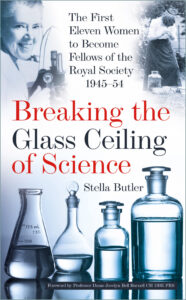
I was interested in the role of women scientists between the two world wars. I realised there were no women Fellows of the Royal Society, the UK’s premier scientific academy, until 1945. That seemed to me outrageous given the contribution women were making by this time to universities and other workplaces. In the first decade to 1954 there were only 11 women elected FRS. It became clear to me that these 11 amazing, pioneer women were little known even among scientific communities. And so I wanted to celebrate their lives and achievements.
There were 2 x-ray crystallographers: Kathleen Lonsdale and Dorothy Hodgkin; 3 biochemists: Marjory Stephenson, Dorothy Needham and Rosalind Pitt-Rivers; 2 natural historians: Agnes Arber and Sidnie Manton; a mathematician: Mary Cartwright; a parasitologist: Muriel Robertson; a cell biologist: Honor Fell and a physiologist, Marthe Vogt.

Dorothy Hodgkin won the Nobel Prize for her ground-breaking work on large biological molecules including penicillin. She was inspired as an undergraduate by Kathleen Lonsdale who was the first to use X-ray crystallography to work out the 3-d structure of a carbon compound, benzene. The zoologist, Sidnie Manton developed techniques for mapping cells as they divide within the embryos of shrimps and crabs. Dorothy Needham worked out the sequence of reactions that take place in muscle cells when they contract. Honor Fell demonstrated how to grow chicken limbs in the laboratory by dissecting out ‘limb buds’ from embryos and growing them in a petri dish. Marthe Vogt showed that the hormone noradrenaline acts as a neurotransmitter in the brain.
Marjory Stephenson used bacteria to work out the chemical reactions taking place inside cells, establishing a new sub-discipline of biochemistry. The work of the mathematician, Mary Cartwright on radio waves in the 1940s contributed to the development of chaos theory by Stephen Smale a decade later. The identification of the thyroid hormone, T3, by Rosalind Pitt-Rivers and her colleague Jack Gross, significantly improved the lives of those suffering from thyroid disorders. Muriel Robertson’s research on trichomonad infertility and abortion in cattle had an enormous and lasting economic impact on dairy farming.
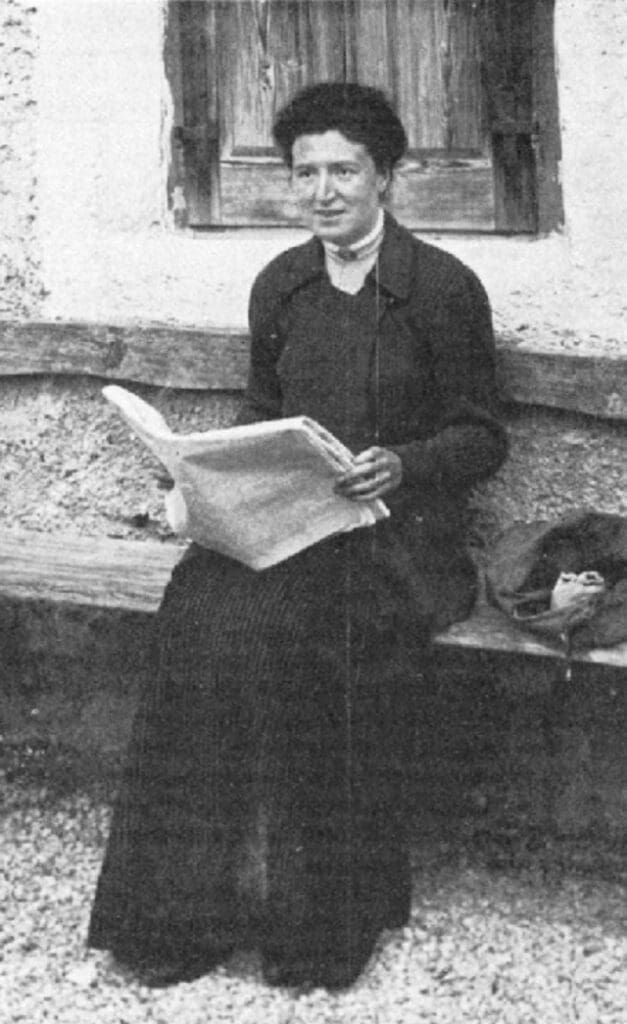
Agnes Arber worked for many years in the Balfour Laboratory, part of Newnham College, Cambridge. When the college sold the building to Cambridge University, the Principal of Newnham made a condition that laboratory space be found for Agnes elsewhere in Cambridge. Agnes felt that what she was offered was unsuitable and so ended up working from a room in her rented house for the rest of her life excluded from scientific colleagues. It must have been a very solitary existence.
Determination, a thick skin, fierce intelligence and love of laboratory work.
The history of scientific discoveries often begins with a narrative written by scientists themselves. We know that the work of women scientists is referred to less than the work of men. This then obscures women’s work from historians as they try to piece together the steps that lead to solving particular problems or developing certain scientific techniques or ideas.
In several cases the support was simply encouragement and financial support for them to follow their academic ambitions in an era when young women, even those with university degrees, were expected to marry and focus their energies on the home. Those women who went on to marry and have children undoubtedly received enormous support from their husbands. When encouraging schoolgirls to consider a career in science, Kathleen Lonsdale who was married with three children, advised them to choose their husbands carefully!
These eleven women were not a socially diverse group. Most enjoyed very comfortable backgrounds. Rosalind Pitt-Rivers came a landed, aristocratic family. Several of the others could almost certainly rely on family money to bridge gaps in grants or short-term fellowships. Only Kathleen Lonsdale’s family struggled financially. She was fortunate to be the youngest child in a family of ten children so that she was able to take up a a county scholarship to secondary school and go on to win scholarships to university.
I discovered that legal barriers to women being admitted to the Royal Society had been removed immediately following the First World War by the Sex Discrimination Removal Act (1919) and that legal advice in the 1920s confirmed that women were consequently eligible for election as Fellows. However, the rules of the Society meant that only Fellows could nominate individuals for the Fellowship. So for more than a quarter of a century women were legally eligible for election but none were nominated. Draw your own conclusions.
Women can do science at the highest level even when they experience prejudice and obstacles. Without those obstacles in the first decades of the twentieth century, more women would have been able to contribute to developing new technologies and to making positive impacts on the health of individuals and communities, just as these first women FRSs did. It is important we learn lessons from the past and, going forward, that we encourage girls as much as boys to enjoy the experience of doing science. We will all benefit.
23rd July, 2026 in Biography & Memoir, History, Women in History Hidden in the bowels of the British Library, an obscure novel written in 1942 seemed eerily prescient as the Alternative für Deutschland held its 2026 party conference in the central German state of Thuringia earlier this month. The novel, written by Mea Allan, one of the few wom… 22nd July, 2026 in Biography & Memoir, Entertainment, Women in History Madam V tells the true story of American-born Virginia Vernon’s transformative journey through the Second World War, looking after the welfare of performers entertaining the British troops at home and abroad. Once described as the war’s most travelled woman, Virginia, in her capa… 11th June, 2026 in Biography & Memoir, Transport & Industry When Harry Met Peggy is the story of one man’s attempt to restore an Austin 1100. Along the way it also becomes the story of one man’s attempt to restore himself. Peggy’s owner, Harry Taylor gives an insight into the ups and downs of following his restoration dream … What made… 27th May, 2026 in Biography & Memoir, History, Women in History Among the few facts of Mary Boleyn’s life is that she was the mistress of Francis I and that she gained a notorious reputation at the French court, being known as ‘the great and infamous whore’. The goal of my book about Mary was to return to the original source which gave Mary t… 13th May, 2026 in Biography & Memoir, True Crime, Women in History ‘The tracking down of the really dangerous criminal is regarded as a man’s job, and men have taken good care to see that such work remains in their own hands.’ So argued May Storey, a private detective of the 1930s famed for shadowing dope pedlars, locating missing heirs, and cat… 14th April, 2026 in Biography & Memoir, Maritime, Women in History Most people know Titanic sank in April 1912 with a great loss of life. Most people also know that the great ship was supposed to be unsinkable. But what many people don’t know are the individual survivor stories, stories of courage and kindness in the lifeboats on that terrible n… 26th March, 2026 in Biography & Memoir, History, Maritime Despite his immense legacy, Greenvile Collins (1643-94), might be the most important naval officer you’ve never heard of. In Master and Cartographer, yachting journalist Alan Harper tells his incredible story in full for the first time. Here, Alan answers questions about this fas… 19th March, 2026 in History, Local & Family History, Military When we think of the Blitz, our minds often go straight to major cities and industrial centres like London, Glasgow, and Coventry. But that’s only half of the story. Blitz on Cheshire is a look into the devastation that everyday people suffered at the hands of the Nazis. Through… 6th March, 2026 in Society & Culture, Women in History I was fortunate enough to be brought up by a Greenham Common Woman and this involved starting my feminist journey incredibly young – one of my earliest memories is of humming along to the Tammy Wynette song Stand By Your Man and seeing my mum rolling her eyes, barely able to cont… 25th February, 2026 in History, Women in History One of the most intriguing aspects of Anne Boleyn, and likely why she still fascinates us 500 years after her death, is the fact that we don’t even know what she looked like. Even that most basic element, seeing the face of the woman who the King of England ripped the entire coun… 18th February, 2026 in History, Local & Family History, Society & Culture March 17th is Saint Patrick’s Day, the feast day of the saint traditionally credited with converting Ireland to Christianity in the 5th century. The date has become an occasion to celebrate wider Irish identity, its uptake a reflection of modern Irish history. Irish emigration fr… 5th February, 2026 in Biography & Memoir, Entertainment, Women in History Agatha Christie, the Queen of Crime and world’s best-selling author, wrote 66 novels and over 150 short stories. Can you uncover these Agatha Christie novels using just three clues? Q1. Poirot cuts short his stay in Istanbul A mysterious person wearing a red kimono Poirot refuses… 27th January, 2026 in Biography & Memoir In recent decades, Holocaust Memorial Day has been officially adopted as a public commemoration by governments across the world, as a universal commitment to remember Jewish suffering and an attempt to ensure that nothing like it could ever happen again. But it’s also worth ackno… 27th January, 2026 in Biography & Memoir, Military BELGIUM: A MAN OF LETTERS On the day that Else Samter was issued with her British visa, her brother, Kurt Grelling, was nearing the end of a three-week stay with his family in Oostduinkerke, a resort town on the Belgian coast. With the forces of the Wehrmacht massing along the bo… 20th November, 2025 in Biography & Memoir, History, Women in History When I first heard about the destiny of Princess Louise, mother of the famous Prince Albert, I was left shivering. Yes, it was a cold and dark winters day and the medievally adorned ballroom in Rosenau Castle in Coburg, where Louise once danced and her son Albert was christened,… 12th November, 2025 in History, Local & Family History Around 140 years after the Romans had deserted the shores of Britain, Ida the Flamebearer, Chief of the Angles, landed on the North East coast of, what is today, England, and founded his dynasty at Bamburgh. After bloody struggles against, and eventual victory over, the Celtic Br… 12th November, 2025 in Folklore, History If you have ever had a good look at a map of Norway you’ll see it’s an extraordinary shape and size. It’s the same distance from Oslo to Rome as from Oslo to north Norway, so not surprisingly the country was divided into many small kingdoms. However, in the year 860 a lad was bor… 29th October, 2025 in Biography & Memoir, History, Society & Culture Before social media, much less a #BLM hashtag, journalists of colour were putting hot metal to paper to declare that Black lives matter. Here, journalist Yvonne Singh introduces us to five of the pioneers who strove to give their communities a voice; individuals who addressed glo… 28th October, 2025 in History, Local & Family History, Women in History Nottinghamshire has been home to some extraordinary women throughout history. They were often underestimated, demonstrated strong character and achieved their goals against the odds. Even today, they largely remain either anonymous or uncelebrated. Less than 5% of statues across… 2nd October, 2025 in Aviation, Biography & Memoir, Transport & Industry Whitney Straight is a fascinating story of speed, courage, romance, determination and tragedy. Drawing on Straight’s diaries, photograph albums, and extensive archival research on both sides of the Atlantic. Biographer Paul Kenny answers our questions to bring this extraordinary… 25th September, 2025 in Biography & Memoir, Women in History In Muv: The Story of the Mitford Girls’ Mother, Rachel Trethewey uses original research and first-hand testimony to tell Sydney Redesdale’s story in full for the first time, revealing a major influence for her daughters’ resolve, self-assurance and extremism. Nancy, Pamela, Diana… 14th August, 2025 in Military, Women in History Bletchley Park is perceived as a world of male intellectuals supported by a vast staff of women in menial roles – a place where men helped sway the course of the Second World War. But women were not just typists and clerks. They had serious, full-on codebreaking roles. And not ju… 24th July, 2025 in History, Society & Culture In Measuring Monarchy, Tim Hames proposes a new way to rank our Royals, and makes a case for applying the following five metrics – with entertaining results. professional reputation standing with the public impact on the public purse conduct of foreign policy preparations for suc… 20th June, 2025 in History, Society & Culture, True Crime Seasoned journalist, acclaimed author, and true crime historian, Neil Root, delves into one of Victorian society’s most explosive scandals – The Cleveland Street Scandal. A precursor to the prosecution of Oscar Wilde, this book exposes deep-rooted corruption within the Victorian… 29th May, 2025 in History, Society & Culture, Sport, Women in History I like to think that there is a symmetry between my query of myself in 1967 – ‘why don’t girls play football?’ – with my thought over fifty years later that the history of the Women’s Football Association needed to be written down. As I was pretty sure that I was the only survivi… 16th April, 2025 in History, Military, Society & Culture In his book Under Fire, Stephen Bourne draws on first-hand testimonies to tell the whole story of Britain’s black community during the Second World War, shedding light on an oft neglected area of history. Drawing on a wealth of experiences from evacuees to entertainers, gove… 9th April, 2025 in History In the thirteenth century the law and finances of each English county were under the jurisdiction of a sheriff (the word comes from ‘shire-reeve’), who was appointed by the Crown. Catherine Hanley author of A Pale Horse discusses who was the real sheriff of Nottingham. A shrieval… 3rd March, 2025 in Biography & Memoir, History, Society & Culture, Women in History When Lady Dorothy Mills was a young girl, a female relative told her she would never be beautiful so she had better be interesting – and she was. Yet extraordinarily, this is the first book about this fearless woman who became the best-known female explorer of the 1920s and 30s,… 17th February, 2025 in Biography & Memoir, History, Women in History Dr Catherine Hanley holds a PhD in Medieval Studies (Sheffield, 2001), is a Fellow of the Royal Historical Society and is the author of historical works in several genres. Lionessheart is her latest book which follows the story of Joanna Plantagenet – princess, pioneer, captive a… 20th January, 2025 in Biography & Memoir, Military ‘Before leaving, we were issued with rations for about two and half days. The weather was terrible, and very, very cold. We arrived at a place called Winterveldt. We had covered a distance of about twenty miles and our resting place was a barn with cold floors, with just a bit of…
More articles you might like
A warning from fiction
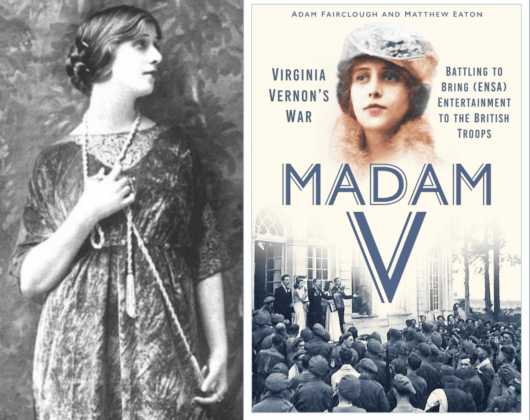
Madam V: The war’s most travelled woman
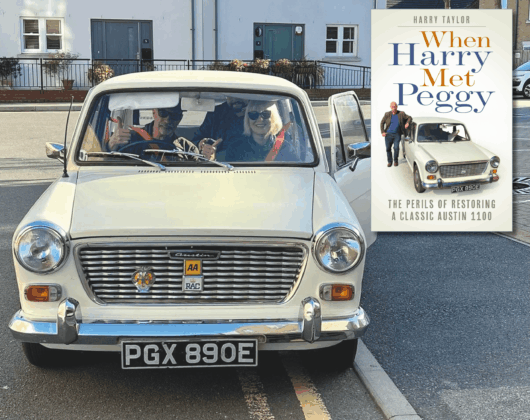
Ask the Author: Harry on his journey restoring Peggy, an Austin 1100
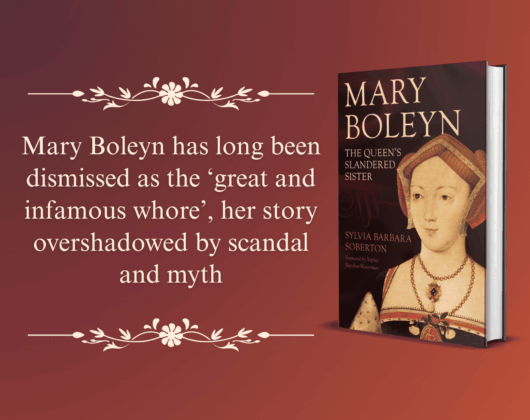
Mary Boleyn: Debunking the myth of the ‘great and infamous whore’
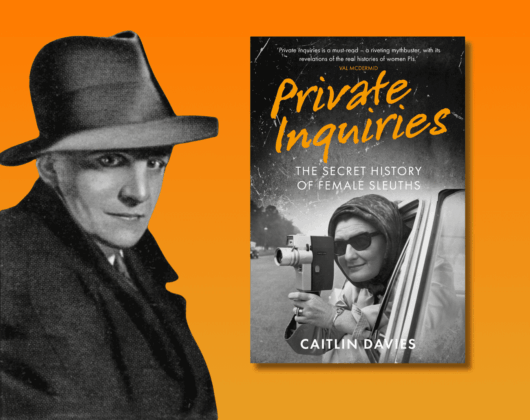
Sleuthing is a great career for a girl
The Aristocrat and the Able Seaman: The story of two courageous Titanic survivors
Ask the author: Alan Harper on Greenvile Collins, cartographer to the King
Before and After: Blitz on Cheshire in pictures
Stand By Your Mam: Mothers in Greenham Common Peace Camp

The missing face of Anne Boleyn

The stories and symbols of Saint Patrick’s Day

Quiz: Are you a true Agatha Christie fan?

Holocaust Memorial Day 2026: The power of testimony

Holocaust Memorial Week: One Jewish family’s struggle to escape the Holocaust

Princess Louise, the Diana of the 19th century

A chapter of North East England’s history

A Norwegian Christmas folk tale

Five Black journalists who should be as popular as Orwell

Nottinghamshire’s remarkable women

Ask the author: Paul Kenny on Whitney Straight
‘MUV’ – Sydney Redesdale, the seventh Mitford woman

Ask the author: Dermot Turing on the codebreaking women of Bletchley Park

The most overrated and underrated British kings and queens?

Ask the author: Neil Root on The Cleveland Street Scandal

Tracing the history of the Women’s Football Association

Black Britain and VE Day

The real Sheriff of Nottingham?

From cocktails to cannibals: The adventurous life of Lady Dorothy Mills, explorer and writer

Ask the author: Catherine Hanley on Joanna Plantagenet

‘we closed our eyes to the blizzard …’ Sergeant Fred Hooker’s memory of the Long March
Books related to this article