Margaret Tudor: English princess, Scottish queen

On 8 August 1503 Princess Margaret Tudor of England married King James IV of Scotland in Holyrood Abbey, becoming Queen of Scots and providing the Scottish throne with an heir, King James V. She would marry twice more before her death in 1541 and, like her ill-fated granddaughter Mary, Queen of Scots, Margaret’s choice of husband threatened her status as queen.

Born in 1489, Margaret was the second child and oldest daughter of Henry VII and Elizabeth of York, whose marriage had cemented the alliance between the Houses of Lancaster and York following the Wars of the Roses. Elizabeth did what every king hoped his wife would do when she provided Henry with ‘an heir and a spare’, with the birth of Prince Arthur in 1486 and the birth of Prince Henry, later King Henry VIII, in 1491. With the births of Margaret in 1489 and Mary in 1496, the only daughters of their seven children to survive into adulthood, Henry also had two marriageable daughters through whom he could create alliances with the royal houses of Europe, something he desperately needed when his own claim to the throne was still rather tenuous.

Marriage was certain but must have been a frightening prospect for a girl who’d witnessed the death of her mother, who died trying to provide her father with another son after Prince Arthur’s death, earlier that same year. Margaret was not yet 14 when she was sent to Scotland to marry James IV, the Scottish king 16 years her senior, not unlike her paternal grandmother and the woman she was named after, Margaret Beaufort, whose own marriage to Edmund Tudor occurred when she was only 12 years old. A year after their wedding Edmund died, leaving Margaret, now 13 years old, widowed and seven months pregnant. Even by the standards of the 15th century, Margaret was incredibly young to be having a child of her own.

Portrait of Lady Margaret Beaufort
Lady Margaret Beaufort, Margaret Tudor’s paternal grandmother

Margaret Tudor didn’t begin to bear James’s children until February 1507, when she was 17 years old. During their ten years of marriage the Scottish king and queen would have six children, only one of whom, their fourth child and second son to be christened James, survived infancy.

A painting of Margaret Tudor copied from the original by Daniel Mytens

Despite Margaret and James’s marriage the relationship between England and Scotland was not a peaceful one, and in 1513, despite Margaret advising him not to go to the battlefield, King James IV became one of the many victims at the Battle of Flodden.

Portrait of King James IV of Scotland
King James IV of Scotland

At 24 years old, Margaret was a pregnant widow with a 17 month old son who was now the king of Scotland. James had named his wife as regent should he die before their son was old enough to rule alone, but it must have been a lonely and frightening time for a queen whose husband had been killed in a battle in which the opposing army served her own brother. Henry’s queen and childhood friend of Margaret’s, Catherine of Aragon, hastened to send ‘comfortable messages’ to Edinburgh following James’s death, promising Margaret England’s protection and support if she could keep the Scots quiet.

Margaret’s regency, however, did have one rule: she could only act as her son’s regent so long as she remained unmarried.

In many ways this is understandable. Margaret was queen of Scotland by marriage, not blood, and in a time when women were considered subservient to their husbands it wouldn’t do to have a man of Margaret’s choice hold any sway over Scotland’s infant king. When Henry VIII died in 1547 and left the English throne to his nine year old son, Edward VI, some expected that his sixth and final wife, Catherine Parr, would be named regent as she had been when Henry was at war in France. Though Catherine was clearly good at being queen, it’s perhaps for the best that Henry didn’t make that decision considering only two months after his death she finally married for love, and her man of choice was the scoundrel Thomas Seymour, brother of Henry’s third wife, Jane, and therefore Edward’s uncle. To have a man like that married to the most powerful woman in the country, who in turn would have been in charge of the monarch, could have been disastrous considering Seymour’s eventual treasonous behaviour that led him to the block.

Later, when Mary I came to the throne, there was genuine concern regarding her marriage. As a queen she was answerable only to God, but as a woman she was answerable to her husband, and if Mary planned to marry the heir to the Spanish throne, Philip II, would that place England under Spanish rule?

Regardless of her own feelings, if the late king had forbade her from remarrying to act as regent, she would be putting her regency and her relationship with Scotland’s nobles at risk if she chose to do so. Margaret, however, was incredibly proud of her Tudor heritage and believed that Scotland should bow to English rule, and perhaps it was this belief in her own rights as the king of England’s sister that led her to remarry on 6 August 1514.

Margaret chose Archibald Douglas, 6th Earl of Angus for her second husband, head of one of the most powerful families in southern Scotland. He was a nobleman whose father had been killed in the Battle of Flodden and was the same age as Margaret. There is evidence to suggest that Margaret and James’s marriage was fairly happy; the king seemed to pay her all the respect that was due to her as a princess of England, but he was still known for his womanizing. After spending ten years married to a man almost two decades older than herself and being left with two young sons when a difficult labour led to the birth of Alexander Stewart, Duke of Ross, it’s no surprise that Margaret sought comfort in the arms of a man her own age and of her own choosing.

Portrait of Archibald Douglas, 6th Earl of Angus
Archibald Douglas, 6th Earl of Angus

Nor was Margaret the only Tudor to seek a marriage that wasn’t political. Her younger sister, Mary, would later follow in her sister’s footsteps. Two months after Margaret’s second wedding, Mary was wed to the much older king of France, Louis XII. She was 18, her husband 52, and it’s likely that Mary was already in love with Henry VIII’s close friend Charles Brandon, 1st Duke of Suffolk when she was sent across the English Channel to take up the position of Queen of France and provide the aging French king with an heir.

Louis died less than three months after their marriage on 1 January 1515, and when Brandon was sent to collect Mary, under orders from Henry not to propose to her, she quickly convinced him that they should be married. Technically Brandon had committed treason by marrying the king’s sister without his permission, and he could have been executed for it, but once the two of them had been forgiven by Henry, Mary was permitted to remain in her much happier marriage until her death in 1533.

Portrait of Mary Tudor and Charles Brandon, 1st Duke of Suffolk
Mary Tudor and Charles Brandon, 1st Duke of Suffolk

Margaret wasn’t quite so lucky. Her marriage to Angus wasn’t well received by the other Scottish nobles, some of whom were jealous of what they perceived to be his rise to power, and the faction of nobles who supported Scotland’s long history of good relations with France wanted Margaret replaced with John Stewart, Duke of Albany. Albany was James IV’s cousin, his own father Alexander Stewart having been son of James II and brother of James III, and should James IV’s sons die he was the rightful heir to the Scottish throne.

Albany had spent his entire life in France and the Scottish nobles had wanted him to return to Scotland and lead the country’s military even before Margaret’s second marriage. Albany arrived in 1515 and Margaret was forced to hand over her regency and her two sons; she must have been frightened for their safety when her own uncles, the Princes in the Tower, disappeared while under Richard III’s care. Albany, however, treated Margaret with great respect and didn’t appear to have any interest in usurping the throne.

Even so, encouraged by her brother, Margaret made the decision to flee Scotland in the summer of 1515. She and Angus sought refuge with Lord Dacre, English Warden of the Marches where, in October, she gave birth to their daughter, Margaret Douglas. It was only when she’d recovered from the ordeal the birth had been that she headed south to London and her brother’s court while Angus returned to Scotland.

Margaret stayed in England for just over a year until Albany returned to France to see his family, and arrangements were made for her to return. As Henry’s sister, she was the perfect candidate to work in England’s favour from a position of considerable power within Scotland. Sadly, her younger son, Alexander, had died during her absence, but the Scottish lords agreed that she was to be given as much access to James as she wished as well as her dower rights.

Though she must have been happy to be reunited with her son, her marital happiness wasn’t to last when she returned to Scotland to discover Angus was living with another woman and using Margaret’s money to keep her. She refused to live with her husband again and sought either a divorce or annulment. Ironically, Henry was scandalised that his sister would think to end her marriage – particularly as Angus had pro-England views himself – and supported his brother-in-law rather than her.

When Albany returned to Scotland in 1521, he and Margaret developed such a strong working relationship that some people believed they were having an affair. Albany sent Angus to France, and Henry worried that his sister would support France’s influence in Scotland over England’s, but in 1523 Angus fled from France to the English court where he loyally served Henry’s interests in Scotland until the king’s death in 1547.

The Scottish lords who opposed Albany’s regency were satisfied when James was pronounced king in his own right at 12 years old, rather than 14 as was usually the case in Scotland at this time, to rule with guidance from his mother and under supervision of a rotating group of Scottish lords – one of whom was Angus. Albany happily returned to France, leaving Margaret to deal with her husband who infuriated her when he refused to pass supervision of the king to the next lord and James was essentially held captive by his stepfather for three years.

Albany continued to support Margaret over Angus, however, as during James’s captivity Albany put Margaret’s case for annulment forward in Rome. Much to Margaret’s delight the annulment was granted, which was for the best considering she was already living with the man who would become her third husband, Henry Stewart, 1st Lord Methven. Despite James’s disapproval they quickly married when the annulment was announced, and were residing in Stirling when the 16 year old James managed to escape Angus’s clutches and fled there. Angus and James’s sister, Margaret Douglas, were banished and went to England, after which Margaret never saw her daughter again.

Portrait of Lady Margaret Douglas
Lady Margaret Douglas

James ruled in his own right from then on with some influence from Margaret, who hoped to improve relations between Scotland and England herself. She even hoped that her son might be named Henry’s heir, and suggested her son marry Henry’s daughter, the future Mary I, but James had no interest in such a match. He strongly disagreed with his uncle’s break from Rome, particularly as Henry had declared Mary a bastard, and preferred a French marriage.

Eventually Margaret’s influence over him waned and, sadly, her third marriage proved no happier than her second when she discovered that Methven was also a womaniser who liked to spend her money. She sought an annulment this time, too, but James forbade it and Methven would remain Margaret’s husband until her death.

It was James’s own marriage to Mary of Guise in 1538 that would improve his relationship with his mother. Mary was a kind and attentive daughter-in-law, and Margaret even wrote to her brother, ‘I trust she will prove a wise Princess. I have been much in her company, and she bears herself very honourably to me, with very good entertaining.’ When the royal couple’s very young sons James, Duke of Rothesay and Robert, Duke of Albany both died in April 1541, it was Margaret they turned to for comfort.

Portrait of Mary of Guise
Mary of Guise, wife of James V and mother of Mary, Queen of Scots

Margaret herself died later that year, on the 18 October. While her life was a rather turbulent and unhappy one, it would ultimately be her great-grandson, James I of England and VI of Scotland, who would succeed Henry’s final child, Elizabeth I, beginning the reign of the Stuarts who would rule England for 111 years.

The fall of Tenochtitlan

On 13 August 1521, after over two months of fighting, Spanish conquistador Hernán Cortés succeeded in bringing about the fall of Tenochtitlan, the capital of the Aztec Empire, and consequently brought an end to Aztec civilisation.

In the late 1400s and early 1500s a proficient military had been stimulated in Spain by the Reconquista, which drove the Muslim North African Moors from Iberia, and the Italian Wars (1494–1559) against France. This, combined with the impetus created by Columbus in the Caribbean, meant that Spain was on a collision course with the pre-Columbian civilisations in Central and South America.

Between 1499 and 1508 Spanish expeditions had been exploring the northern coast of South America. In the Caribbean, Hispaniola (Haiti) was secured as a base of operations against Cuba and the Antilles. Hernán Cortés arrived in Santo Domingo, on Hispaniola, in about 1504. Initially he had intended to fight in the Italian Wars like his father, but had drifted to the New World. Five years later, he joined Diego Velázquez in conquering Cuba. For his success Velázquez was rewarded with the governorship of the island and Cortés was appointed his secretary.

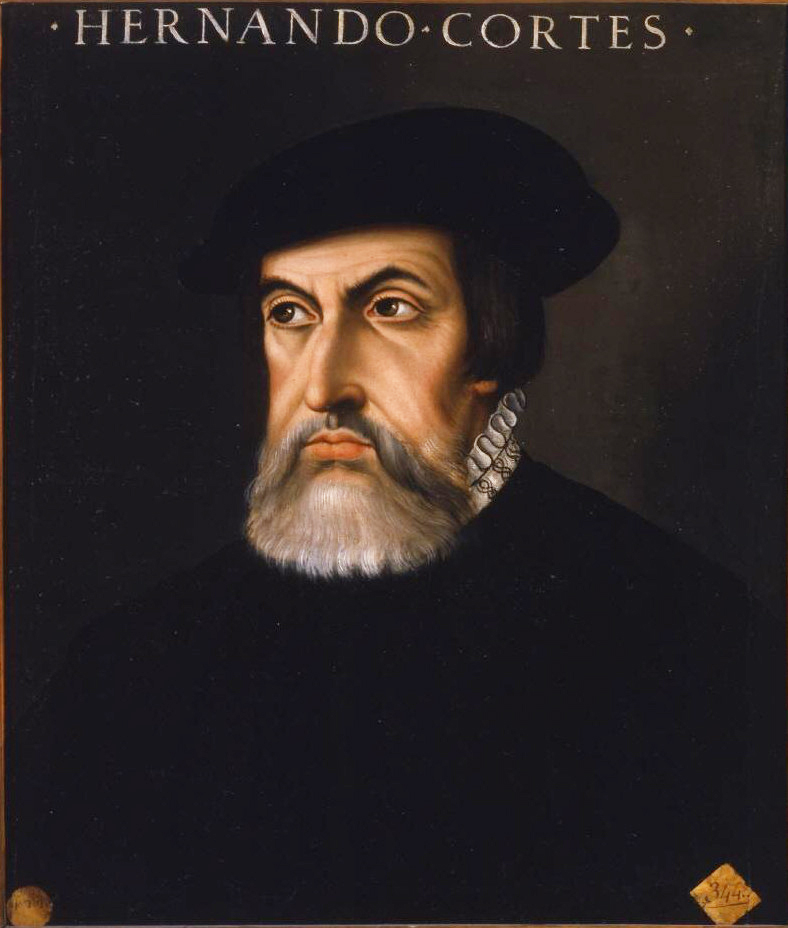
An anonymous portrait of Hernán Cortés (1485-1547

Then, in 1517, Francisco Hernandez de Cordoba landed on the Mexican Yucatán Peninsula. He received a mixed reception from the declining Mayan civilisation, which ended in twenty dead Spaniards. For the time being, the Maya were to be spared the rapacious Spanish. The following year an expedition sailed into the Gulf of Mexico, landing in what is now Tabasco. Juan de Grijalva, Velázquez’s nephew, made contact with the Totonac people who told him of the wonders of Tenochtitlan and, importantly, how they resented Aztec authority.

Meanwhile in Tenochtitlan, Montezuma’s spies reported on the progress of the strange visitors from across the sea. It seemed the legend of Quetzalcoatl was coming true and he hoped that he could conclude his reign before the transition of power. The emperor resolved to meet these visitors with the utmost hospitality. First gold and precious stones were sent to the Spanish, who returned with them to Cuba. Their greedy appetites wetted, they were not slow in returning.

Cortés set sail from Cuba with 550 soldiers, sixteen horses, ten brass cannon and four smaller ones on 18 February 1519. Most of the men were hardy Castilians from the dry tableland of central Spain. His lieutenant was one Pedro de Alvarado, who was from the same province as Cortés. However, Cortés nearly never left. At the last minute, Governor Velázquez, having appointed Cortés captain general of the expedition but fearing the success of Cortés’ preparations, tried to remove him; but it was too late, he had already sailed. Despite claims that this expedition in the New World was for the glory of God and Spain, the true motive was greed – greed for gold.

Cortés headed for Tabasco and once ashore his muskets and horses quickly defeated a Tabascan army of up to 12,000. Thus, at Potonchán on the mouth of the Tabasco River, Cortés experienced his first major victory when his European arms drove off the hostile Tabascans. His cavalry attacked the Indians from behind, taking them by surprise. The natives had never seen horses before, to them they were some sort of supernatural beast and many fled in abject terror.

The Spanish then sailed further up the coast, landing on 21 April 1519, not only the same year and same month as the Aztec prophecy, but the very day. Once on the mainland, Cortés founded Vera Cruz and a municipality answering direct to Spain and snubbing Velázquez’s Cuban authority. In a stroke of luck Cortés discovered a shipwrecked Spaniard who spoke Mayan, and an Indian woman, part of the spoils from the Battle of Tabasco, who could speak Aztec: the latter, Malinche, quickly learned Spanish and became his mistress.

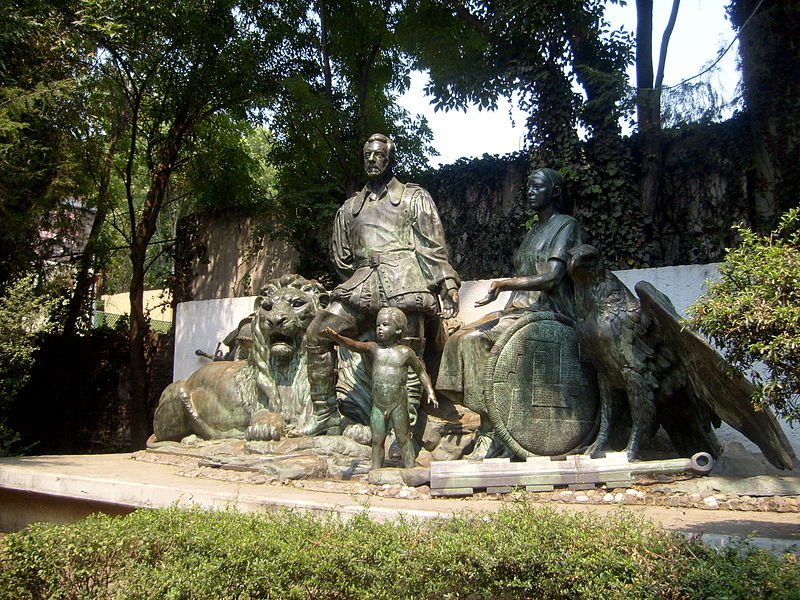
A statue of Cortés, La Malinche, and their son Martín in Mexico

Once again, Montezuma’s gifts, which were intended to persuade Quetzalcoatl to leave so that the Tlatoani could complete his reign, had the reverse effect. Cortés, defiantly sinking all but one of his ships, marched on Tenochtitlan. His army of some 400 men, fifteen horses and six cannon faced a journey of 200 miles. His forces also included some 3,000 Carib, Mayan, Tabascan and Totonac Indians. The Totonacs advised him to march via Tlaxcala and provided forty warriors and 200 porters. The forthcoming Tlaxcalan campaign, after the rehearsals with the Tabascans, was a taste of things to come and in hindsight proved crucial to Cortés’ overall success against the powerful Aztecs.

Extracted from The Art of War in Twenty Battles by Anthony Tucker-Jones

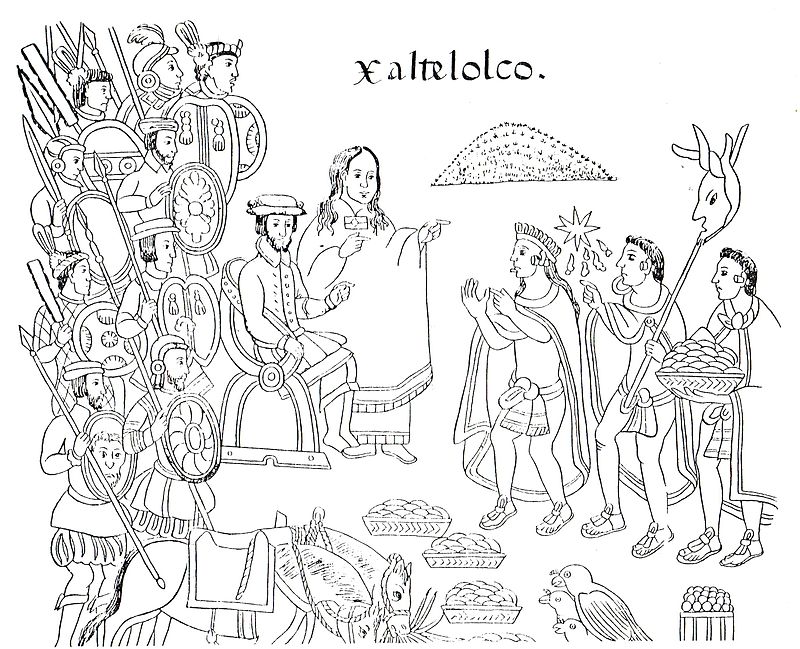
La Malinche and Hernán Cortés in the city of Xaltelolco, in a drawing from the late 16th-century codex History of Tlaxcala

James I: England’s first Stuart monarch

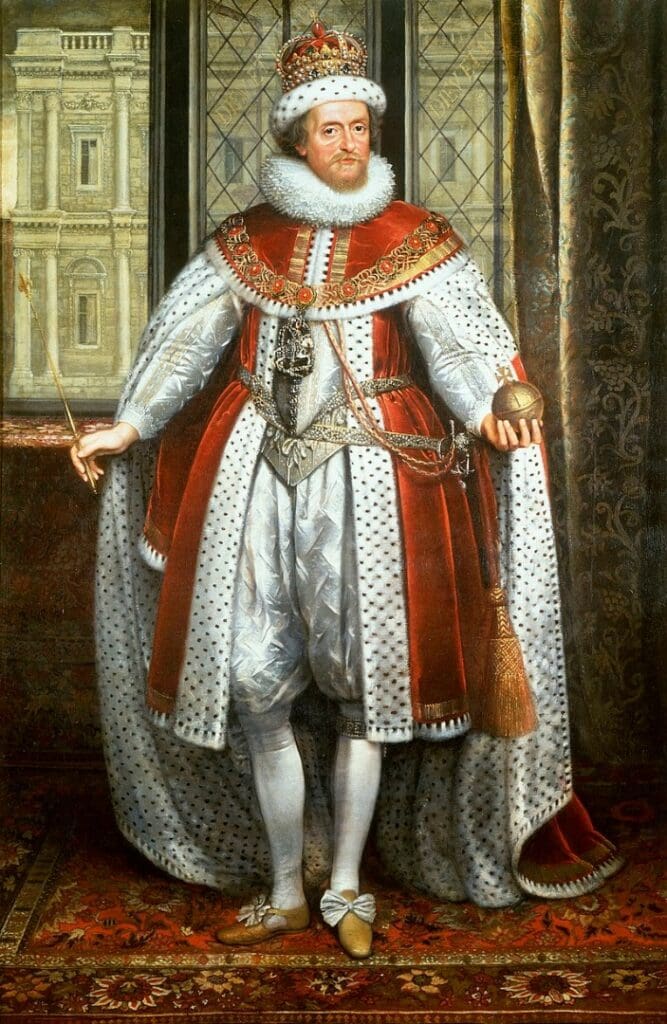
James I of England

On 24 March 1603 the 69 year old Elizabeth I died, bringing to an end her ‘golden’ Elizabethan age and the Tudor dynasty. James VI of Scotland, the son of her former rival Mary, Queen of Scots, was named her heir, and the Stuart era began, bringing England and Scotland under the rule of the same monarch for the first time.

It was in January 1603 that Queen Elizabeth had first developed a bad cold and been advised by Dr Dee, her astrologer, to move from Whitehall to Richmond – the warmest of her palaces – on what would prove to be ‘a filthy rainy and windy day’. Once there, it seems, she refused all medicine and, as the Earl of Northumberland informed King James in Scotland, her physicians were soon concluding ‘that if this continue she must needs fall into a distemper, not a frenzy but rather into dullness and lethargy’. The death on 25 February of her cousin and close confidante the Countess of Nottingham had only served to compound her illness with grief, and while all Scotland stirred in happy anticipation of her demise, the queen merely reclined on floor cushions, refusing Robert Cecil’s instructions that she take to her bed. ‘Little man,’ she had told him, ‘the word must is not to be used to princes’. She was 69, plagued with fever, worn by worldly cares and frustrations, and dying – so that even she was forced at last to accede to her secretary’s pleas. Then, in the bedraggled early hours of 24 March, as the queen’s laboured breathing slackened further, Father Weston – a Catholic priest imprisoned at that time in the Tower – noted how ‘a strange silence descended on the whole City of London … not a bell rang out, not a bugle sounded’. Her council was in attendance and, at Cecil’s frantic request that she provide a sign of acceptance of James as her successor, she was said to have complied at last.

At Richmond Palace, on the eve of Lady Day, Elizabeth I had therefore finally put paid to her successor’s interminable agonising and on that same morning of her death Sir Robert Carey, who had once conveyed her pallid excuses for the demise of Mary Queen of Scots to King James, was now dispatched north with altogether more welcome tidings. Leaving at mid-morning and bearing at his breast a sapphire ring that was the prearranged proof of the queen’s demise, Carey had covered 162 miles before he slept that night at Doncaster. Next day, further relays of horses, all carefully prepared in advance, guaranteed that he covered another 136 miles along the ill-kept track known as the Great North Road linking the capitals of the two kingdoms. After a further night at Widdrington in Northumberland, which was his own home, the saddle-weary rider set out on the last leg of his journey, hoping to be with James by supper time, but receiving ‘a great fall by the way’ which resulted in both his delay and ‘a great blow on the head’ from one of his horse’s hoofs ‘that made me shed much blood’. Nevertheless, ‘be-blooded and bruised’, he was in Edinburgh that evening and though the ‘king was newly gone to bed’, the messenger was hurriedly conveyed to the royal bedchamber. There, said Carey, ‘I kneeled by him, and saluted him by his title of England, Scotland, France and Ireland’, in response to which ‘he gave me his hand to kiss and bade me welcome’.

James had dwelt upon the potential difficulties of the succession for so long, however, that he could scarcely credit the ease with which it appeared to be taking place and wasted no time in consolidating his position. To the very last, of course, Elizabeth had made no official acknowledgement of the King of Scotland as her heir, and until he had taken physical possession of his new realm, his fear of invasion or insurrection remained tangible. The day after Carey’s arrival, therefore, the Abbot of Holyrood was urgently dispatched to take possession of Berwick – the gateway to the south – and within a week, as his English councillors pressed him to make haste, plans for James’s transfer to London were complete. Summoning those nobles who could be contacted in the time available, he placed the government in the hands of his Scottish council and confirmed the custody of his children to those already entrusted with them. Likewise, his heir, Prince Henry, was offered words of wisdom upon his new status as successor to the throne of England. ‘Let not this news make you proud or insolent,’ James informed the boy, ‘for a king’s son and heir was ye before, and no more are ye yet. The augmentation that is hereby like to fall unto you is but in cares and heavy burdens; be therefore merry but not insolent.’ Queen Anne, meanwhile, being pregnant, was to follow the king when convenient, though this would not be long, for she miscarried soon afterwards in the wake of a violent quarrel with the Earl of Mar’s mother, once again involving the custody of her eldest son – whereupon James finally relented and allowed the boy to be handed over to her at Holyrood House prior to their joining him in London.

Before his own departure, however, James had certain other snippets of business to attend to. On Sunday 3 April, for instance, he attended the High Kirk of St Giles in Edinburgh to deliver ‘a most learned, but more loving oration’, in which he exhorted his subjects to continue in ‘obedience to him, and agreement amongst themselves’. There was a public promise, too, that he would return to Scotland every three years – though he would ultimately do so only once, in 1617 – and a further suggestion that his subjects should take heart upon his departure, since he had already settled ‘both kirk and kingdom’. All that remained thereafter was a plea to the council for money, since he had barely sufficient funds to get him past the Border, and a series of meetings with both English officials on the one hand and a mounting flood of suitors already seeking lavish rewards and promises. In the first category, came Sir Thomas Lake, Cecil’s secretary, who was sent north to report the king’s first thoughts as he became acquainted with English affairs, and the Dean of Canterbury, who was hastily dispatched to ascertain James’s plans for the Church of England. To the second belonged a teeming, self-seeking throng. ‘There is much posting that way,’ wrote John Chamberlain, an eagle-eyed contemporary reporter of public and private gossip, ‘and many run thither of their own errand, as if it were nothing else but come first served, or that preferment were a goal to be got by footmanship’.

In the event, James’s progress south might well have dazzled many a more phlegmatic mind than his, since it was one unbroken tale of rejoicing, praise and adulation. Entering Berwick on 6 April in the company of a throng of Border chieftains, he was greeted by the loudest salute of cannon fire in any soldier’s memory and presented with a purse of gold by the town’s Recorder. His arrival, after all, represented nothing less than the end of an era on the Anglo-Scottish border. In effect, a frontier which had been the source of bitter and continual dispute over five centuries had been finally transformed by nothing more than an accident of birth, and no outcome of James’s kingship before or after would be of such long-term significance. That a King of Scotland, attended by the Wardens of the Marches from both sides of the border, should enter Berwick peacefully amid cries of approval was almost inconceivable – and yet it was now a reality for the onlookers whose forebears’ lives had been so disrupted and dominated by reprisal raids and outright warfare.

Nor did a sudden rainstorm the following day dampen the king’s spirits. The sun before the rain, he declared, represented his happy departure, the rain the grief of Scotland, and the subsequent fair weather the joy of England at his approach. Such, in fact, was his keenness to press forward into his new kingdom that his stop in Northumberland at Sir Robert Carey’s Widdrington Castle was deliberately cut short. For he departed, we are told, ‘upon the spur, scarce any of his train being able to keep him company’, and rode nearly forty miles in less than four hours. Pausing to slay two fat deer along the way – ‘the game being so fair before him, he could not forbear’ – he rested over Sunday at Newcastle, and heard a sermon by Tobie Mathew, Bishop of Durham, with whom he joked and jested in high humour. Indeed, the urbane, serene world of the Anglican episcopacy, which so happily combined theological soundness with a proper deference for royal authority could not have been more agreeable to James. Received at the bishop’s palace by a hundred gentlemen in tawny liveries, he was treated at dinner to a fine diet of delicious food and Mathew’s own unique brand of learning, humanity and worldly wisdom, which would bring the bishop considerable rewards three years later when he found himself Archbishop of York and Lord President of the Council of the North. Even before the king left next morning, moreover, Mathew’s bishopric had already recovered much alienated property, including Durham House in the Strand, which had been granted previously to Sir Walter Raleigh.

By the time that James entered York on 14 April, however, he had already found much else about his new kingdom to impress him. Above all, he was struck by the apparent richness of a land he was visiting for the first time and knew only by reputation. The abundance of the countryside, the splendour of the great mansions, the extensive parklands through which he travelled, even the quaintness of the villages scattered along his route all proclaimed the contrast with Scotland. Everything, indeed, seemed to lift James into a heady state of expectation after the rigours of his rule in Scotland. According to the eminent lawyer and Master of Requests Sir Roger Wilbraham, the king travelled onwards ‘all his way to London entertained with great solemnity and state, all men rejoicing that his lot and their lot had fallen in so good a ground. He was met with great troops of horse and waited on by the sheriff and gentlemen of each shire, in their limits; joyfully received in every city and town; presented with orations and gifts; entertained royally all the way by noblemen and gentlemen at their houses …’. But the same observer’s concerns about what might be awaiting England’s new king in the longer term were more revealing still. ‘I pray unfeignedly,’ wrote Wilbraham, ‘that his most gracious disposition and heroic mind be not depraved with ill-counsel, and that neither the wealth and peace of England make him forget God, nor the painted flattery of the court cause him to forget himself.’

Extracted from James I: Scotland’s King of England by John Matusiak 

The launch of SS Great Britain

Painting of the launch of SS Great Britain

On a showery summer morning in 1843 excited onlookers poured into the city of Bristol eager to witness the ‘floating out’ of Isambard Kingdom Brunel’s revolutionary new ship – SS Great Britain. The date was 19 July 1843, exactly four years to the day since the start of the ship’s construction. Remarkably, exactly 127 years later – on 19 July 1970 – SS Great Britain returned to her home, the Great Western Dockyard.

An air of anticipation

A long day of festivities were planned to celebrate the launch on Wednesday 19 July 1843 and the ships owners had pulled out all the stops for the celebration, most notably by inviting a very special Guest of Honour to oversee proceedings. HRH Prince Albert, Queen Victoria’s husband and one of the most famous celebrities of the day, would be launching the ship.

Prince Albert portrait, 1848
Prince Albert in 1848

The 1840s had not been kind to Bristol. Having been a busy trading port since ancient times, the city was in serious commercial decline by 1843 and many Bristolians were hoping that the construction of SS Great Britain would mark a reversal in the city’s fortunes. The Bristol Mirror, which published a special supplement to commemorate the launch, described how the Prince Consort’s patronage should be regarded as much as a celebration of the city of Bristol as a spectacle which marked man’s mechanical genius and that it should reaffirm the city’s confidence itself. The paper describes the pride felt by the local population that Prince Albert would be gracing them with his presence and the efforts they went to in the days ahead of his arrival in order to transform and spruce up the city. According to the reports, in Temple Street many faded and ‘woe-begone’ houses had their frontages cleaned and freshened up with ‘a plentiful supply of water and a limited allowance of paint’ and the streets were decked with all manner of flags, banners, ribbands and flowers. On the day itself, when the Royal cortege passed through the city, all the shops were shut and business was entirely suspended. The ladies of Clifton had even organised elegant parties to entertain the Bristol elite later in the evening. Crowds lined the streets, church bells rang, ships were dressed out in a variety of colours and a cannon was fired. Triumphal arches of laurel, ivy and cut flowers lined the processional route, some adorned with striking arrangements in the shapes of peacocks and birds of paradise. Even the city schoolchildren were involved:

‘Perhaps the most pleasing and gratifying sight to a Bristolian was that of the boys belonging to the City school, and the girls belonging to the Red Maids’ school, stationed on a raised stange, extending the entire length of the Exchange. The air of good order, neatness and cleanliness that marked their attire, the happiness and comfort expressed in their countenance, spoke to the hearts of all…’

Meanwhile, down by the harbour, the proprietors of the yards around Cumberland Basin at the main entrance to Bristol Docks and at the foot of Brandon Hill (which overlooked the harbour) took entrepreneurial advantage of the fine view across to the Great Western dry dock, where SS Great Britain lay. Makeshift viewing platforms and seats had been cobbled together and spectators, keen for a full view of the spectacle, willingly paid admission charges to the premises.

The Prince Consort’s arrival

The Royal Train, a special train drawn by the Damon engine (one of the GWR Firely Class steam locomotives) and driven by Brunel on the newly completed Great Western Railway, arrived at a packed Temple Meads station on the Wednesday morning and was greeted by rapturous applause. Two bodies of police were stationed to keep the entrance to the gates clear and further police and soldiers of the North Somersetshire and Gloucestershire Yeomanry lined the streets. A further one hundred soldiers of the 75th foot were drawn up on the platform to the clear the way from the station and a troop of the 4th Light Dragoon Guards formed the Guard of Honour of his Royal Highness. The band of the 1st Life Guards, which had arrived from London the day before, occupied a central position within the station and played numerous airs, including the Dalkeith Palace Waltzes by Labitsky, a selection from the ballet of Alma and a selection from II Puritani and a Polonaise.

The Great Western Railway Company had gone to great lengths in making arrangements to receive his Royal Highness upon his alighting from the Royal Carriage. Two large compartments had been boarded off on the down platform – the first was covered with a rich carpet and contained an antique chair of ‘curious workmanship’ and some velvet cushions. The second compartment was laid down with carpet from the Council-House and was commandeered for the reception of the Town Council and the Clergy. A crimson carpet had been laid lengthways along the platform.

When Prince Albert arrived and alighted from the carriage he was accompanied by the Marquis of Exeter, Groom of the Stole to his Royal Highness; Lord Wharncliffe, President of the Council; Lords Liverpool, Lincoln and Charles Wellesley; Colonel Bouveries, Equerry in Waiting to his Royal Highness and G. E. Anson Esq., his personal secretary. In the other carriage were Charles Russell, Esq., Chairman of the Railway Company and C. A. Saunders, Esq., the Secretary. Prince Albert was not dressed in uniform, but in private dress and the only badges he wore were the ribbon and star of the Order of the Garter.

The Mayor of Bristol and the Town Clerk addressed the Prince and Mr John Savage, Esq., Master of the Society of Merchants, presented him with the freedom of the Society before the Very Rev. the Dean of the Clergy of the City of Bristol presented his address. The men then proceeded to the private room of the Directors for breakfast. Around twenty minutes later Prince Albert took his seat in one of the Royal Carriages in waiting and began his procession through the city, the route of which was lined with magnitudes of cheering spectators.

The launch

When the Prince’s carriage approached the harbour shortly after twelve o’clock (having had a quick stop-off in Clifton in order to take in the views) he was greeted by a flotilla of ships and boats of all kinds, each hung with flags of different nations. As he entered the Great Western Dockyard, the crowds cheered and the band of the First Life Guards, stationed aboard the Great Britain, began to play.

Following an escorted tour of the new ship and a banquet held in the company’s engine works, the time came to name the magnificent vessel. At around half past three, as cannon thundered away in all directions, the band struck up ‘Rule Britannia’ and the Great Britain was slowly towed out of her dock by the Avon steamer.

Painting of the launch of SS Great Britain in 1843
A painting of the ship’s launch in 1843
Illustration of the launch of SS Great Britain in Bristol
The launch of SS Great Britain in Bristol

Prince Albert invited Mrs Clarissa Miles, the wife of Philip John Miles (one of the Great Western Steamship Company’s directors) and mother of Bristol’s Member of Parliament Phillip William Skinner Miles, to perform the act of christening the ship for him. Unfortunately something went awry and on the first attempt the ceremonial bottle of champagne managed to miss its target of the ship’s hull. As luck would have it, the Prince intervened – seizing a second bottle he hurled it at the vessel and scored a decisive hit. At that point the words ‘The Great Britain’ were pronounced and the ship was named to rapturous applause. With the proceedings having thus terminated, the Prince returned to the Royal Carriages and was driven at once to the railway terminus for his return to London.

SS Great Britain – ‘the greatest experiment since the Creation’

One of the most important historic ships in the world, SS Great Britain was the largest passenger ship in the world when she set out on her maiden voyage in 1845. Designed by Isambard Kingdom Brunel for the Great Western Steamship Company’s transatlantic service between Bristol and New York City, she was the first iron steamer to cross the Atlantic and did so in a time of just 14 days.

Fitting out of SS Great Britain in Cumberland Basin, April 1844.
Fitting out of the ship in Cumberland Basin, April 1844. This photo by William Talbot is believed to be the first ever taken of a ship

When she was launched in 1843 she was the largest vessel afloat – Brunel fitted her with a 1000 hp steam engine, the most powerful yet used at sea, and rejected using conventional paddle wheels to drive his ship, instead using the newest innovation in maritime technology by giving SS Great Britain a screw propeller. By combining these key innovations, Brunel created a ship that changed history.

Painting of SS Great Britain stranded in Dundrum Bay, 1846
SS Great Britain stranded in Dundrum Bay, 1846

However, in 1846, her owners were forced out of business after they spent all their funds re-floating the ship after she was run aground in Dundrum Bay following a navigational error. In 1850 the luxury liner was sold for salvage and repaired. Gibbs, Bright & Co. purchased the SS Great Britain to use for carrying emigrants to Australia, adapting the ship by replacing the original engine with a more efficient one. A second funnel was added, the ship’s rudder and propeller were replaced with new ones and an extra upper deck was built so that she could carry up to 700 passengers. To save money on the run to Australia, the ship relied more on sail power than her steam engine.

Illustration of SS Great Britain in 1853, after her refit to four masts
SS Great Britain in 1853, after her refit to four masts

By 1876 shipbuilding standards had changed and the Great Britain was no longer insurable for passenger use. Gibbs, Bright & Co. sold her off and her new owners adapted her for carrying bulk cargoes, by removing the engines and rigging her as a huge, 3-masted windjammer. In 1882 she set sail from Penarth, Wales laden with coal and bound for San Francisco. Until 1886 she carried a variety of exports such as coal and wheat between England and the West Coast of America. Following storms off Cape Horn in 1886 Great Britain was badly damaged and her Captain, Henry Stap, was forced to seek shelter in the Falkland Islands. Her owners decided that she was damaged beyond economic repair and so she was sold the Falkland Islands Company and used as a floating storage hulk until 1937, when she was towed to Sparrow Cove, scuttled, abandoned and left to rust away.

Attempts to rescue her in the 1930s and 1960s failed but Ewan Corlett, a naval architect, recognised the importance of the SS Great Britain. After many months of research and planning he attempted a rescue operation to return the ship to the UK. The salvage operation, made possible by several large donations (including from Sir Jack Hayward and Sir Paul Getty) managed to refloat the SS Great Britain on 13 April 1970, despite ferocious gales. She crossed the Atlantic sitting on a huge floating pontoon pulled by tugs and by July 1970 she had been brought 8,000 miles home to her birth place in Bristol. SS Great Britain was finally welcomed ‘home’ – back to the dock in which she was built – on 19 July 1970, exactly 127 years to the day since her launch in 1843.

SS Great Britain today

Brunel’s SS Great Britain was re-launched as one of the world’s most important maritime museums in 2005. Dominating the historic waterfront of Bristol, the ship has been painstakingly restored to recreate life on the world’s first great luxury liner and celebrate’s Bristol’s history as one of the most important docks in the world.

SS Great Britain today in Great Western Dockyard, Bristol
SS Great Britain today in Great Western Dockyard, Bristol (photos courtesy of the SS Great Britain Trust)
SS Great Britain in Great Western Dockyard
SS Great Britain at night

Visitors can stroll on the decks, take in the interiors and experience the sights, sounds and smells of life on board. Also included is entry to the Great Western Dockyard, so you can see where the story began, and The Dockyard Museum, which tells the ship’s adventure-filled life. You can even admire the ship from underneath with entry to the Dry Dock. New for 2018, the Being Brunel museum explores the life and legacy of Isambard Kingdom Brunel and tells his story through never-seen-before personal possessions, as well as interactive exhibits and audio-visual experiences.

For more information about Brunel’s SS Great Britain and planning a visit please go to:
https://www.ssgreatbritain.org/

Yorkshire versus Henry VIII

The defeat of the north was one of Henry VIII’s less-well-known achievements. Never heard of it? It was not achieved by battle but by rather less expensive methods: fear and impoverishment. Until his reign, the north (and Yorkshire in particular) had been thorns in the sides of English kings for centuries. Although smaller and poorer than the south, the north with its Scandinavian heritage of independence produced men and women who were tough, hardy fighters, useful as soldiers and invaluable against Scottish invaders.

That independence, however, made them dangerous, quite capable of marching on a terrified London, as they did during the Wars of the Roses, and owing loyalty not to the king, but to their own northern lords: the Percys, the Nevilles, the Scropes.

Henry wanted to centralise government in London, with himself in full control. He liked to keep the great landholders close under his own eye, and, like any mafia boss, surrounded himself with lesser men who relied solely upon him for their wealth. The rich pickings provided by the closure of the monasteries gave him the opportunity to buy the loyalty of ambitious men.

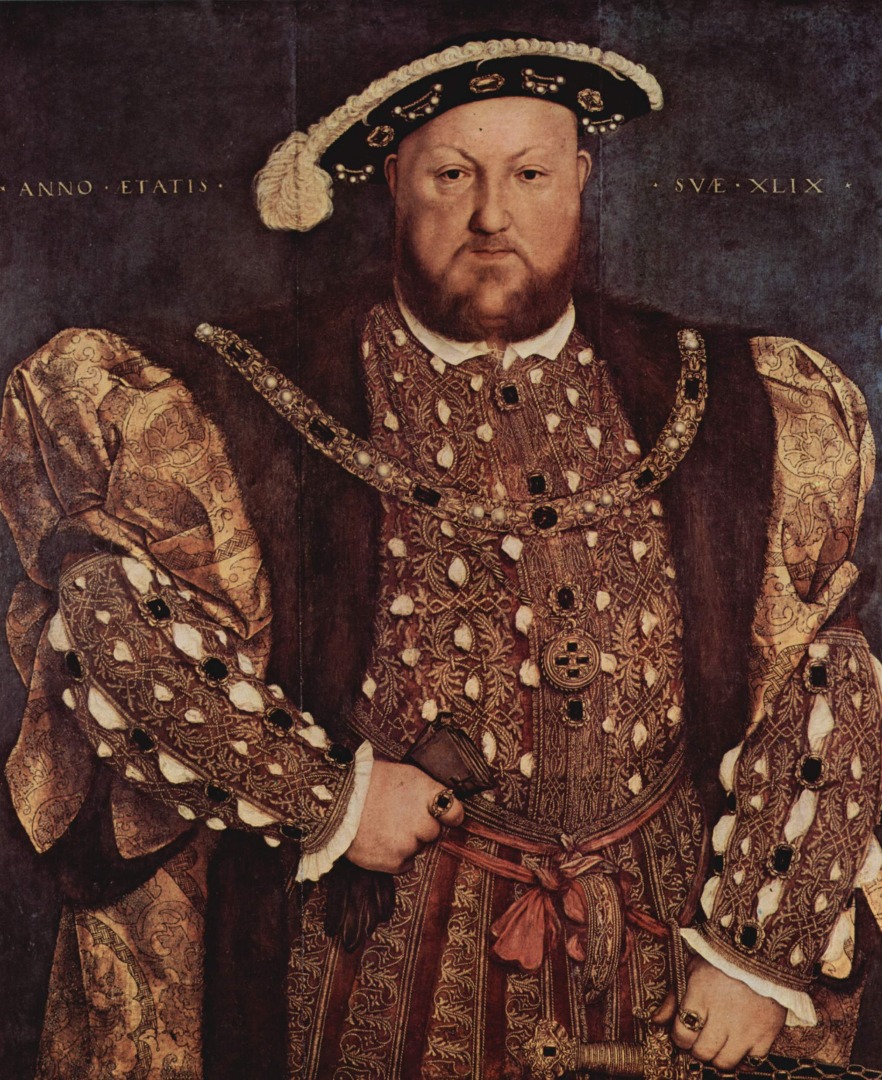
Portrait of King Henry VIII
King Henry VIII

In the north, often impoverished by war and less productive than further south, the many poor had always relied heavily on the support provided by monasteries made rich by the charitable gifts of centuries of pious donors. In Yorkshire alone there were ninety hospitals caring for the sick, elderly and foundlings and northern monasteries often also maintained the infrastructure of roads and bridges. After their closure monastic land was often “given” (i.e. sold) by Henry to anyone who was prepared to pay for it and, inevitably, it was those down south close to Henry who had the first pick. Large parts of Yorkshire became the property of southern men who had no interest in local problems or customs. The poor were thrown onto their own slender resources, or the dubious charity of landowners.

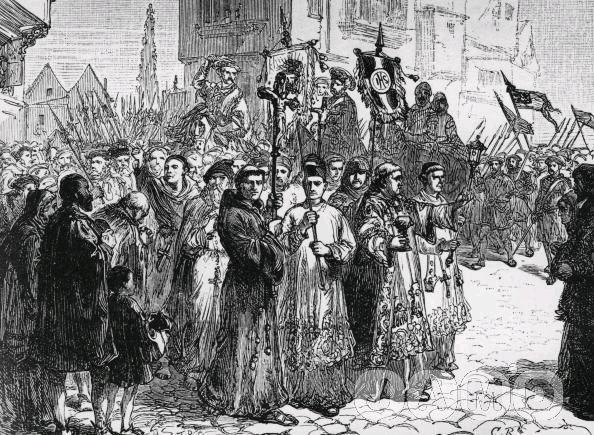
Black and white illustration of the Pilgrimage of Grace
The Pilgrimage of Grace

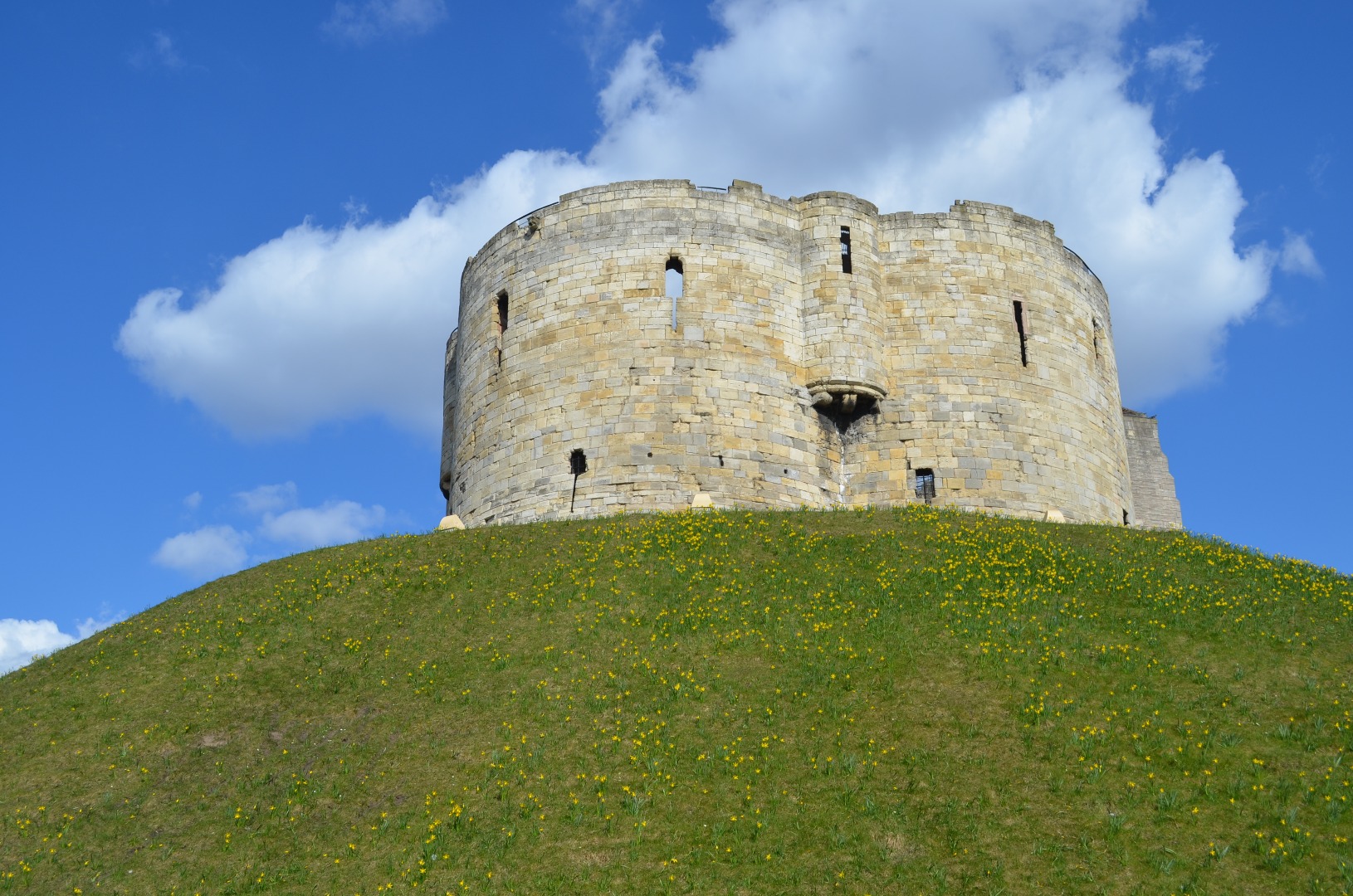
But what of those great northern lords who had held so much power? Outraged by the changes Henry was making to their religion as well as what they considered was their own loss of prestige in a court filled with southern low-born people like Cromwell, they attempted to ‘encourage’ the king to change his ways by joining, together with many ordinary northern folk, in a peaceful protest march to London: the Pilgrimage of Grace. Peaceful it may have been, but the numbers involved were considerable and, to the king, threatening. Persuaded by fair words to go home when they reached Doncaster, those who took part, noble as well as common, found themselves ruthlessly hunted down in subsequent months. Soon those ancient northern families were cowed into submission by the hanging, drawing and quartering of some of their members. Lesser mortals, including churchmen, were hanged. Fines and taxes followed, seriously impoverishing better off northerners.

Photograph of Cliffords Tower in York where Robert Aske was executed
Cliffords Tower in York where Robert Aske was executed

In 1541 Henry finished the job by making a Great Progress to Yorkshire to demonstrate his own kingly glory, graciously accepting the homage (and gifts) of towns, their councillors kneeling before him, humbled by poverty.

There were later rebellions, but none that really come so close to success. Game set and match to Henry!

Walthamstow: Beating the bounds

Most people, even if they’ve never visited, know that Walthamstow is somewhere in the suburbs sprawling across north-east London, and most Londoners know that it’s a last stop on the Victoria Line of the Tube. They’ve all probably heard of the area’s famous associations: William Morris, a former greyhound racing track, and Europe’s longest outdoor street market.

But perhaps many of today’s residents would struggle to say exactly where Walthamstow starts and the neighbouring areas begin. These days it doesn’t matter too much, but there was a time when knowing the boundaries of the area was all-important for the locals. And, understanding how Walthamstow’s boundaries have been recorded over the years tells us a lot about its history.

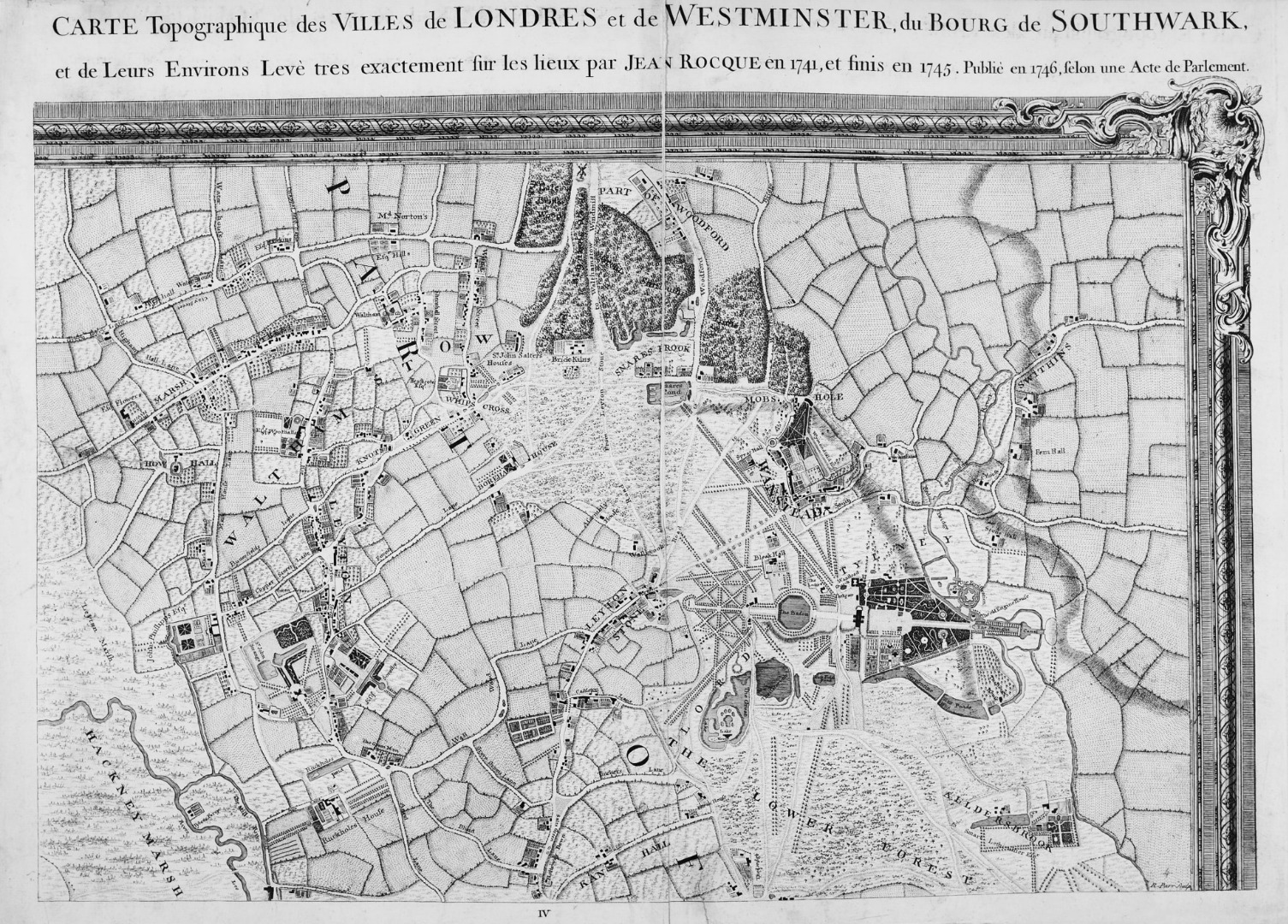
Map of Walthamstow in 1744
Walthamstow in 1744 (Credit: London Metropolitan Archives)

For many generations, there was a ceremony carried out called beating the bounds. It was a folk custom, common in rural areas, in which locals, churchwardens and parish officials perambulated around the boundaries of the parish to remind them of where the borders lay. Popular memory and the knowledge in people’s heads mattered in those days when maps were scarce and administrative records were less systematic.

The boundaries of where Walthamstow met a neighbouring parish such as Tottenham or Leyton were often highlighted by crosses painted on stonewalls and trees, or were marked by a brook or hedgerow. In some places, wooden stakes were hammered into the ground. Often the perambulation took place during Rogation Week and there was a procession of locals who beat drums as they stopped at each marker. The walkers were often fuelled by bread and cheese, and beer. Another tradition was to carry willow wands and to use them to ‘beat’ the bounds. The ceremony was carried out every few years or so.

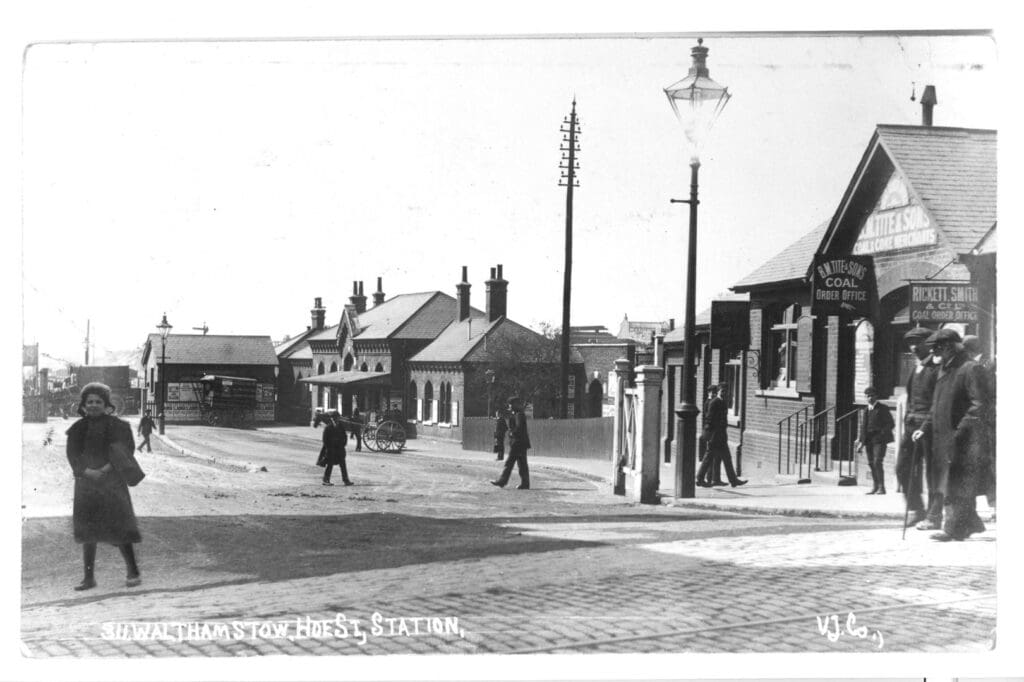
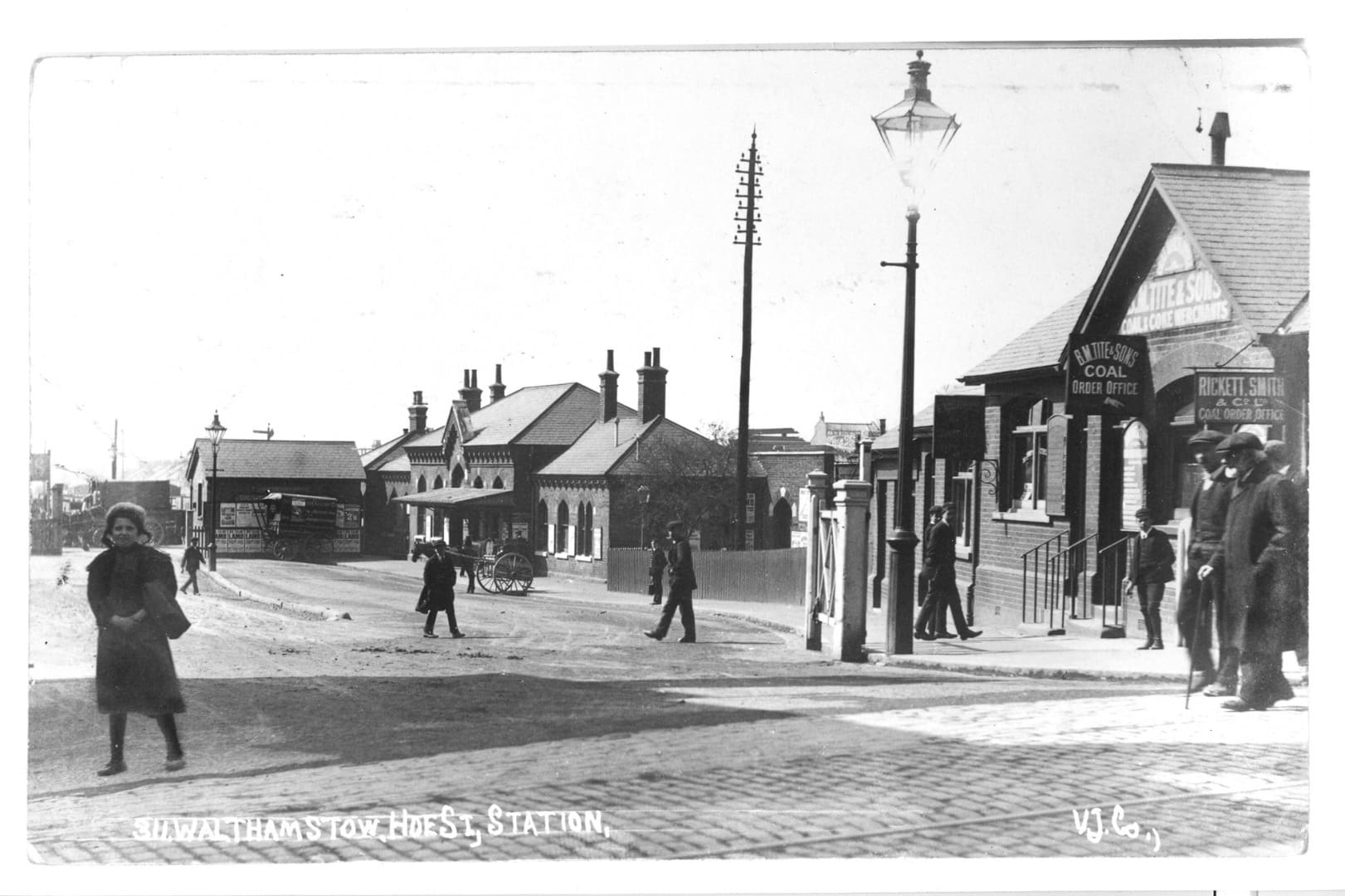
Hoe Street Station, Walthamstow in the early twentieth century
Hoe Street Station in the early twentieth century (Credit: Vestry House Museum)

The only problem was that as the parish developed, trees were chopped down, hedges uprooted, and sometimes the wooden stakes were moved. In some locations, a farm building was built across the parish boundary. In time, no one knew where one parish began and the other ended in some places. Walthamstow always had the historical boundary of the River Lea to mark it off from Tottenham except that his borderland area was mainly meadowland even into the nineteenth century, and Walthamstow even had small patches of ground on either side of the river. So, there could be confusion between the two communities about exactly where their respective parish boundaries lay.

These borders mattered in the days when each parish and its vestry was more or less a self-governing unit responsible for everything from maintaining the roads to caring for the poor. It’s thought that the Walthamstow’s vestry last organized a complete beating of the bounds in the 1860s. Even then Walthamstow was still a parish in Essex with largely a landscape of open countryside and a rural heart. But even by then it’s likely that the ceremony was mainly a ritual rather than having any administrative purpose.  Some people by then regarded the ceremony as a little anachronistic. In the mid-Victorian period, the railways were approaching and within a few years a direct line was built from London to Walthamstow. Beating the bounds probably seemed to belong in the past to some people.

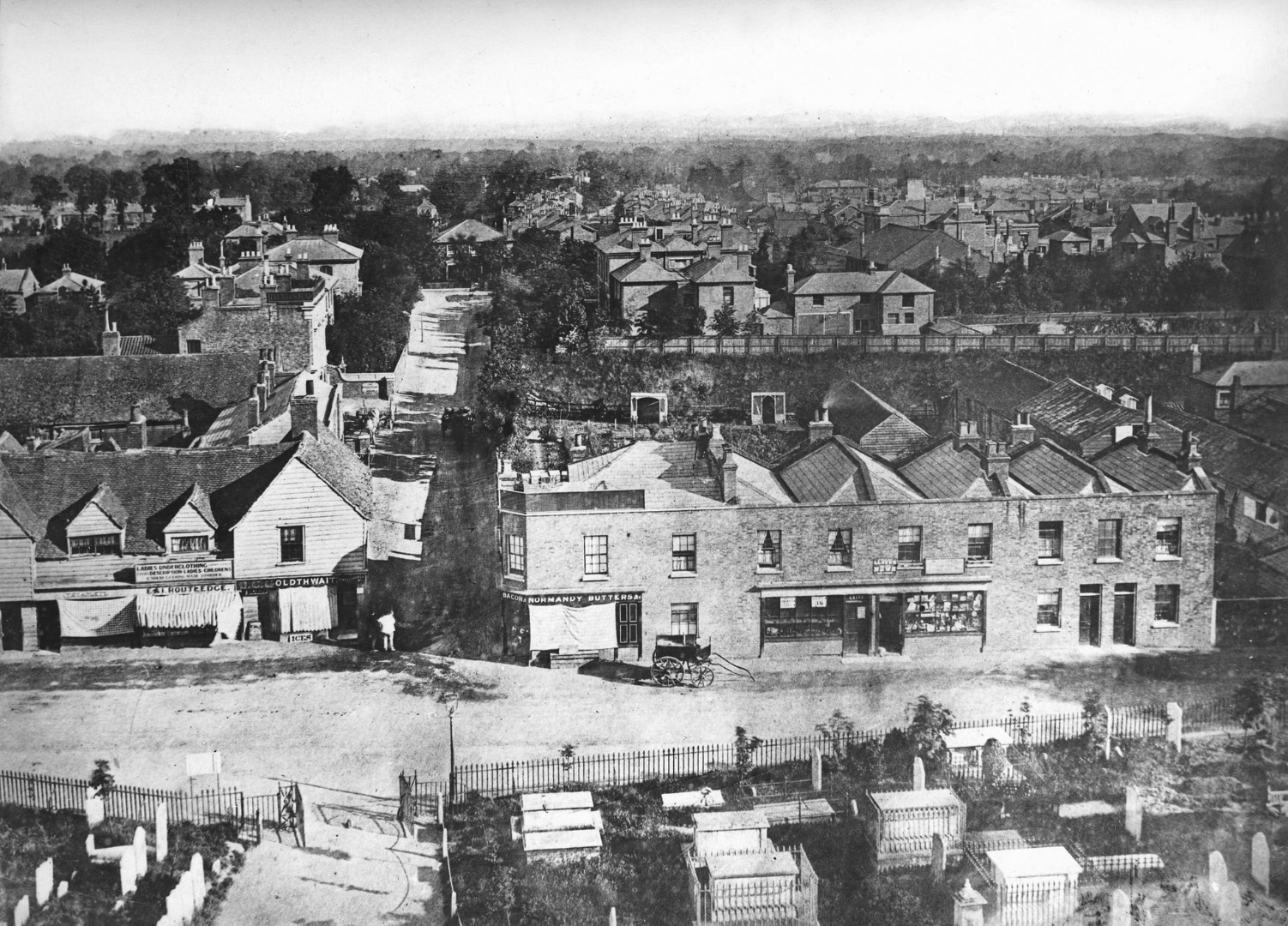
The view from St Mary's Tower, Walthamstow in the 1870's
The view from St Mary’s Tower in the 1870’s (Credit: Vestry House Museum)

But like many folk traditions, the custom underwent a revival in the twentieth century. One of the revivals was for Walthamstow’s celebration of the Festival of Britain in 1951 when a party of schoolchildren and members of the local history society toured around the old boundaries of what was then a municipal borough and administratively part of Essex. In the mid-1960s just as the municipal borough of Walthamstow was merged with Chingford and Leyton to form today’s London borough of Waltham Forest, there was another revival of beating of bounds. In those post-war years, it was done in a humorous spirit and partly as a history lesson.

So, these days it’s still interesting to find out more about the old boundaries of a village, parish or town. There probably won’t be any crosses marked on old trees to guide you, not at least in most areas of London, but it’s still a little local knowledge worth having.

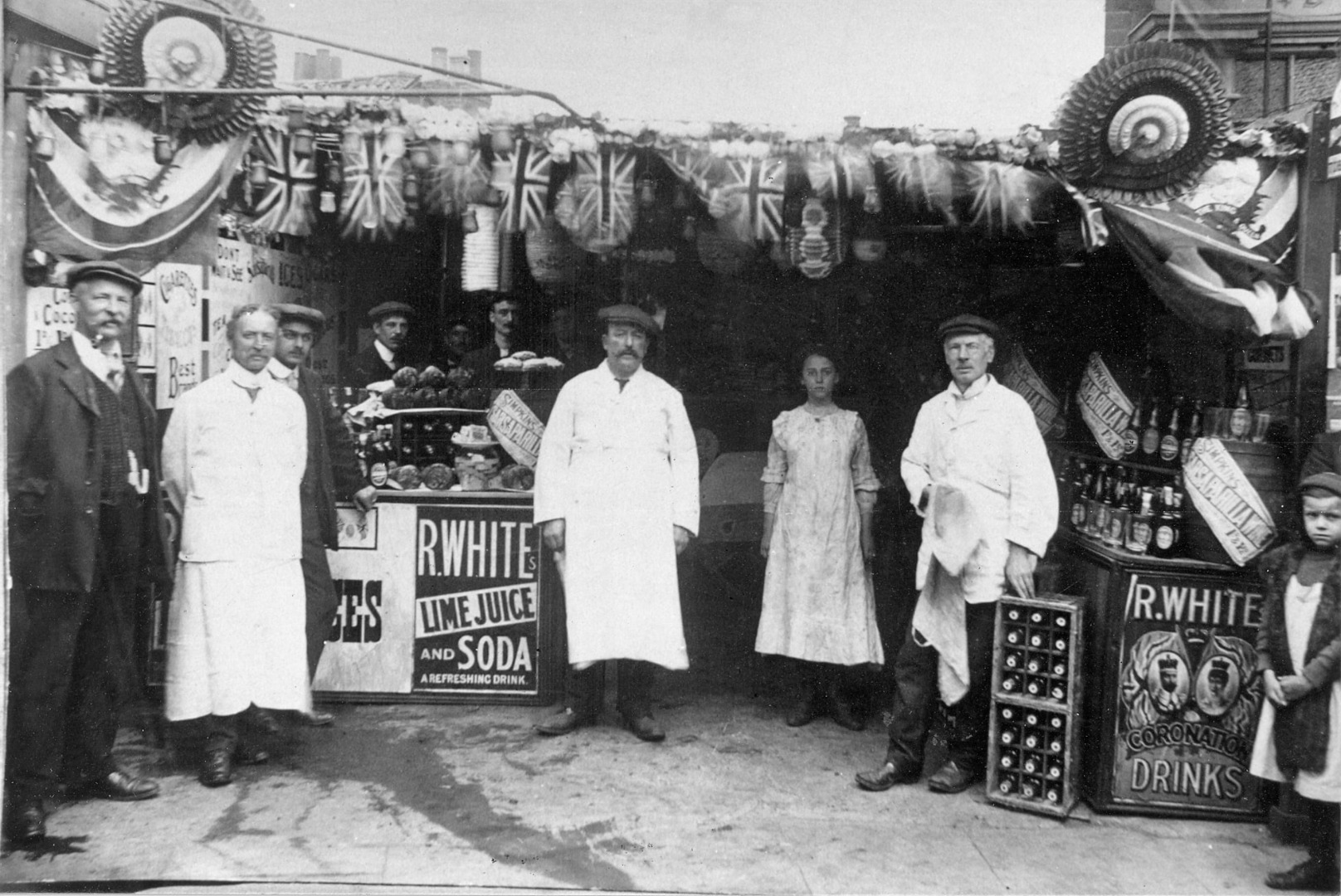
Ernest Rolfe's stall on Walthamstow high street
Ernest Rolfe’s stall on the high street (Credit: Vestry House Museum)

Helmet history: Impractical German headdress

We are almost all surrounded by and governed by the need for status. Large businesses and government bureaucracies know this. They use it to control us and motivate us.

Only some get large offices, large desks, speaker phones, and secretaries. Fewer still have window offices or private secretaries. People work hard to gain these outward signs of success. From my experience in a large corporation they also spend countless hours trying to figure out how to get status symbols they are not entitled to.

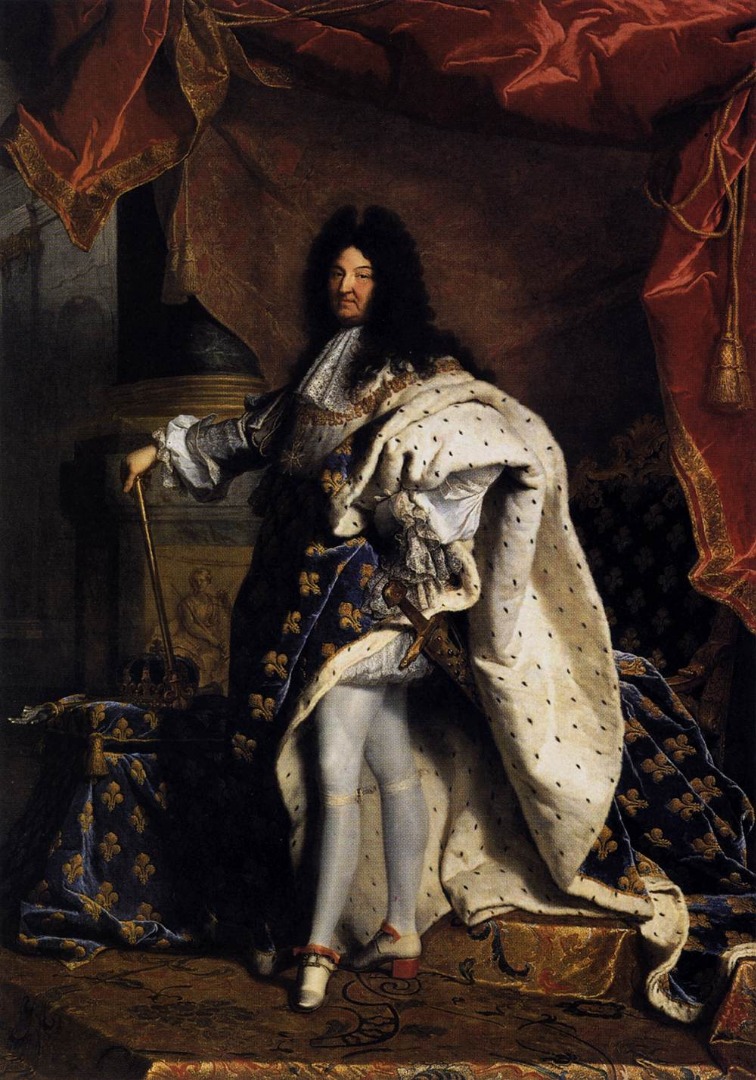
This striving for status is not a new phenomenon. Louis XIV, the Sun King, was a short man, 1.63 m (5 ft. 4 ins.) tall. He whole-heartedly adopted the new trend of high heels on shoes that had come into France from Persia. His were 10 cm (4 ins) high and red because that colour dye was striking and expensive. He was widely copied and in 1670 he issued an order that only a limited few of the nobility, the members of his court, could wear red high heels on their shoes. The red heels became such a power symbol of status that men wore them whenever they could.

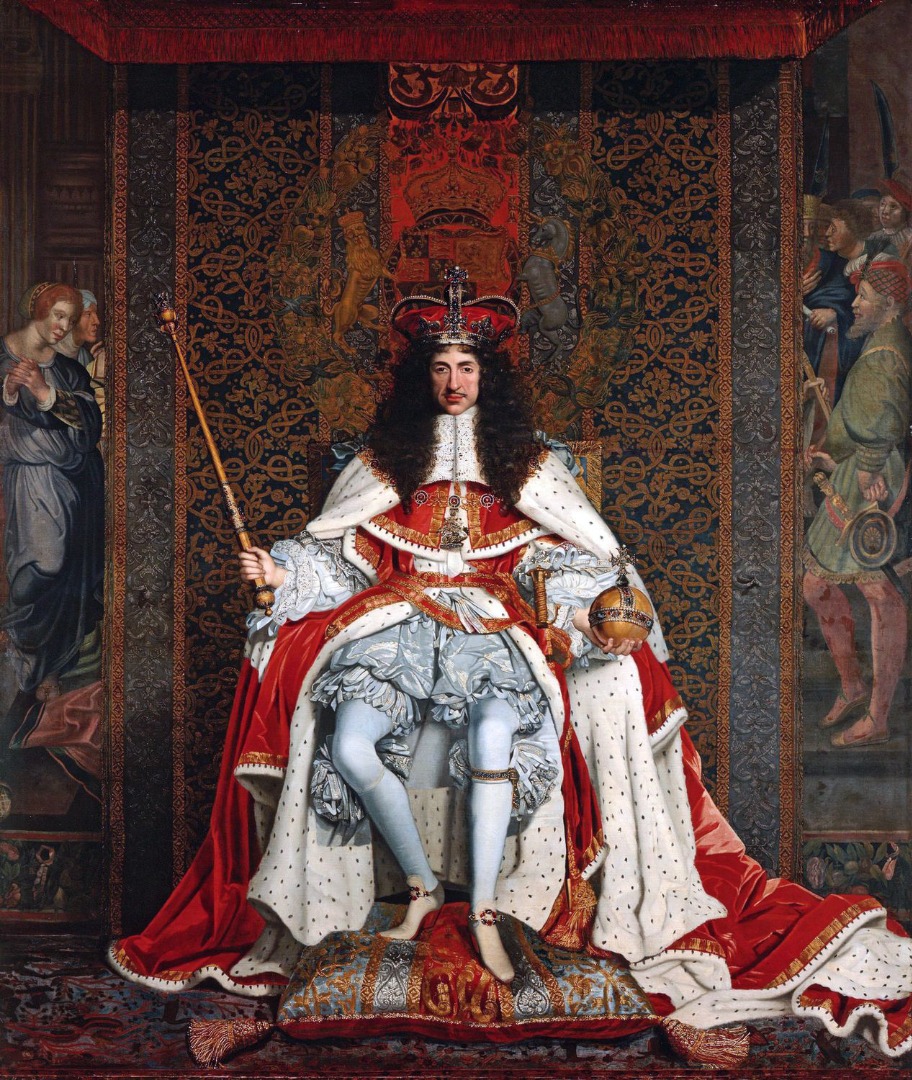
Charles II of England who was 1.85 m (over 6 ft.) tall wore red high heels in his coronation portrait and presumably for his coronation. Even an English king wanted to show a tie to high Versailles status.

King Louis XIV of France's red heels, from Hyacinthe Rigaud's 1701 portrait
King Louis XIV of France’s red heels, from Hyacinthe Rigaud’s 1701 portrait
Charles II's coronation portrait
Charles II’s coronation portrait

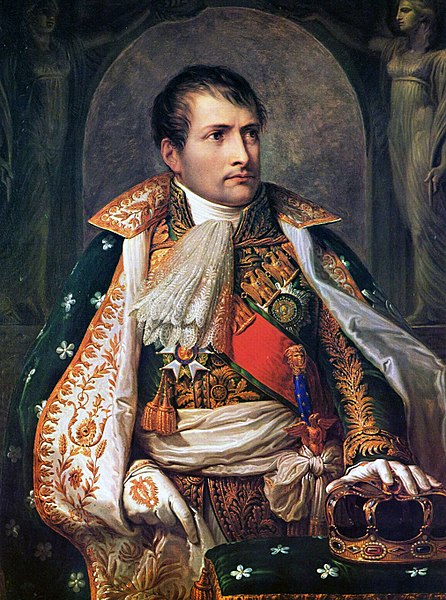
The military which at bottom is a large bureaucracy has long used men’s need for recognition and status to build esprit de corps and spur men on to outstanding actions. Napoleon once said, “A soldier will fight long and hard for a bit of coloured ribbon” He also said this about medals, “Some people call them baubles. Well, it is by such baubles that one leads men.”

Portrait of Napoléon Bonaparte
Napoléon Bonaparte

Esprit de corps can be built by distinctive items of uniform that mark the regiment as an elite unit or at least different from the others. The old pre Great War British Army specialised in this. Its infantry when compared to the infantry of France, Germany and Russia positively abounded in distinctive uniform elements. These included the Foot Guards bearskins, the fusiliers’ raccoon and sealskin hats, special uniforms for the highland and rifle regiments, and the lowland regiments in their trews with three different types of headdress.

There were five different types of cavalry: household, dragoon guards, dragoons, hussars and lancers. Each had its own uniform and headdress. Then on top of that there were different headdress, collar, shoulder and arm badges for them. It was all enough to make a girl swoon.

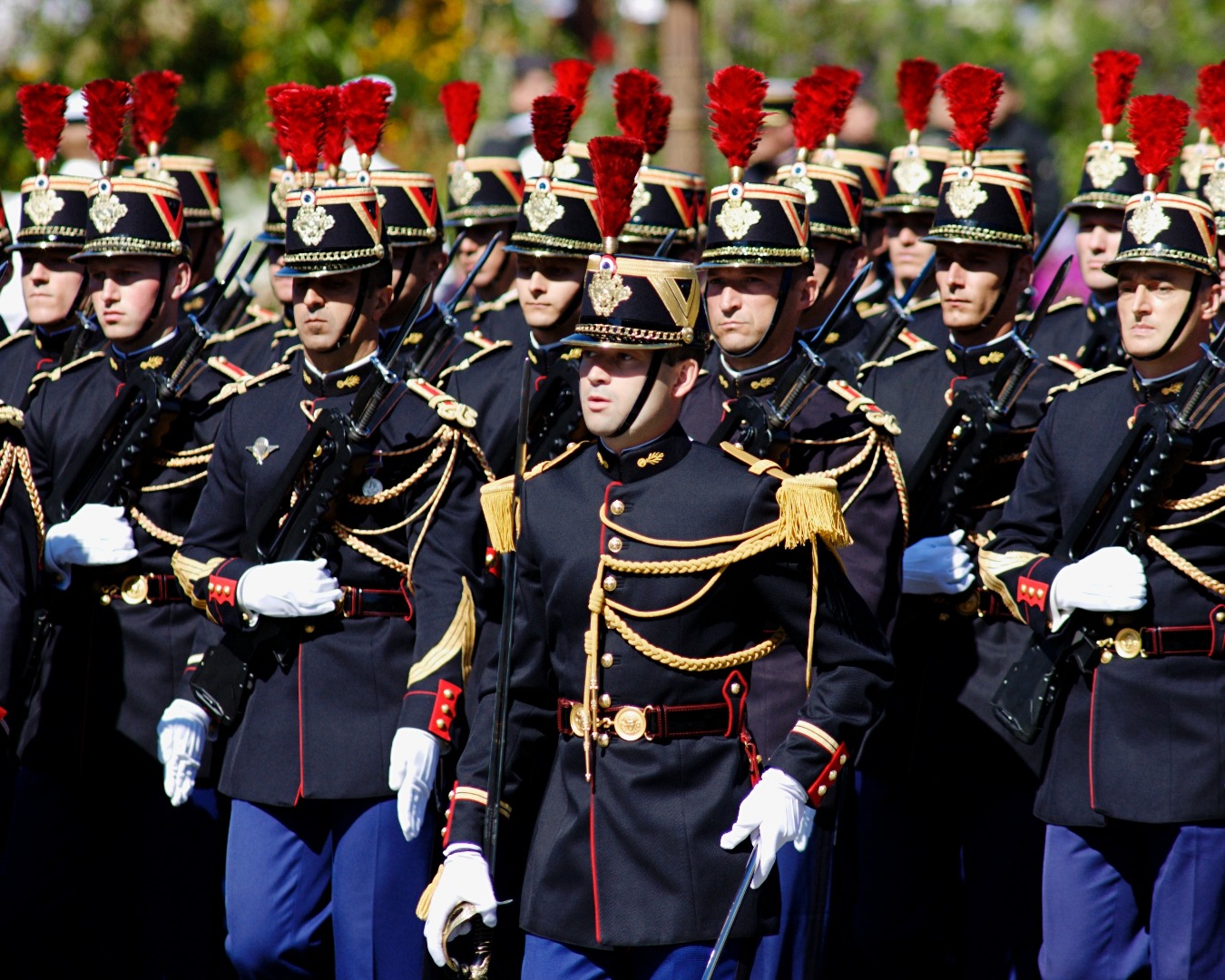
In contrast the other Great Powers’ armies were more subdued. Republican France after the colourful uniforms of the Napoleonic era were down right Puritan.

The 1st Infantry of the French Republican Guard
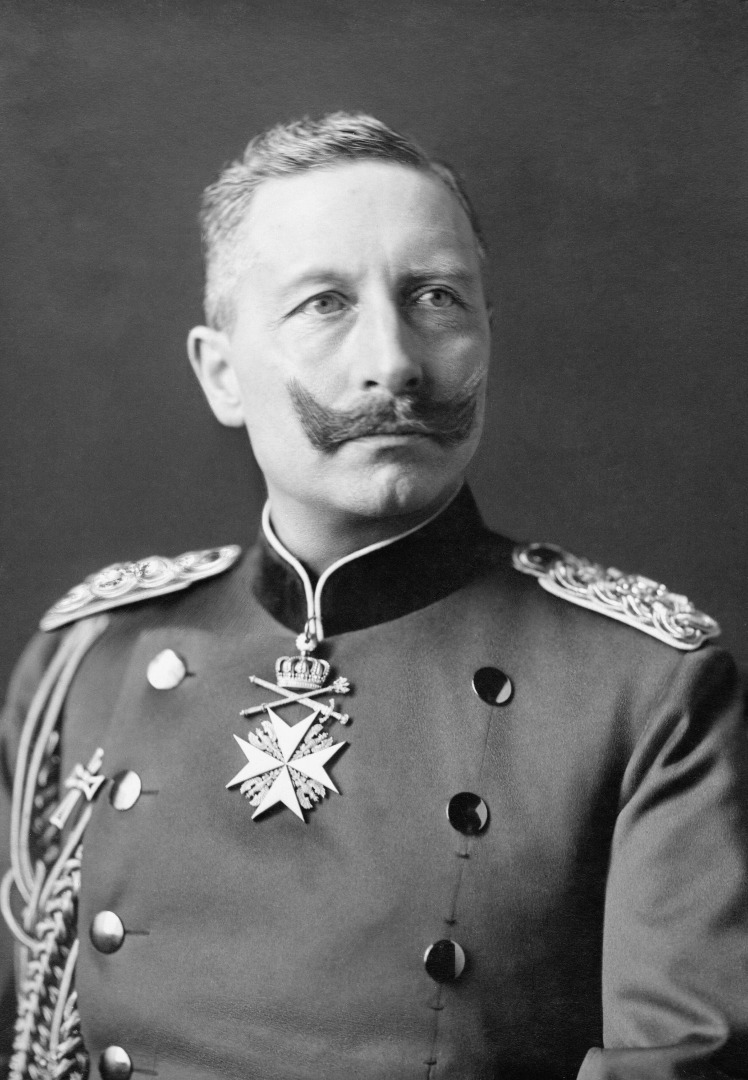
Kaiser Wilhelm II of Germany, 1902

Prussia had a tradition of being thrifty and sober, and this reflected in its uniforms. However, in some cases it borrowed uniform traditions from Russia and when Wilhelm II came to the throne Germany was rich and powerful. This effected his and others’ outlook on the world. The result of these factors was some very outlandish, bizarre and impractical helmets that men were proud to wear because it showed they were members of high status regiments.

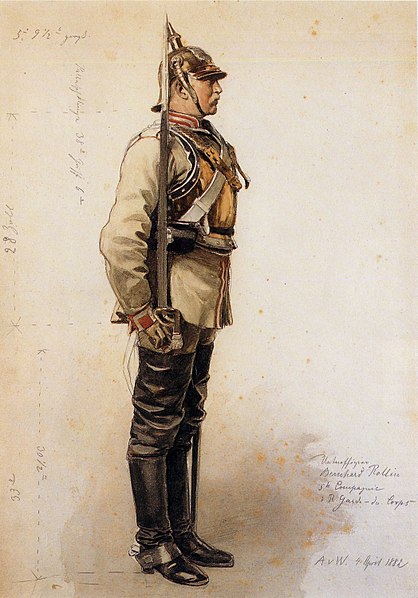
Eagle Helmet

Prussian cuirassier of the Garde-du-Corps by Anton von Werner, 1882

Two guard cavalry regiments were marked by eagles on their full dress helmets. One was the Gardes du Corps, perhaps the most prestigious cavalry regiment and maybe the most prestigious regiment of the entire German army. The other regiment was the Garde Cuirassiers regiment which while very prestigious did not attract as many high ranking nobles as the Gardes du Corps. In fact, it did not have as many as several other guard cavalry regiments such as the 3rd Guard Lancers, the 1st Guard Dragoons or the Life Guard Hussars.

The eagles on the top of the helmets for the two guard cuirassier regiments were adopted in 1843 at basically the same time the cuirassier helmet was adopted by the Prussian army. We are so use to seeing this helmet and as collectors lusting after them that we don’t really stop to think how impractical they are. They make no pretense of being something that could be worn in battle.

Lion Helmet

Another helmet that falls in this category is the lion helmet worn by the Saxon Guard Reiter Regiment. (Leib Cuirassier Garde Regiment) This regiment in full dress wore a lion on its helmet in honour of the old Margrave of Meissen, an ancestor of the King of Saxony. The lion was awarded in 1907.

If possible this helmet was even more impractical than the eagle helmets as it tended to get off balance easily.

Mitres

The next item of headdress is not truly impractical as it, like the British Foot Guard’s bearskins, was at one time worn in combat. But, to modern eyes it looks odd and a bit comical,

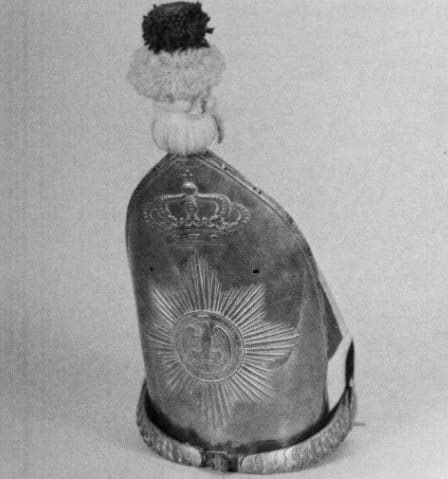
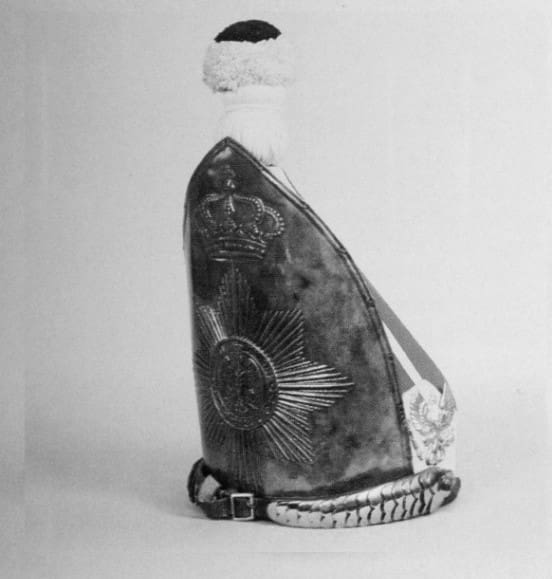
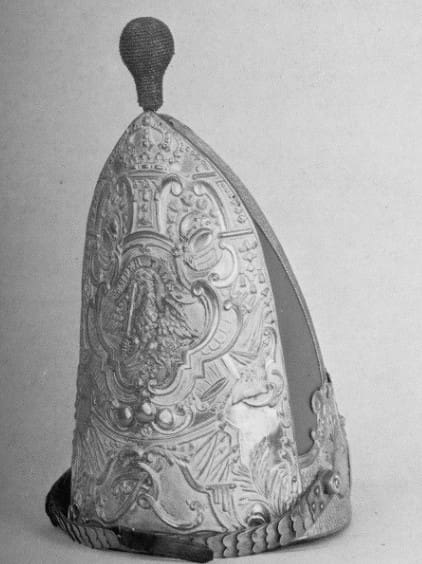
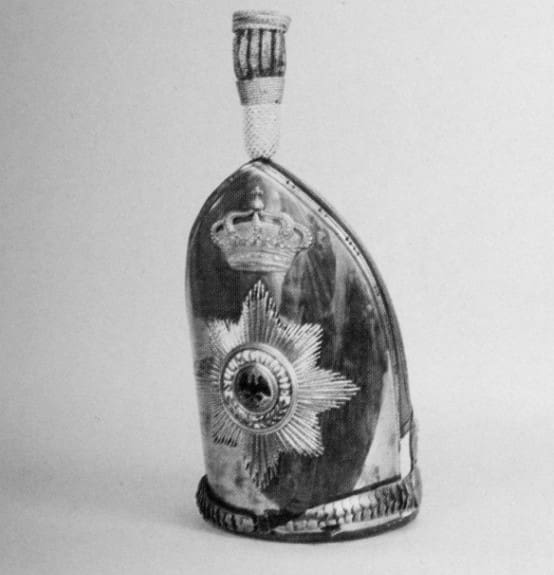
The mitre is descended from low cloth caps worn by grenadiers in the 1700s in place of the standard tri corner hat. It is often said that this was done in order to allow the grenadiers to throw their grenades without hitting one corner of their tri corner hats. Since grenades were normally thrown underhanded this is probably not the reason. A more likely reason was to allow them to put their muskets on over their heads. These caps in southern and central Europe were adorned by a bearskin while in Prussia and other northern countries they were fitted with a brass or cloth plate in front displaying armorial bearings. In time the front plates grew taller and more dominant.

On March 30,1824, King Friedrich Wilhelm III of Prussia awarded the second battalion of the 1st Foot Guards Regiment mitres. This was a mistake. It was the first battalion that had the historical tie that entitled them to wear the mitres. So much for Prussian efficiency. This error was corrected in August of 1824.

1st and 2nd Battalion of the Kaiser Alexander Guard Grenadiers Enlisted Men’s Mitre
1st and 2nd Battalion of the Kaiser Alexander Guard Grenadiers Enlisted Men’s Mitre, © Eric Johansson
Officer’s Parade Mitre
Officer’s Parade Mitre, © Eric Johansson

The mitres were likely given in an effort to improve the general morale of the Prussian army which after the humiliating defeats by the French army in 1806 needed a boost in morale. Looking back to the military feats of Frederick the Great would help.

In 1843 the 3rd (Fusilier) Battalion was awarded a smaller, somewhat different mitre. Other sources say it was in 1848.

3rd Battalion of the 1st Foot Guards Enlisted Men’s Mitre (1849-97)
3rd Battalion of the 1st Foot Guards Enlisted Men’s Mitre (1849-97), © Eric Johansson

The 1st Battalion of the regiment wore from the summer of 1889 on, a banner which said “Semper Talis”. This was because of a supposed tie by the 3rd and 4th companies to the old Giant Grenadier Guards of Friedrich Wilhelm I. Between January 27, 1889, and summer only, the 3rd and 4th Companies had been allowed to wear the banner.

Then on January 9, 1894, Kiser Wilhelm bought a new style of Baroque mitres for the 1st Battalion of the regiment. The Prussian war ministry then paid for the new Baroque mitres of the 2nd and 3rd (Fusilier) Battalions. The new mitres were copies of mitres worn by the Guards Regiment (No 15) under Friedrich the Great. 

The “Semper Talis” banner worn in the past exclusively by the 1st Battalion was now also stamped on the front of the mitre of the 2nd Battalion.

The new mitre plate for the 3rd (Fusilier) Battalion had a stamped banner which said “Pro Gloria et Patria” which had been on the Grenadier Mitres of Regiment 35 of the Frederician Army.

Officer’s Mitre of the 1st Foot Guards, 1st and 2nd Battalions after 1894
Officer’s Mitre of the 1st Foot Guards, 1st and 2nd Battalions after 1894, © Hermann Historica

After 1912, the 200th anniversary of Friedrich II’s (Friedrich the Great) birth, the wearing of the Grenadier mitre was extended to the regiment’s mounted officers while on horseback.

The design of the new mitres was a big change and as with any change it was not universally popular. The new mitres were derided by some wearers as ‘party hats’ or as ‘coffee funnels’. Ironically the first jibe came true when after World War I the Baroque mitres were bought and used as party hats for carnivals along the Rhine. This and their short service life is why it is basically impossible for military collectors to find examples of them.

Their headdress may have looked odd, even comical, but the 1st Foot Guards yielded to no one on prestige. And like the red high heels men were proud to wear them.

Many considered the 1st Foot Guards the most prestigious regiment in the German army. It had extremely close ties with the Prussian royal family. For years it had been the custom for Prussian princes to become officers in the regiment at the age of ten.

1st Foot Guards
1st Foot Guards © Wendell Schollander

This was more than just being enrolled in the regiments. There are accounts of a prince writing how hard it was to keep in step on parades with the larger men who took longer steps.

One mark of the regiment’s prestige was that young men tried hard to get into it. Strings were pulled, personal contacts used and political and social pressure was shamelessly applied whenever possible. Mortal men can take only so much of this. One result was that the authorities gave in and let the young men in the regiment. The Prussian Officers List shows that the junior ranks of the 1st Food Guard have more than the regulation number of junior officers and more than the other standard infantry regiments. The Gardes du Corps showed the same tendency. In 1913 it had fifty percent more lieutenants in its ranks than the regulations called for.

In 1894 when the new Baroque mitres were issued the Prussians were far too thrifty to simply throw away the old mitres. Instead they passed on the out of date mitres to the Guards Grenadiers Regiment No. 1. The regiment received the mitres in 1896. The banner that read “Semper Talis” had to be removed from them. This left two small holes in the mitres’ front plates above the star of the Order of the Black Eagle. These mitres with holes gradually disappeared as they were replaced with new mitres. Today the mitres with holes are rare collectors’ items.

When World War I ended these mitres did not meet the fate of their Baroque brothers. They had enough fame and prestige to become collectors’ items almost right away and were thus saved.

Bomber Command in the Battle of Britain: Stories of The Many

White vapour trails twisting and turning in an azure sky, Spitfires and Hurricanes roaring through the thin air, bright sunlight glinting off their wings, machine guns spitting out destruction and defiance, grateful crowds far below gazing in awe at the gallant modern-day knights defending the realm from a cruel and skilful enemy. Such is the traditional and popular view of the Battle of Britain but – without taking anything away from the inspirational exploits of The Few – it is at best a partial one.

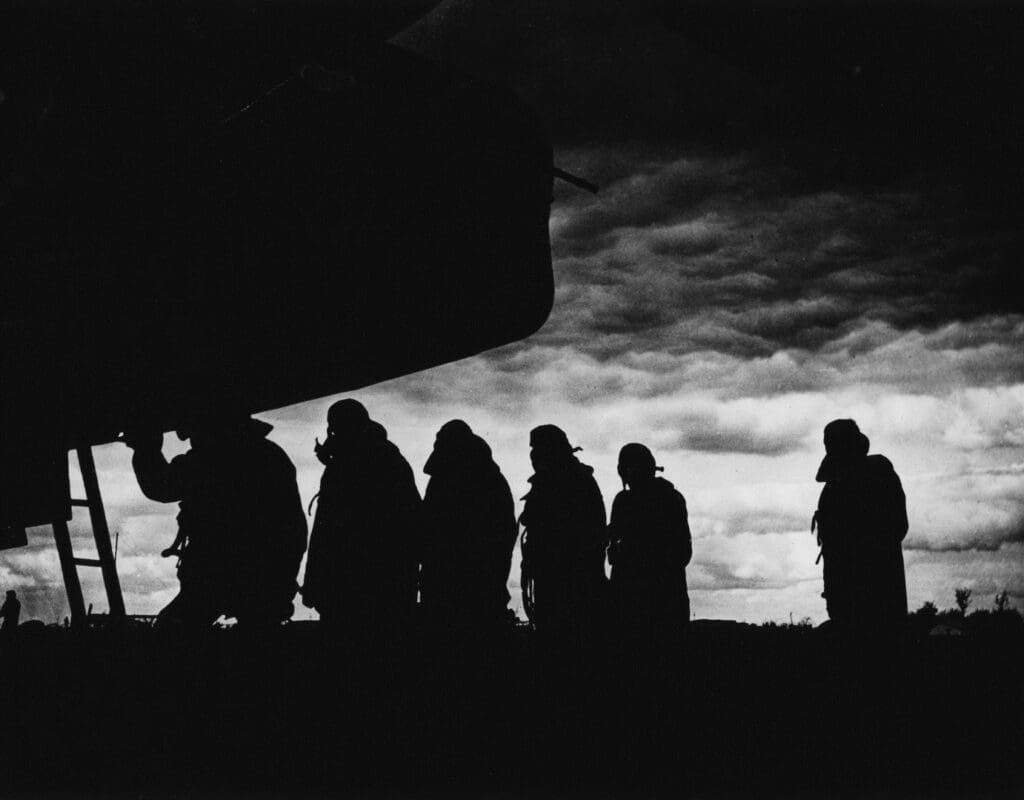
The role of The Many in Bomber Command often remains overlooked and neglected. Night after night, the bomber crews ranged far and wide over Occupied Europe, often in atrocious conditions, seeking out and attacking targets in an all-out attempt to undermine the German war effort against Britain and prevent the imminent invasion. The Battle of Britain for these airmen was very different but no less deadly.

A few of The Many - the crew of a 102 Squadron Whitley
A few of The Many – the crew of a 102 Squadron Whitley

The parsimonious and languid approach of successive governments to military spending after the Great War had a significant and deleterious effect upon the RAF and the years slipped by with precious little investment in new aircraft, equipment and training. Indeed, a Royal Flying Corps veteran returning to the colours in, say, 1934 would have needed little more than a light refresher course before becoming fully operational once more. At the end of that year, there was still not a single bomber in service that could from an airfield in Britain reach the nearest point in Germany, deliver more than a paltry 500lb bomb load and return. If an attempt had been made in daylight, the lumbering bombers would have been easy prey for anti-aircraft guns and a new generation of fighters. If the attempt had been made by night, the problems of navigation, target location and accuracy in hostile skies almost precluded success and a safe return. The matter did not end there for there had been a similar degree of stagnation and paralysis in defensive armament, ordnance and general training, especially at night. Even the very welcome introduction of new and far more capable aircraft like the Wellington, Hampden and Whitley did little to remedy many of the deficiencies in the Command. Indeed, they underlined the long-held belief that Bomber Command was a decisive weapon of war, capable of destroying a hostile nation’s capacity and will to wage war.  More than that, as Prime Minister Baldwin had famously opined in November 1932 ‘the bomber will always get through’ and, as a result, as key component of defending the nation was to have the capacity to bomb an enemy harder and more often than he could you, an early form of Mutually Assured Destruction. Added to the mix much later was the almost unthinkable imperative of having to prevent a direct invasion. The gulf between extensive expectation and harsh reality at the outbreak of war was a very wide one.

Ground crews working on a rear turret of a Whitley

The aircrew of Bomber Command in 1940 were overwhelmingly skilful career airmen determined to do their duty and carry out their orders to the very best of their ability. Time and again, the young men made bold decisions in the full knowledge of the risks entailed. On the night of 30th August, for example, 58 Squadron pilot Plt. Off. N.O. Clements, who just a few days earlier had swept over Bremen docks in his Whitley under heavy fire at just 100ft to carry out his attack and let his crew take on the searchlight and flak batteries with machine guns, found himself over Berlin in the dark. Unable to identify anything of interest through the cloud, he cruised over the city releasing his flares one by one until, his supply eventually exhausted, he reluctantly turned for home. Passing over Nordhorn, his crew spotted a large factory complex and they decided to attack it in preference to taking their bombs back, even though doing so would use up more of their dwindling fuel supply. Having done so, Clements eked out the fuel as best as he could, gently easing the bomber out over Occupied Europe and over the inhospitable North Sea, until, with the coast of Yorkshire visible on the horizon in the pale glow of dawn, the engines finally began to cough and splutter. Coaxing the bomber as far as he could, he gave the order to bail out while there was still height to do so and the aircraft was still under control. Clements knew as he gave the order that he would not have time to get out and instead attempted to ditch the bomber; it was around 05.00 hours and he had been in the pilot’s seat for nine and a quarter hours. While he and three of his crew made it, Sgt. M. Hill was caught by an off-shore breeze and drifter further out to sea, his body being lost.  Such is the thin line between life and death.

A Bristol Blenheim mid-flight
Bristol Blenheim

On another occasion, later in the summer, 51 Squadron’s Whitleys were assigned targets industrial targets in northern Italy, at the very limits of the aircraft’s endurance. Crossing the whole of Occupied Europe and then the Alps in a heavily laden bomber with little fuel or altitude to spare was no easy or quick matter but the crews managed to locate the targets in the clear conditions and left a number of fires burning. However, flying conditions had deteriorated significantly for the return-leg and the crews now faced miles of dense, ice-bearing storm clouds. Sgt. Wright held course as best he could and throttled right back to conserve precious fuel and flew as low as he dared in the hope of finding a hole in the cloud and picking up some very much needed landmark. The clock showed a gruelling twelve hours in the air before the cloud broke to reveal nothing but sea not too far beneath them. The young crew’s dismay increased as first one then the other engine spluttered and fell silent. Wright succeeded in pulling off a textbook ditching in the darkness and the crew managed to scramble out and take to their dinghy, exhausted, wet and cold, waiting for the dawn. When it came, they discovered they had been very lucky; they were just a few miles north of the River Mersey.

Survivors from a No 166 Squadron Wellington

There was little time for reflection or rest after such traumatic experiences; there was a war to be fought and aircrew were at a premium. On one flight, a young American Fg Off Henry Young of 102 Squadron found himself far out over the Atlantic when his engines began to run rough and then cut out entirely. There was little else for it but to send out a distress signal, ditch and hope for the best. Young pulled off the first of several such landings to earn the epithet ‘Dinghy’ and the men were able to clamber into the dinghy which became their wave tossed home for the next twenty two hours. Picked up by HMS St. Mary, Young and his crew returned to duty straightaway. Young eventually became a Sqn Ldr DFC but lost his life on the Dams Raid in May 1943.

When Plt Off Andy Dunn of 77 Squadron ditched on 24th September on his way back from Berlin, he knew what to expect, having ditched off Hastings early in the morning of 20th June. Things could have been far worse; nobody was seriously injured, they were in a dinghy stocked with emergency food and water and had had time to send a detailed location signal and knew they were just 80 or so miles off the English coast. There was great jubilation as a Coastal Command Hudson located them at 10.50 hours the following morning, about 100 miles east of Hartlepool and aircraft sent in relay remained reassuringly overhead for much of the day as ships set out to rescue them. However, the weather worsened rapidly and it became clear that it would be a long and difficult night, tossed about on the open sea. By 11.00 the following morning, another Hudson had spotted them again and remained on station until 13.00, by which time two destroyers were only sixteen miles away. The weather once again clamped down and contact was lost as visibility fell to almost zero, leaving the bone-weary airmen to the Fates. As daylight returned, only Sgts Riley and Allen and Dunn were still alive, the latter by now in a bad way. Throughout the following day, the search aircraft fought a number of skirmishes with German planes in the area but failed to locate the dinghy. The following day, the fourth, four Ansons and five Hudsons resumed the search in foul conditions and, against the odds, at 11.15 hours one spotted the dinghy only to lose sight of it in the squally showers and it was not until 14.00 hours that contact was re-established. Determined not to lose sight, the Hudson circled at wave top height, noting that two of the men now lay slumped motionless; with mounting horror, the crew watched as one of the figures reared up, struggled to his feet, lost his balance and tumbled into the sea – the last moments of Plt Off Dunn’s life. Barely ninety minutes later, HMS Bedouin picked up Riley and Allen and signalled ‘One fair, one very ill’, an accurate assessment as Allen slipped away within the hour. Over the four days, the dinghy had drifted over 100 miles in rotten weather; nobody would have quibbled if Sgt Riley, after such a terrible ordeal, had wanted no further part in the war. In the event, he volunteered to return to operational flying and served with distinction in 106 and later 617 Squadrons, completing 49 operations.

The long and dogged war waged by the men of Bomber Command was very different to that of the pilots of Fighter Command. What links them, however, is the courage and determination of the young airmen who were ready and willing to risk everything in defence of their country.

The NHS: Serving the nation for 75 years

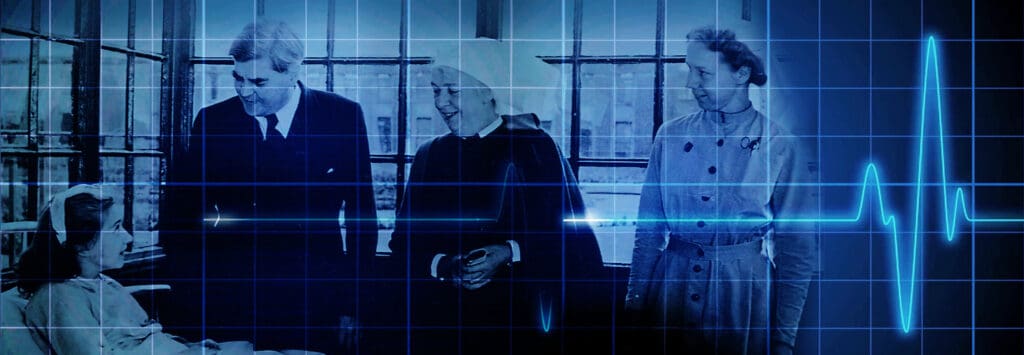
On 5 July 1948 the National Health Service (NHS) that we have all come to rely upon was launched. Its intention was to provide a comprehensive healthcare system for all, free at the point of contact and funded by taxation and national insurance contributions. As the NHS celebrates 75 years since its inception, this article reflects on its origins, its achievements and struggles, and re-evaluates the concept on which it was founded.

Pre-1948 welfare provision and healthcare was patchy and lacked uniformity. Back in the nineteenth century, many people joined friendly societies, which allowed members to put money aside for hard times, such as sickness, unemployment, old age and burial provision.  Hospitals were often voluntary and survived on philanthropic funding that was prevalent in the Victorian era. The Poor Law offered relief to the most in need and workhouses had their own hospital provision but the conditions and stigma attached to the workhouse was a major drawback.  Into the twentieth century the Liberals, led by Lloyd George, instituted a programme of reform that formed the early stages of a welfare state. They introduced a range of initiatives, including the Old Age Pension Act of 1908 and the National Insurance Act of 1911. Local government also provided a wide range of public health-related services, such as school meals and health education and by the 1930s, it included hospital provision, where many of the hospitals that had been run by the Poor Law were incorporated into local authority control.

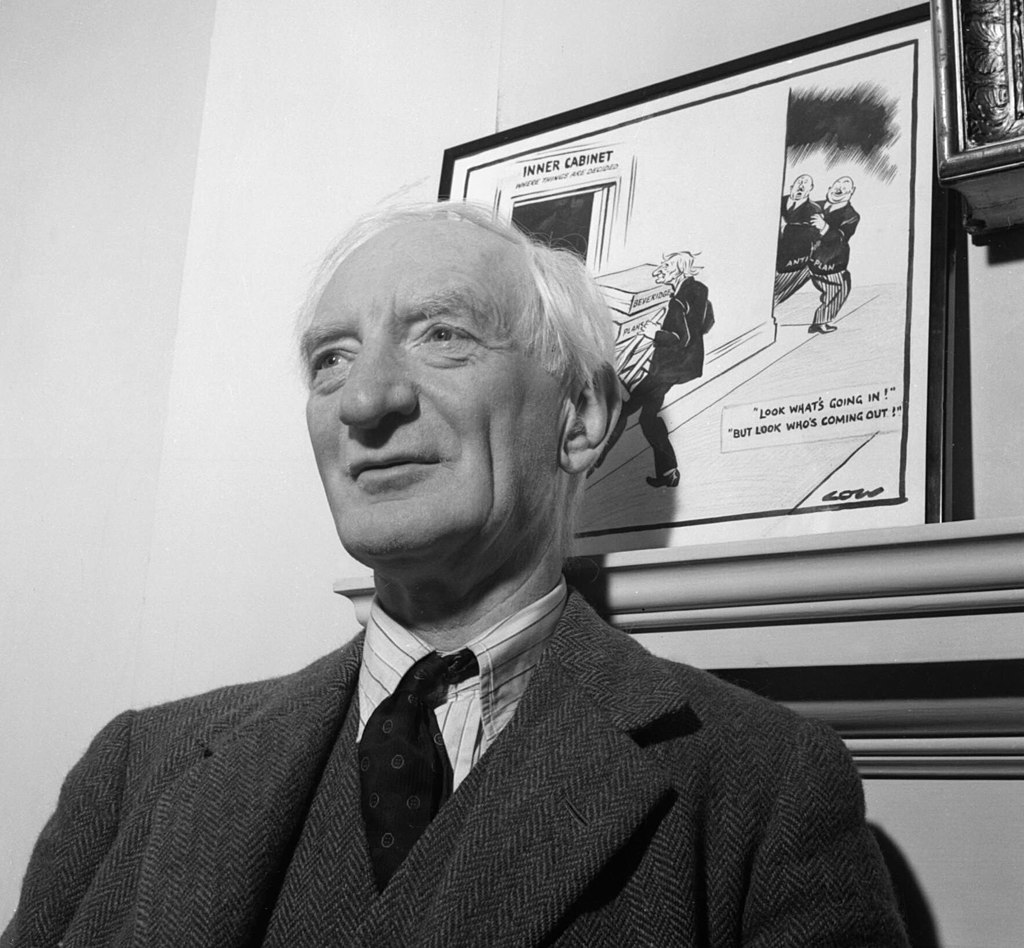
Health reform accelerated in consequence of wartime experiences, notably World War Two, since there became an overwhelming need for a healthcare system to cope with both military and civilian casualties. As part of plans for post-war reconstruction the wartime coalition government commissioned a review led by William Beveridge. His 1942 report not only covered health, but provided a blueprint on the future of social insurance and a means to provide a cradle to grave system of welfare provision. 

Photograph of William Beveridge
William Beveridge
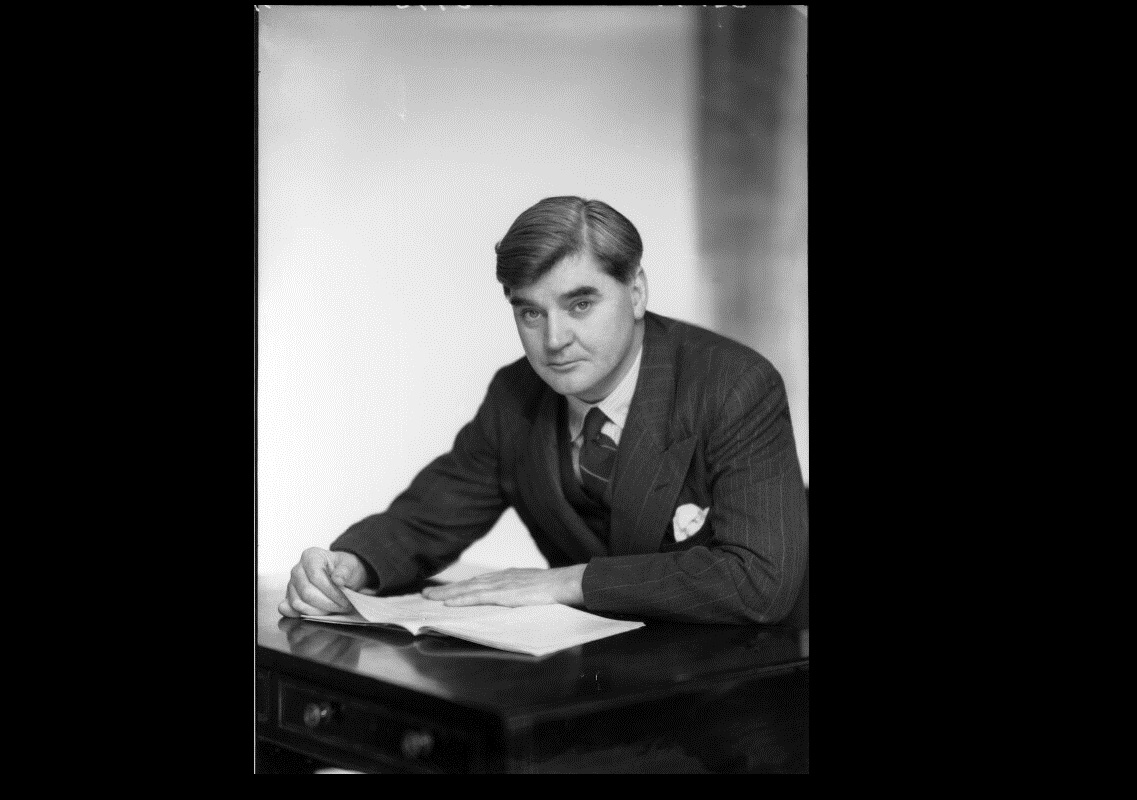
Photograph of Aneurin ‘Nye’ Bevan
Aneurin ‘Nye’ Bevan

In 1946 the National Insurance Act established a more comprehensive provision for unemployment, sickness, maternity and pensions; and the National Health Service Act intended to provide a universal system of health provision, that was free at the point of use and included dental and eye care. The 1945 election brought Labour’s Clement Attlee to power and he began instituting the finding of the Beveridge Report, including development of the National Health Service.

National Health Service leaflet, May 1948

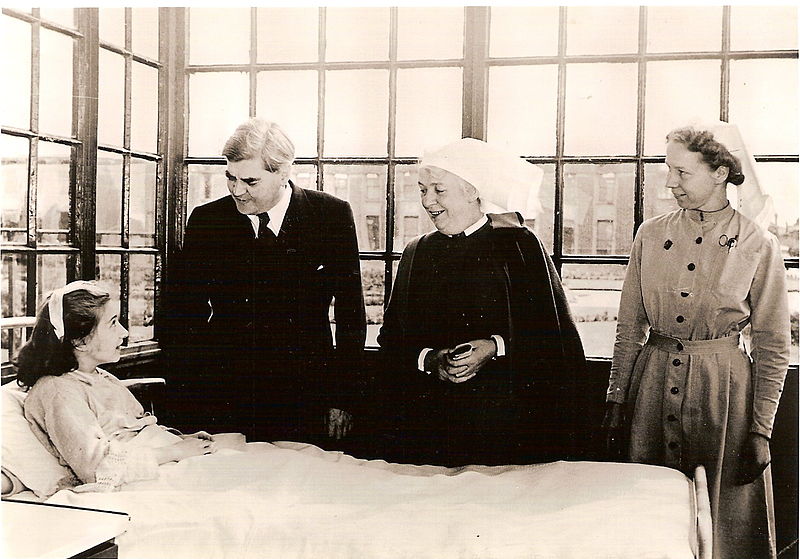
On 5 July 1948, Health Secretary Aneurin (Nye) Bevan officially launched the NHS at the Park Hospital (now Trafford General) in Manchester.  It was founded on a number of key principles, though at its heart its mission was to provide a comprehensive service for all, regardless of status. It was a three-level system of health care – hospitals; general practice, dentistry, and opticians; and local authority services managing preventative and community healthcare. In 1958 vaccinations for polio and diphtheria were launched and subsequent immunisation programmes took this preventative medicine further. 

Anenurin Bevan on the first day of the National Health Service, 5 July 1948 at Park Hospital, Davyhulme
Anenurin Bevan, Minister of Health, on the first day of the National Health Service, 5 July 1948 at Park Hospital, Davyhulme, near Manchester

The NHS has witnessed some major medical ‘firsts’, including the first UK kidney transplant in 1960; the introduction of the ‘pill’ in the 1960s; the first heart transplant in Britain in 1968; the first ‘test-tube’ baby born in 1978 at Oldham Hospital; and the introduction of MRI scanners in the 1980s. Its remit ever since 1948 has also had a strong emphasis on preventative healthcare. Campaigns on drugs, alcohol, smoking, diet and lifestyle have been both welcomed in attempts at educating to prevent illness and save the NHS money, yet also criticised for creating a nanny state culture. So one debate that continues to resonate is where does individual responsibility for their health end and the State take over??

One of the biggest challenges the NHS has faced is the cost. It very quickly ran into financial problems and even by 1951, just three years after it began, the Government brought in charges for dental work, glasses and prescriptions. This resulted in the resignation of Nye Bevan, who saw this as an erosion of its founding principles. 75 years later this problem continues.

Doctors and nurses at a demonstration, cutting cake to celebrate 40 years of the NHS

In 2013 NHS England warned of a £30bn funding gap by 2020 and currently the government has to continually provide short-term funding whilst attempting to develop a sustainable long-term financial plan. On 17 June 2018 the government announced a £20 billion boost by 2023 as a 70th birthday present but is being pressed on the sources of this funding and whether it will lead to tax increases.  Current funding priorities focus on maintaining Accident and Emergency services in wake of growing demand and seasonal pressures. General Practice services are also under strain, where a more flexible service is expected but with limited resources. Waiting times for diseases such as cancer, and increasing demand for mental health services also add pressure to an already stretched service.

So how does the NHS face the next 75 years and beyond? Its original concept, whilst admirable, is struggling to cope with the demands placed upon it and is in many respects a victim of its own success. The future of the NHS is one of the most contentious political issues of our time and successive attempts at reform have not provided a sustainable solution in providing a universal system of healthcare for over 65 million people with an increasingly older demographic. However, the NHS and the daily dedication of its staff remains one of the nation’s cornerstone institutions and tribute must be paid to all those that have made it such a success over the last 75 years.
Diving the wreck of Carpathia

The circumstances and details of Carpathia’s sad ending were typical of the many thousands of merchant vessels sunk by enemy action in the First Word War.

Consequently, stories of more publicised and controversial losses, such as the Lusitania in 1915, tended to dominate public attention. However, the significant role that the Carpathia played in the Titanic disaster would always ensure that this modest Cunard vessel would never be forgotten. The wreck was of obvious interest to salvors and divers, but the remote offshore location and depth meant that no serious attempts were made to locate or dive the wreck for many decades. However, the discovery of the Titanic wreck in 1985 and advances in diving equipment created renewed interest in discovering what remained of Carpathia.

Photograph of RMS Carpathia at sea
RMS Carpathia

In 1979 the best-selling American novelist Clive Cussler founded the National Underwater and Marine Agency (NUMA), a non-profit organisation dedicated to discovery and preservation of maritime heritage. The Carpathia was a natural target for NUMA and in 1999 a search team was put together in conjunction with a new television series, The Sea Hunters. The team included Cussler himself, archaeologist James Delgado and commercial diver Mike Fletcher. In September 1999 NUMA sponsored an initial search for Carpathia by the British explorer Graham Jessop. The expedition located a wreck that they thought to be Carpathia. However, a subsequent visit to the site utilising underwater cameras established the wreck to be the Isis of Hamburg-America Line, which foundered in a storm in 1936.

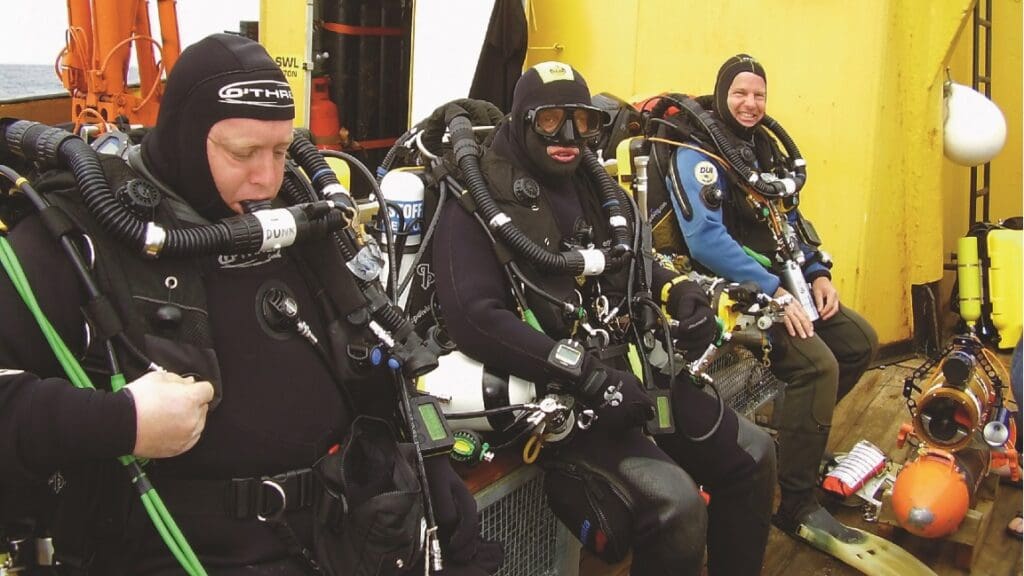
In May 2000 Mike Fletcher lead the NUMA team out to search for the wreck once more. One of the biggest challenges in locating the wreck was the lack of an accurate starting location. At the time of the sinking a number of different positions were recorded by Carpathia’s radio officer, the German submarine U-55 and HMS Snowdrop (which had picked up the surviving crew and passengers). A search area had to be defined on a chart covering all possibilities so that a systematic survey could be undertaken using side-scan sonar and a magnetometer. The part of the ocean being searched was a rich hunting ground for U-boats, so the presence of a wreck on the seabed would still require positive identification as that of Carpathia. After a month of searching the wreck was located and was conclusively identified by further ROV footage taken in September. On 22 September 2000 NUMA issued a press release stating that the wreck of the Carpathia had been found.

Painting of the wreck of Carpathia by Stuart Williamson

The wreck of Carpathia was dived for the first time by a team of British technical divers in August 2001. The group travelled the 268 miles from Plymouth aboard the Loyal Watcher, skippered by Steve Wright, with all divers taking spells at the helm. When they arrived at the wreck site the conditions were perfect, with just a gentle Atlantic swell. As the divers made their final preparations it was with a degree of apprehension as they did not know what conditions awaited them deep in the ocean and so far from shore. Four divers descended to the wreck: Rich Stevenson, Ric Waring, Zaid Al-obaidi and Bruce Dunton. Fred Buckingham and Dave Whitney took on the important role of safety divers. Ric Waring was the last to enter the water and described his dive:

‘When I got down to the wreck I was amazed to find myself in ambient light. I hadn’t turned my torch on and could see the wreck stretched out around me, two huge telegraph heads lay on top of the wreck, we were right on the bridge! Zaid was nowhere to be seen, Richie was returning back toward the shot line and Bruce had gone off the side of the wreck trying to get down to the sea bed. Two huge ling were patrolling the wreck like guard dogs obviously curious about our arrival. I managed to turn my torch on as Richie gave me a salute as he began his ascent. The wreck was full of very hard shells and coral and crawled with brittle stars. I spotted some plates and found one with the Cunard line’s crest.’
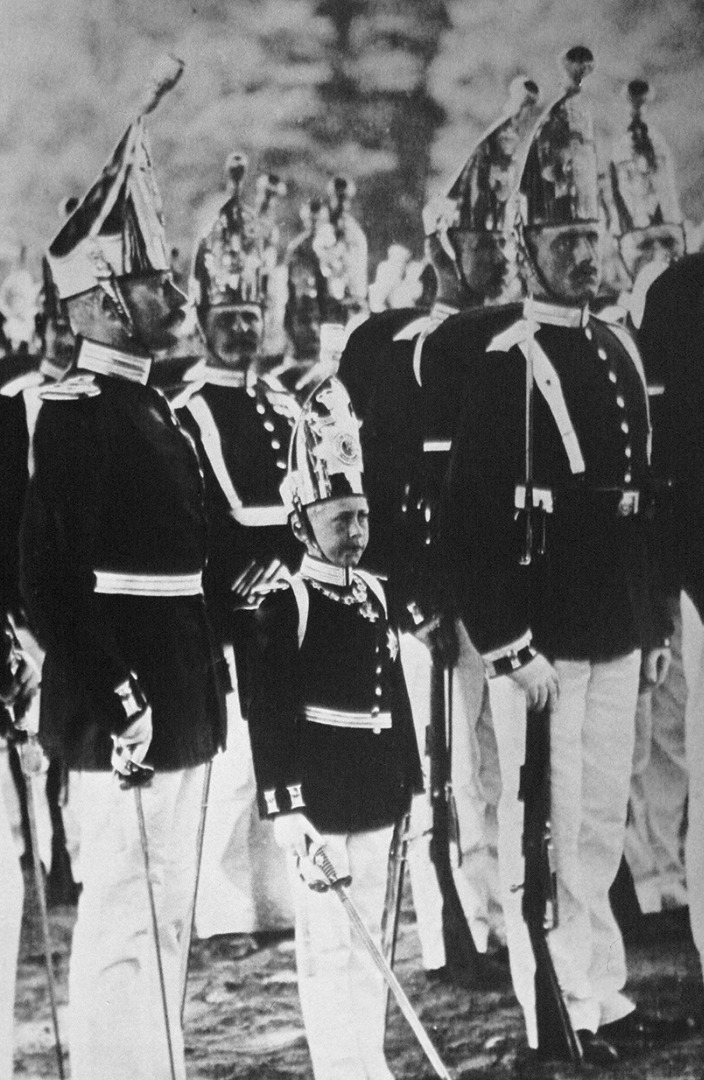
A china plate found during the first dive of the Carpathia wreck in 2001
The china plate found during the first dive in 2001. (Credit: Carpathia Expedition 2001)

All divers breathed mixed gas (trimix 6/80) on closed-circuit rebreathers and managed to spend about twenty minutes on the wreck at an average depth of 153m (502ft). Such a deep dive imposed a heavy decompression penalty of five hours in open water. The water temperature on the seabed was 13°C (55°F), warming to 20°C (68°F) for the final decompression stops in the last 10m (33ft). The divers finally broke the surface to a beautiful sunny afternoon and the sight of dolphins playing across the bows of the Loyal Watcher. A china plate with the Cunard crest was recovered, proving conclusively the wreck’s identity as Carpathia. This dive in itself was a considerable technical achievement and at the leading edge of underwater exploration on scuba. It was also believed to set a record for the deepest ever UK wreck dive at the time.

Underwater photograph of a diver videoing the Carpathia wreck using a driver propulsion vehicle (DPV)
Videoing the wreck using a driver propulsion vehicle (DPV). (Credit: Ric Waring)

It was not until September 2007 that divers returned to the Carpathia. The depth at which the wreck lies caused problems with the underwater cameras and lights but nonetheless one of the highlights of the expedition was the recovery of a double-headed bridge telegraph by Jeff Cornish. Various other smaller items such as china plates were recovered. In his dive report, Rich Stevenson noted that the wreck is starting to collapse in on itself.

Extracted from Shipwrecks of the Cunard Line by Sam Warwick and Mike Roussel

Sign up to our newsletter

Sign up to our monthly newsletter for the latest updates on new titles, articles, special offers, events and giveaways.

Name(Required)
Search
Basket