On Sunday 3 July 1938, during a series of high-speed brake trials on the main line between Peterborough and Grantham, the opportunity was taken to make an attempt on the world speed record for railways, using the A4 locomotive No. 4468 Mallard. Although the load was far less than a full train, it was no light weight either, with three twin-articulated carriages from the spare ‘Coronation’ set and the company’s dynamometer car, making seven vehicles in all with an empty weight of 236.5 tons, or 240 tons with officials and equipment aboard. Mallard was chosen because she was one of three A4 locomotives to have the Kylchap exhaust arrangements, which included a double blast-pipe chimney.
The decision to find out how fast the locomotive could run with the seven-vehicle load seems to have been almost a spur of the moment decision, and it is notable that no-one from the LNER Magazine was aboard, leaving the publication to reproduce an account from the Railway Gazette.
Mallard in York station (Credit: National Railway Museum)
Mallard took her carriages through Grantham station at just 24mph because of permanent way work, and then accelerated to almost 60mph over the next two and a half miles up a rising gradient of 1 in 200, eventually reaching almost 75mph over the next mile-and-a-half to Stoke summit, again over a further stretch at 1 in 200. Descending Stoke Bank, the speed rose to 116mph, and then to 119mph, and then crossed the 120mph mark where it stayed for the next three miles, reaching a maximum of 126mph. The locomotive maintained a speed of between 123mph and 126mph for nearly two miles. The record-breaking run was then curtailed as the opportunity was taken to conduct a brake test from such a high speed and the train was approaching the curve at Essendine, which also included several sets of points, and it was thought unwise to take these at such a high speed.
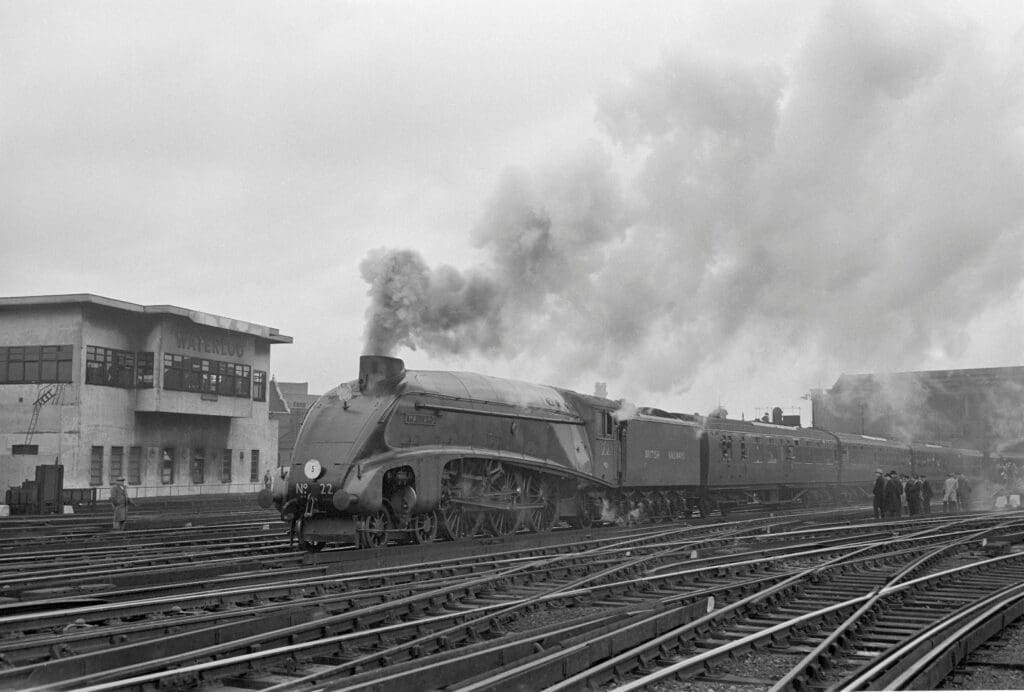
Mallard at Waterloo, 22 June 1948 (Credit: National Railway Museum)
This was a greater achievement than generally realised, not just because it has never been beaten anywhere, but because far from being specially prepared, Mallard had worn valves and was driven hard by a driver, Driver J, Duddington of Doncaster, known for thrashing his locomotives. Had she been properly prepared and all valve clearances correct, the record might have been set even higher. As it was, those on the footplate could smell the machinery at is overheated and the locomotive needed major workshop attention afterwards.
Many claim that the locomotives of the day operating in the United States and Germany could have matched or even exceeded this record, but the point is that they didn’t. One would have expected the Germans, whose dictator had a thirst for propaganda, to have set a new record if they had been able. Others have also suggested that the LMS ‘Duchess’ class could have matched or exceeded the record, but again, this did not happen. It might be pertinent to note that while the LNER cut the London to Edinburgh journey time of the Flying Scotsman to just six hours, the rival LMS service to Glasgow took 30 minutes longer.
Mallard retired from service in 1963 and was subsequently preserved in 1964 by the British Transport Commission. In 1975 Mallard entered the National Railway Museum’s collection in York. It was restored to working order between 1982 and 1988 and completed a limited number of runs until 1989. It is now one of only six remaining A4 Pacifics. In 2013, to celebrate the 75th anniversary of Mallard’s speed record, all six locomotives were reunited at the National Railway Museum. On the weekend of 5 July 2008, Mallard was taken outside for the first time in years and displayed beside the three other A4s that are resident in the UK, thus reuniting them for the first time since preservation. It departed the museum for Locomotion, the National Railway Museum’s outbase at Shildon in June 2010, where it was a static exhibit, until it was hauled back to York in July 2011 and put back on display in its original location in the Great Hall. Today Mallard remains one of the highlights of the museum.
Mallard on display at the National Railway Museum, York
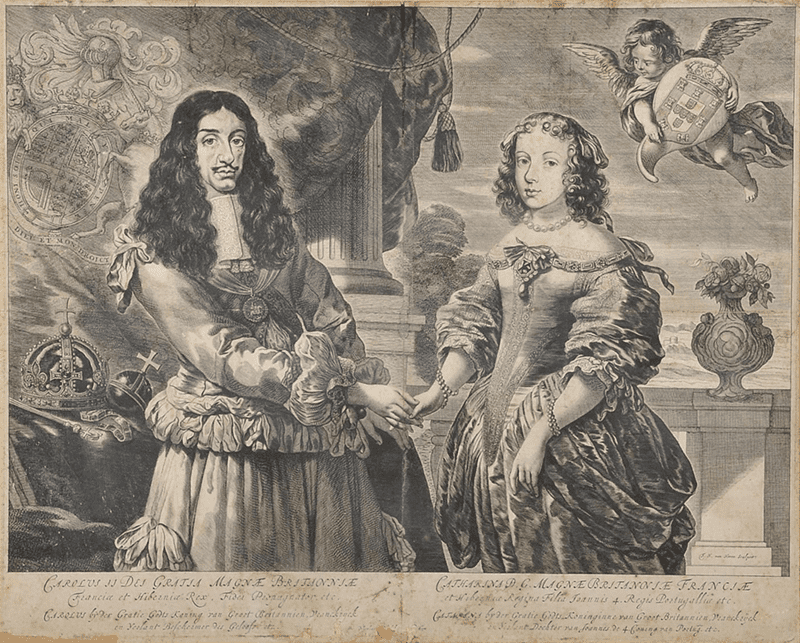
On 23 June 1661 a marriage treaty agreeing upon the union of Charles II and Catherine of Braganza was signed. Catherine brought a dowry of £500,000, as well as Bombay, Tangier and the right of free trade with the Portuguese colonies, and also popularised tea-drinking in Britain.
In spite of being relatively poor, Charles easily assumed the role of King of England and he left it to his new government to work through the intricacies of choosing a wife who would bring the greatest political and economic benefit to him and to England.
Contrary to endless rumours that he was married to Lucy Walter in his teens, Charles was, in fact, married only once, and that was to a Portuguese princess eight years his junior, Catherine of Braganza. Catherine was born at Vila Vicosa near Lisbon on 25 November 1638, the third child of the Duke of Braganza who later became King John IV of Portugal. If ever a marriage was made for political and economic reasons, the union of Charles and Catherine was such a match. Her dowry included Tangier, Bombay, full trading privileges for England in the Indies and a very large sum of money for the impoverished Charles. At twenty-one Catherine was neither young nor pretty and apparently was not considered an important candidate for marriage in other European courts. Spain did not favour the match and the Spanish ambassador spread rumours that Catherine would be a sterile queen, hoping that Charles would look further north in Europe for a suitable wife. Notes which passed during Privy Council meetings between Charles and his chancellor, Edward Hyde, Earl of Clarendon, illustrate Charles’s somewhat disinterested acceptance of this match. He even implied to Clarendon that he might not be able to consummate the marriage immediately as he would be tired after the long journey from London to Portsmouth, where he was to meet his bride and her entourage. As it happened Catherine had a cold and slight fever when Charles arrived and she was not up to much more than merely greeting Charles at their first meeting. They were married in a Catholic ceremony at Portsmouth and later were married again at a grand ceremony in London in May 1662. They shared the throne of England as king and queen and, ultimately, they also shared her Roman Catholic faith.
King Charles II of EnglandCatherine of Braganza, Queen of England
Although Catherine was short and had protruding teeth, she also had quite beautiful long black hair and a pleasant voice and demeanour. Charles described her in a letter to Clarendon as not exactly a beauty but he liked her eyes and thought her, on the whole, acceptable as a wife. The marriage began well but soon Catherine was in the difficult position of having to share Charles with his mistresses. To her great credit, she put a brave face on her personal anguish and discomfort in a situation she could not remedy. She reached an understanding with him, tacit or otherwise is not known, so that she remained queen and enjoyed his affection, protection and respect, while he was free to graze in pastures other than hers.
Charles II’s lifelong fascination with women has been titillating and of interest to many over the years, but it is distracting as far as understanding him as a ruler of England is concerned. He regarded his dalliances as recreation, not politics. His four favourite mistresses, Lucy Walter, Barbara Villiers, Nell Gwynne and Louise de Keroualle, were quite different in background, and whether or not they exerted important political influence on Charles is open to question. Louise de Keroualle was an agent of Louis XIV of France and Charles did become a client of Louis. But Charles might have embraced Louis for the money he gave him, regardless of Louise’s influence. Charles’s own estimate of his experience with women is best summed up in his answer to the man who asked him how many women he had; Charles mischievously answered thirty-nine, explaining that the number of the articles of the Anglican faith was a good enough total for the head of the Church of England.
Lucy WalterBarbara VilliersNell GwynneLouise de Keroualle
The one dalliance with political consequences was his affair with Lucy Walter when he was living in exile in Holland. In 1649 she gave birth to a son when Charles was just nineteen years of age. This son, who Charles acknowledged, was ultimately known as James Scott, Duke of Monmouth, and he and his mother caused problems for Charles throughout his life. In spite of Charles’s many mistresses, sixteen bastard children and the occasional meddling of Henrietta Maria, who visited them for long periods, Charles and Catherine were happy together. Their court was stable and it restored much-needed pomp and splendour to London.
James Scott, Duke of Monmouth
England and the Stuarts were severely tested in 1665/6 when bubonic plague struck, arriving through London and other seaports. Ultimately it took the lives of nearly one in four of the half-million inhabitants of London. The city was brought almost to a standstill by this terrible epidemic disease. The Royal College of Physicians was a major force in organizing the medical resources of London to deal with the challenge of plague, both as to individual sufferers and the public at large. Charles, Catherine and their court remained in London during the early months of the epidemic and were seen as a stabilizing presence. In the summer the royals moved to nearby Hampton Court and continued to serve as a source of stability for their kingdom, besieged by an enemy against which they had little in the way of defences.
With the plague barely gone, fire destroyed most of London in the autumn of 1666. Although only a few lives were lost in this Great Fire of London, it destroyed about 80 per cent of London’s buildings. It was a difficult time and Charles faced it well; with his brother, James, he directed the containment of the blaze on horseback, from the edge of the fire. It was Charles’s influence that led to the reconstruction of London, and the replacement of its burned wooden structures with stone. Together, Charles and Catherine were largely responsible for bringing back the social and cultural life of London after the Great Fire.
While his court has often been described as dissolute, certainly in comparison to the grim, grey days of Cromwell, the arts and science thrived during Charles II’s reign and the king himself was very much the cause of it. For example, in 1662 he granted a charter to the Royal Society, recognizing the alliance already formed by the men of science and strengthening it with the blessing of royal patronage. Catherine joined him wholeheartedly in encouraging this blossoming of culture and knowledge, for she remained every inch his, and England’s, queen.
Catherine’s principal value to England and to Charles lay in her potential to provide heirs to the throne. There is no reason to believe that Charles neglected his marital duties because Catherine is thought to have been pregnant as many as four times. But in September 1663, Catherine and Charles made an official visit to Bristol and on their return to London she was suddenly afflicted with what Samuel Pepys recorded as a spotted fever, an acute febrile illness associated with a prominent skin rash. This would not have been smallpox, but could have been measles, chickenpox, scarlet fever or even typhus or typhoid fever. She was delirious and ill enough to be given the last rites of her Church. Charles is noted by Pepys to have been constantly at her bedside and sincerely concerned about her welfare. It is likely that she was pregnant at this time and miscarried, as it had been rumoured she was pregnant prior to the visit to Bristol. She apparently also had miscarriages in early pregnancy in 1666, 1668, and 1669. With many women around her, the signs of pregnancy, including missed menstrual periods, morning sickness, and breast swelling and tenderness, would immediately have been noticed. It is only reasonable to assume that she did have these additional three pregnancies, all of which ended in miscarriages.
Catherine’s reproductive problems rapidly became a pressing concern for court and government and Charles was endlessly given counsel and suffered criticism from well-meaning advisers. There were even times when Charles faced pressure to divorce Catherine because of her inability to provide an heir. A polygamous marriage with Lucy Walter, his first mistress and mother of his bastard son, James Scott, Duke of Monmouth, was seriously considered as a way out of at one point, even by Church authorities. But no amount of pressure would convince the king to desert his queen. Charles protected Catherine and she remained by his side throughout his reign as he slowly and steadily consolidated his power. By 1670, the ten-year anniversary of his reign, he was generally regarded as a vigorous and successful monarch, both at home and abroad.
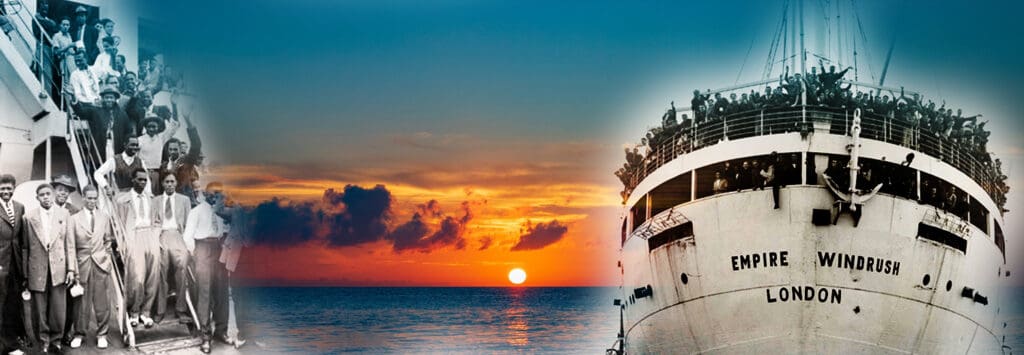
On 21 June 1948, the former German cruise liner HMT Empire Windrush arrived in the UK at Tilbury Docks, Essex carrying passengers from the West Indies. The following day, in what has become a landmark in the history of modern Britain, Caribbean migrants from countries including Jamaica, Bermuda, Trinidad and British Guiana exited the Windrush and were among the first to be recruited to rebuild post-war Britain. Mainly former service personnel, this was the first wave of post-war immigration.
In 1948, Britain was just starting to recover from the devastation of the Second World War but faced desperate labour and housing shortages. Enticed by the prospect of long-term job opportunities and prosperity, Caribbean men and women crossed the Atlantic in response to adverts for work in an attempt to tackle Britain’s labour shortage crisis.
HMT Empire Windrush
In May 1948, HMT Empire Windrush was en route from Australia to England, via the Atlantic and docked in Kingston, Jamaica, to pick up servicemen who were on leave. Whilst the Windrush was crossing the Atlantic the 1948 British Nationality Act, which would grant all Commonwealth citizens free entry into Britain, was being debated by the British government. Even before the act – which would reaffirm their pre-existing rights of travel and residence – had been passed, Commonwealth migrants began to arrive in Britain with the first of these travelling on board the Empire Windrush.
When the Windrush docked in Kingston, the ship was far from full and so an opportunistic advertisement was placed in a Jamaican newspaper offering cheap transport on the ship for anyone who wanted to work in the UK. During the war, thousands of Caribbean men and women had been recruited to serve Britain and many of these decided to make the trip in order to rejoin the armed forces or with hopes of finding better employment. Those from Jamaica were also leaving a country which had a struggling economy and had been recently devastated by a hurricane. Other more adventurous spirits, mostly young men who had heard about the voyage, simply fancied coming to see what the ‘mother country’ was like and doubled the numbers. The journey to Britain cost £28 for travel on the troopdeck (around £1,000 today) and £48 for cabin class travel.
Before arriving in Kingston, the ship had visited Trinidad and, following departure from Jamaica, it also docked at Tampico in Mexico, Havana in Cuba and Bermuda where others joined the vessel. However, most of the Windrush’s passengers boarded in Jamaica.
The ship itself made its final voyage in 1954. She continued to be used as a troopship until March 1954, when the vessel caught fire and sank in the Mediterranean with the loss of four crew.
HMT Empire Windrush
Arrival in Britain
The ship docked at the Port of Tilbury on 21 June 1948 and discharged its passengers the next day. At the time, news reports in the media reported that the number of West Indian immigrants on board was 492, however the ship’s records, which are held at the UK National Archives, show that Windrush was carrying 1,027 passengers (including two stowaways) and amongst those travelling from the Caribbean for work there were also Polish nationals displaced by World War II, members of the RAF and people from Britain, Mexico, Gibraltar and Burma. According to the ship’s passenger lists 802 of the official listed passengers on board gave their last country of residence as somewhere in the Caribbean – over half of these (539) were Jamaican residents.
As most eyewitness accounts testify, the majority of people on board the ship were men. There were 684 males over the age of 12, compared to 257 females over the age of 12. 86 of the passengers were children aged 12 and under.
Passengers disembarking from Empire Windrush at Tilbury Dock, 22 June 1948
Unsurprisingly, the most popular destination recorded by the passengers was London – 296 people named the city as their planned place of residence and a number of others planned to go to Liverpool, Birmingham, Manchester, Plymouth and Bristol. Those that had not already arranged accommodation were temporarily housed in the Clapham South deep shelter, which had been built under the London Underground station as an air-raid shelter during the Second World War.
The nearest employment exchange to Clapham happened to the Coldharbour Lane Labour Exchange in Brixton, less than a mile away. Many of the arrivals sought work here, working for state-run services like the newly-formed National Health Service and London Transport. They then moved into rented houses and rooms in the Brixton and Clapham areas where large Caribbean communities developed. In Brixton, the town’s Windush Square commemorates the ship’s arrival.
Windrush Square, Brixton
Many of Windrush’s passengers originally only intended to stay for a few years and although a number did return, the majority remained to settle permanently and now form a vital part of British society.
The ‘Windrush generation’
The arrival of Empire Windrush in Britain in June 1948 was a landmark event that marked the beginning of post-war mass migration and one that would change Britain’s social landscape forever – the image of West Indians filing off the ship’s gangplank is often used to symbolise the beginning of modern British multicultural society.
By January 1949 the 1948 British Nationality Act had come into effect, giving citizenship of the UK and Colonies (CUKC) to all people living in the United Kingdom and its colonies, and the right of entry and settlement in the UK. This, coupled with the introduction of a tough new US immigration law which restricted entry into the USA in 1952, encouraged West Indian immigrants to travel to the UK en masse as they could settle in the UK indefinitely without restrictions. By 1956, more than 40,000 immigrants from the West Indies had moved to Britain.
New immigration rules were introduced in the intervening years, before the Immigration Act 1971 changed the law to grant only temporary residence to most people arriving from Commonwealth countries. This came into force in 1973 and ended the influx from the Caribbean. However, people born in Commonwealth countries (and their wives and children) who settled in the UK before 1973 were still allowed to remain in the UK indefinitely under the terms of the new Act. They retain that right today but, after the 1971 Act, a British passport-holder born overseas could only settle in the UK if they had a work permit and could prove that a parent or grandparent had been born in the UK.
Those who were born in the Caribbean and who settled in the UK between 1948 and 1971 are generally referred to as the ‘Windrush generation’, after HMT Empire Windrush which transported the first migrants. It is unclear how many people belong to the Windrush generation, since many of those who arrived as children travelled on their parents’ passports and never applied for travel documents, but they are thought to be in their thousands. According to estimates by Oxford University’s Migration Observatory over 500,000 are now resident in the UK who were born in a Commonwealth country (including Windrush arrivals) and arrived before 1971.
The Windrush Scandal
Recently it came to light that some of the Windrush generation of Commonwealth citizens were being denied access to state healthcare, had been made redundant from their employment and, in some cases, threatened with deportation, despite being legally resident in the UK for decades and often making paying taxes and making pension contributions. The scandal also prompted a wider debate about British immigration policy and Home Office practice, including treatment of other migrants, and of asylum seekers and what the status of EU nationals living in Britain would be after Brexit.
Under more recent immigration laws there had been a requirement for people to provide four pieces of evidence for each year that a person has been in the country. Since the 1971 Immigration Act people of the Windrush generation have been forced to prove continuous residence in the UK since 1973, when they were granted the right to stay in the country permanently (if anyone left the country for more than two years they lost their right to remain). However, proving continuous residence has proved to be an almost impossible task for those who have not kept up-to-date records, or did not have paperwork originally.
In 1962 citizens of the Commonwealth became subject to immigration controls but those who arrived as minors were not included – children could come in on their parents’s passports – and many of those now facing difficulties arrived as children with their parents. In the 1970s the Home Office did not keep records of the people to whom it granted indefinite leave to remain and while many have taken UK citizenship or have documents to prove their status, some do not – some Windrush generation citizens stayed but did not apply for British citizenship, meaning there is no official record of their legal status.
Then, in 2012, then Home Secretary Theresa May promised a ‘hostile environment’ for illegal immigrants to stop migrants having access to the NHS, welfare services, employment, bank accounts, driving licences and rented accommodation, unless they could prove their right to be in the UK. These requirements were made even more stringent in 2016 and, consequently, hundreds of those from the Windrush generation found they had not got paperwork to prove they had lawfully been in the UK for years.
To gain official recognition people were told to apply for an official ‘No Time Limit’ (NTL) stamp, at a cost of £229. The Home Office did not use central tax and pension records to support NTL applications and instead the onus was put on the individual to provide evidence and documentation. It further came to light that in 2010 the UK Border Agency destroyed thousands of landing cards, which for some of the Windrush generation would have been the only proof of exactly when they arrived in Britain, as part of their legal obligations under the Data Protection Act.
From 2013 onwards the Home Office received repeated warnings that many Windrush generation legal residents were wrongly being identified as illegal immigrants. In April 2018 Home Secretary Amber Rudd apologised for the “appalling” treatment of the Windrush generation and announced a taskforce to resolve the immigration status of those affected, granting them the citizenship papers to which they are entitled, waiving application fees and awarding compensation. By the end of April Rudd had resigned as Home Secretary amid great pressure over the Windrush scandal. She said she had “inadvertently misled” MPs over targets for removing illegal immigrants and was replaced by Sajid Javid.
By August 2018 a compensation plan had still not been implemented and in February 2019 the Home Office admitted that, although it had set up a hardship scheme in December 2018 for victims of the scandal, only one of the applicants to the scheme had thus far received any assistance. Even by April 2020, the Windrush taskforce, which was set up to deal with applications from people who were wrongly categorised as illegal immigrants, still had 3,720 outstanding cases.
On 19 March 2020, the Home Office released the Windrush Lessons Learned Review, an independent inquiry managed and conducted by Wendy Williams, which concluded that the Home Office showed an inexcusable “ignorance and thoughtlessness”, and that what had happened had been “foreseeable and avoidable”. It further found that immigration regulations were tightened “with complete disregard for the Windrush generation”. The study recommended a full review of the “hostile environment” immigration policy.
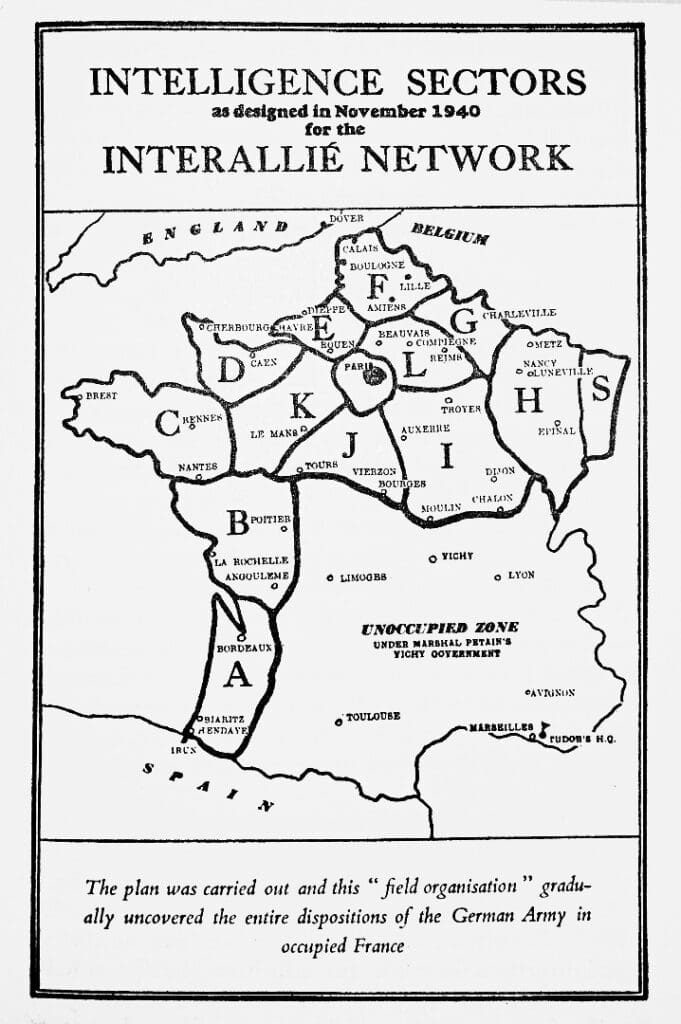
In his book Double Agent Victoire, David Tremain uses official and previously unpublished MI5 documents to explore the betrayal of France’s Interallié network and the woman who served three masters during the Second World War, but ultimately served herself.
A cat is mercurial: she plays to her own rules, no one else’s. She is independent and does what she pleases, when she wants to, not when others think she should. She owes her loyalty to no one but herself. Then, when the fancy takes her, she is off, returning at her convenience. Female cats also like to be the boss; put two of them together and they will fight for dominance. The spy known as ‘La Chatte’ (the female cat) was much the same. In her lifetime she served three masters, but ultimately was serving herself. A report (undated) written by Patricia McCallum of MI5’s Registry about the woman later known as VICTOIRE begins:
‘On 28.2.42 there arrived in the U.K. a remarkable woman agent: Mathilde Lucie (or Lily) CARRE …’
Remarkable she may have been, but for all the wrong reasons. Like most spies she was temperamental, untrustworthy, scheming, manipulative, jealous, and above all, treacherous.
VICTOIRE, the woman who would become notorious as ‘La Chatte’, was employed by the Interallié network, an organisation working on behalf of the Polish Secret Service in Occupied France. On 18 November 1941, she was arrested by the Abwehr, along with some of the more important members of the organisation. Shortly thereafter, she became one of their most trusted agents and worked for them as a double agent while still operating the Interallié network’s radio. Allegedly, she briefly became the mistress of Feldwebel (Sergeant) Hugo Bleicher, the senior Abwehr NCO who worked against the French Resistance in breaking up Interallié and other networks. While working for the Germans, Mathilde Carré provided them with the names and locations of organisation members still at large, as well as acting as a decoy or as an agente provocatrice, so they could be arrested by the Gestapo. Her motivations for betraying them are complex and will be examined during the course of this book and summed up in the final chapter.
The overall picture that emerges from the ‘Interallié affair’ reveals a tragic set of circumstances caused by a morass of lies, scheming and treachery. This was symptomatic of the many factions struggling to assert themselves against the Nazi occupation of war-torn France, as well as, to some extent, the response by the various British Intelligence agencies and their refusal, in some cases, to acknowledge that a problem existed. This account is my attempt to set the record straight.
The first raid came at the Villa Léandre on the morning of Tuesday 18 November. MAURICE (W?odarczyk) awoke at 5.30 a.m. to the sound of what he thought were gunshots, footsteps on the stairs and shouting. It was the Gestapo. Since WALENTY had not heard the bell ring, the Gestapo must have rung Madame Blavette, the concierge, to let them in. Ironically, he had planned to move yet again and had packed up all his things. In the flat above, MAURICE and GEORGE, who were staying with him, managed to escape over the rooftops. As MAURICE described in a report compiled by M.B. Stokes at the Royal Victoria Patriotic School (RVPS) on 28 May 1942:
‘GEORGE ran into his room saying that the Germans had broken into ARMAND’s flat and then they could clearly hear commands being given in German. As neither WLODARCZYK nor GEORGE was armed and it was obvious that ARMAND had been trapped, they decided to escape, if possible …’
They escaped to Dax in the Landes sub-prefecture of Nouvelle-Aquitaine and crossed the demarcation line at Tartas, eventually making it to the safety of the Unoccupied Zone by way of Montpellier and Marseilles. MAURICE crossed into Spain on the night of 13/14 December and reported to the British consulate in Barcelona on the 15th. From there on 7 January 1942 he was sent to the British embassy in Madrid, where he stayed until 20 February.
WALENTY and VIOLETTE were not so lucky and were arrested. Later MAURICE estimated that there had been up to six Gestapo members making the arrest. This set off a cascade in which almost every member of the network was rounded up. VICTOIRE’s account offers the most details on a day-to-day basis of how this happened which Harmer included in his extensive report … However, she was not the only one involved, as it was noted in Kraus’s MI5 file that:
‘On the information available it seemed clear that KRAUS was responsible for breaking up the effective VICTOIRE organisation. Previously Madame CARRÉ had been suspected of this, and whilst there was no reason to alter the conclusion reached in her case, there seemed no doubt that KRAUS was also responsible for this effective organisation being betrayed.’
VICTOIRE described that fateful Tuesday morning as ‘cold and foggy. Montmartre seemed colder than elsewhere and Paris lay below shrouded in mist.’ Not suspecting anything was amiss, she kept her meeting with MICHEL (Jean Lucien Kieffer) at 10.30 a.m. at the Café Lamarck. When no one turned up she went back to her rooms, where Mireille Lejeune told her that the rue Junot, where the Villa Léandre was located, was being searched. Realising that there was a problem, she went to the old apartment in the rue Cortot to retrieve some incriminating papers, and left instructions with Mireille that she was to destroy all her papers if VICTOIRE failed to return. Always the ‘drama queen’, she claimed that as she passed by the Sacré Coeur she felt as if people were watching and following her: ‘I continued up the street when I suddenly sensed that the men who had been gossiping by the lamp post had started to follow me.’[T]he Gestapo took her first to the Hotel Edouard VII at 39, Avenue de l’Opéra, described as one of the offices of the Gestapo in Paris … Harmer states: ‘It is difficult to assess the exact moment that VICTOIRE’s collaboration with the Germans began.’ From what VICTOIRE related, it was on 19 November at eleven o’clock in the morning.
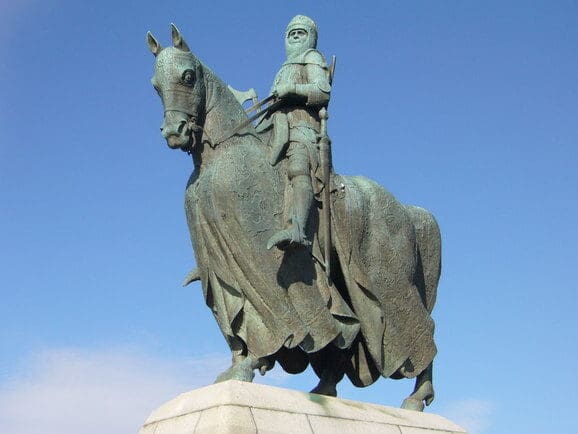
Born in Essex in 1274, Robert the Bruce was a French-speaking Anglo-Norman with enormous estates in England. He was the rightful heir to Alexander III, but Edward I appointed John Balliol as king in his stead. He betrayed William Wallace at the battle of Falkirk and scored one victory over Edward II on a boggy hillside at Bannockburn with his band of ill-equipped peasants then died of leprosy in 1327. That’s what most people know about Robert the Bruce, and none of it is true.
Robert was born in 1274 and he did die in 1327, but the rest is what historiographers define as ‘codswallop’. Robert’s mother was the Countess of Carrick – a rich Celtic potentate and his grandmother was the daughter of King David I of Scotland – to describe him as an ‘Anglo–Norman’ is like describing the latest royal baby as a ‘German-Greek’. He was most likely born at his mother’s castle of Turnberry in Ayrshire and it is difficult to believe that he did not grow up speaking the languages of the areas in which he was raised; Gaelic-speaking Ayrshire and Scots-speaking Annandale. As an educated man he would almost certainly have been able to read French and possibly Latin, but whether he could actually speak either of those is a very different matter. The Bruce family did own some valuable property in England, but not enough to make them politically significant people in England; Robert was just one baron among hundreds.
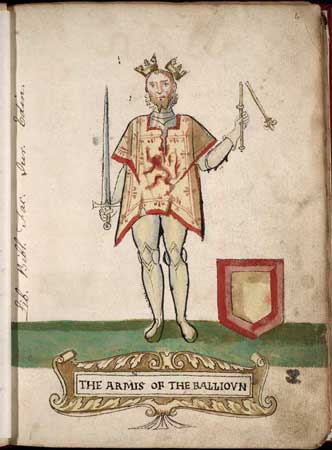
John Balliol as depicted in the 1562 Forman Armorial
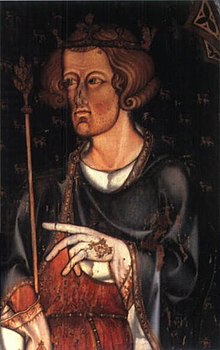
When Alexander III died it was not absolutely clear who had the better claim to his throne, but since Robert was only 12 years old and both his father and grandfather were still alive, it certainly was not him. The lords and communities of Scotland decided that there should be a court of enquiry and Edward I was invited to be the chairman; he was not invited to make the decision, just to administer the process. A jury of 104 auditors was appointed to examine the claim of a total of 13 candidates, though in fact there were only two serious possibilities; John Balliol and Robert Bruce – the grandfather of the man who would eventually become king. Balliol’s claim was undoubtedly the better of the two and the jury chose him as Alexander’s successor. The notion that Edward chose Balliol because he would be more malleable is simply untrue.
John Balliol as depicted in the 1562 Forman Armorial
In due course Edward chose to force Balliol into a war that would enable him to annexe Scotland and Robert certainly changed sides at least twice – he was not alone in this and he had little choice if he was to protect his inheritance as Earl of Carrick and Lord of Annandale. He never betrayed Wallace, but he always had his eye on the possibility that he could become king in place of John Balliol who, by 1303, had abandoned any hope of being restored.
Robert’s road to the throne depended on military success so long as the Balliol line survived and his first campaign was disastrous – within months of declaring his kingship in 1306 he had been defeated twice in battle and driven into hiding. A new campaign the following year started badly, but by 1308 he was in the ascendant. It was a long struggle – he had to fight two civil wars against domestic opposition as well as dislodge the English occupation, but by 1314 only a handful of castles still held out against him.
The most important of these was Stirling. Robert’s brother had laid siege to the castle at Lent and agreed a pact with the commander of the garrison, Sir Philip Mowbray. If the castle was not relieved by midsummer it would be surrendered and the garrison would leave with life, limb and property intact. Mowbray was well aware that Edward II was already committed to a major campaign in Scotland that summer so he was confident that relief would be achieved. Accordingly, Edward raised a great army and headed north only to find his way blocked by the Scots just a few miles short of his first objective; Stirling.
Robert had avoided a major battle against other English armies in the past, but this time he was prepared not just to accept a battle, but to force one. Edward’s initial thrusts toward Stirling were thrown back with some loss and the two leading elements rejoined the rest of the English army on the plain. The site was well-chosen in the sense that it was good ground and with a degree of night protection on three sides from the River Forth to the east and two streams – the Pelstream and the Bannock – to the north and south.
Edward and his lieutenants had extensive military experience, much of it gained on campaigns in Scotland and none of them had any concern that the site might become a trap if the Scots were to attack, in fact their chief concern was that the Scots would slip away in the night and avoid a major battle as they had in the past.
They were quite wrong. In the early dawn Robert’s army moved down from high ground from which they could safely observe their enemy, deployed across the space between the Pelstream and the Bannock and pressed forward quickly and fiercely. The ensuing battle was a hard-fought affair, but did not last long. The Scots were heavily out-numbered, but they were well-trained, well-equipped, well-motivated and well-led. Forced to leave the battlefield, Edward headed to Stirling Castle where Mowbray informed him that although, by the terms of his agreement with the Scots, the castle had been relieved by the arrival of an English army within three miles, in practice the siege would be imposed again immediately and was bound to fall. Edward made a swift exit and was fortunate not to be captured.
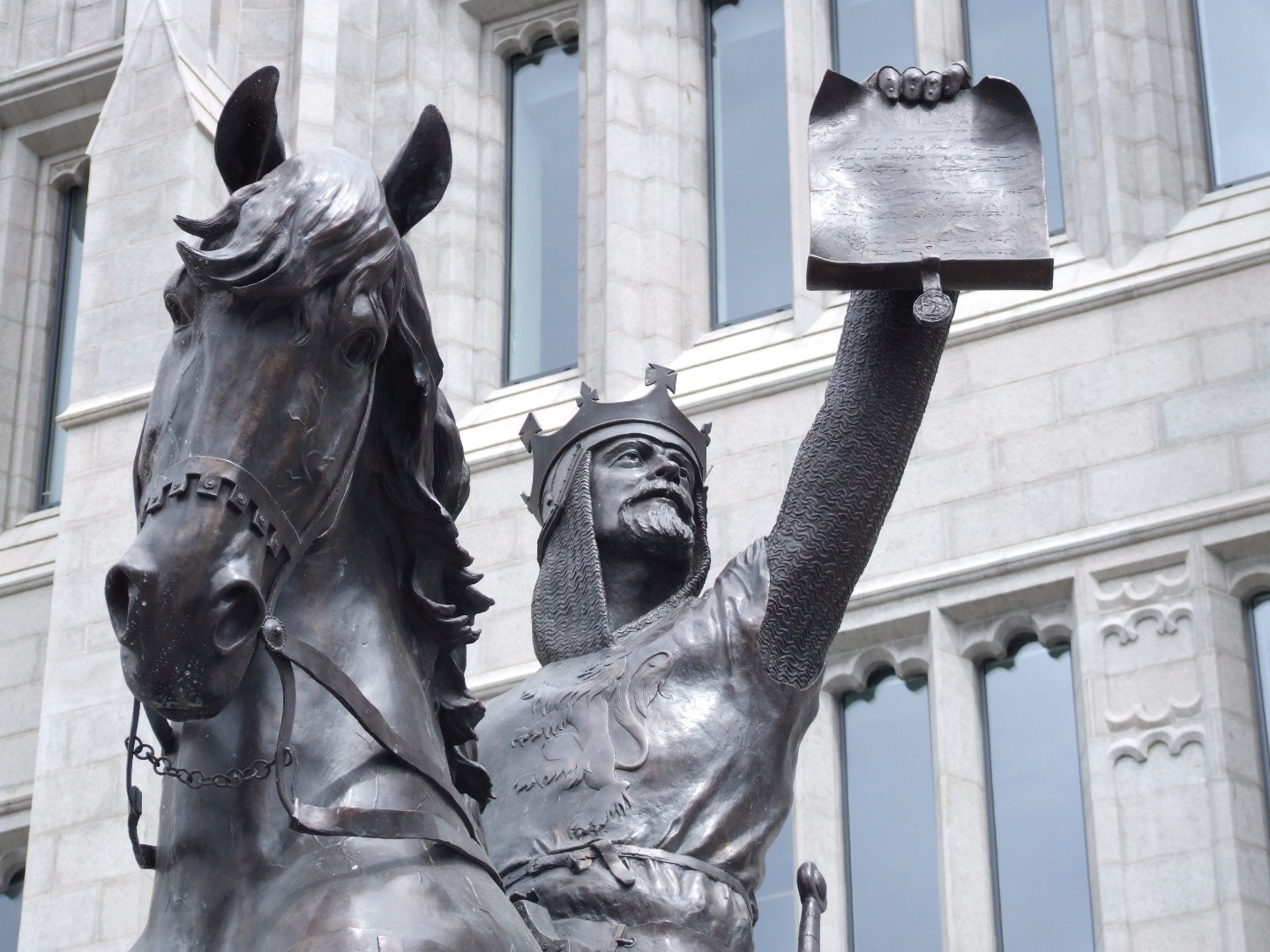
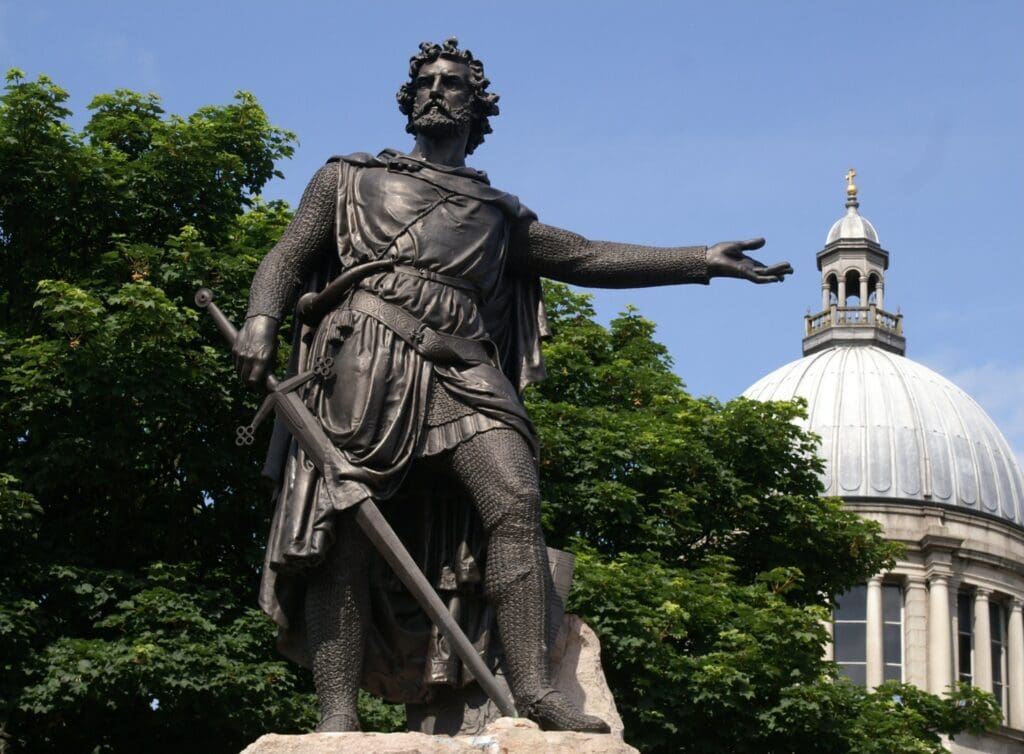
A statue of Robert the Bruce in front of Marischal College, Aberdeen
Robert was now master of his kingdom, but the war would drag on for more than a decade before he managed to force a treaty that recognised his kingship and Scotland’s independence. He got little opportunity to enjoy the fruits of his labours; he died in 1327, but not of leprosy; that was no more than a propaganda claim by English chroniclers.
So there we have it; almost everything that almost everyone thinks they know about Robert I is simply not true.
Scottish hero William Wallace was hanged, drawn and quartered on 23 August 1305. 600 years later his fight for Scottish independence was immortalised in the 1995 film, Braveheart, and in 2018 both Robert the Bruce and Mary, Queen of Scots are set to be portrayed in new films that have already attracted criticism for their lack of historical accuracy. Thanks to Braveheart William Wallace has never been forgotten, but has the film done more harm to Scottish history than good?
William Wallace has attracted a great deal of attention from interested enthusiasts, but surprisingly little from historians. Of the several biographies readily available at the time of writing, not one has been written by anyone with a background in medieval history generally, let alone with any scholarly understanding of the society in which Wallace lived. The lack of an understanding of the context has led to the easy acceptance of material that is at best questionable and at worst fraudulent.
This is most evident in the film Braveheart. Not content with relying on Blind Harry’s largely fictitious poem The Wallace as the sole source of material, the writer, Randall Wallace, simply changed the story to suit a script that made no sort of historical sense and has, in fact, deprived Scottish people of part of their history by effectively undermining the factual material. The benefit of the Braveheart phenomenon is of course the extent to which it has heightened interest in medieval Scotland – an important consideration in a country where there is no viable programme of history in schools. Although Braveheart did help to make Scots more aware of their past, the damage done to our perception of Wallace and of the early period of the Wars of Independence is incalculable. If it is true that a picture paints a thousand words, how damaging is it when the picture is a fantasy?
Many readers will have seen pictures of armoured knights being lowered on to their chargers by means of a block and tackle and a set of sheerlegs. The pictures may have been very well executed, but the premise is nonsensical. Armies did not carry large arrays of engineering equipment simply to enable cavalrymen to get mounted. Practical demonstrations of the ability of a middle-aged man (such as this writer), little accustomed to armour and only a little more accustomed to horses, encountering no difficulty whatsoever in getting mounted draw the defence that ‘armour was heavier then’, which is simply untrue – the weight to volume relationship of steel has not changed appreciably in the last 700 years. The same applies to the oft-repeated observation that an armoured man who had the misfortune to fall over would have been unable to stand without the help of an assistant. No one can realistically accept that men went into battle wearing equipment so heavy that they would be completely compromised if they should happen to slip.
The Braveheart film takes this problem to an extreme degree. The costumes worn by the Scots were, presumably, chosen by a design team with an extensive background in Brigadoon studies – they certainly bear no resemblance whatsoever to the clothing of medieval Scots. The same applies to other visual aspects of the film. It can only be presumed that the project was carried out without any of the benefits of historical research into the clothing, housing, social and political conditions or military practices of fourteenth-century Scotland and England.
Mel Gibson was perfectly honest about the production values of the project. He described the film as being his ‘fantasy’ of William Wallace and his many adventures. This is a fair point – none of us would expect that a film about any romantic hero from history would necessarily have any great claims to historical validity. For one thing, a movie is not a documentary, for another, Braveheart was made before the current, and highly laudable, vogue for visually convincing sets and action, as exemplified by Saving Private Ryan or Gettysburg. All the same, unwittingly or otherwise, Braveheart has made an enormous contribution to a romantic ‘kailyard’ (‘cabbage patch’ – a Scottish term denoting literature with a romantic and rather parochial flavour) vision of medieval Scotland that historians find almost impossible to dislodge with mere evidence. Quite why it should have made so great an impression is impossible to say, though the involvement of a major Hollywood star in a heavily promoted production must surely be part of the explanation. What is harder to account for is the reaction of audiences. A medieval historian attending a screening of the film at the town of Alnwick, Northumberland, was disconcerted when the audience cheered Wallace enthusiastically as he unleashed his men to sack and destroy … Alnwick, Northumberland!
Normally enthusiasm engendered by a history film dies out quickly, as the film recedes in public memory or as it is increasingly ‘debunked’ by students of the period concerned. For reasons unknown, Braveheart has lasted the pace more than most. In 2001 re-enactors attending an event at Bannockburn were astonished – and not a little put out – when they discovered that a man dressed as Mel Gibson (in the sort of costume he wore in the film, and complete with blue face paint) had put himself at the head of their procession. Given that most, if not all, of the re-enactors had taken a great deal of trouble to provide themselves with reasonably appropriate arms, armour, footwear and clothing, they were understandably rather less than impressed. When approached, this ‘Mel Gibson’ character was able to defend himself on the grounds that the makers of a film – expert professionals – were bound to be more thoroughly informed about Scottish medieval society than historians, none of whom, as he accurately pointed out, had ever ‘…taken Braveheart seriously as history’.
Inevitably there is a danger in writing history for the cinema or stage. The needs of the narrative do not always coincide with the parameters of recorded history. A similar outcome can be identified from other productions and from other artistic genres. The average person’s view of the First World War is probably the product of the poems of a small number of middle-class poets, men from a privileged background with no previous military experience and a very insecure understanding of the strategic or tactical issues facing their commanders. The other ‘popular’ experience of the same conflict is the musical and film production Oh What a Lovely War. It is a fine work of art, but is of less than zero value as an insight into the 1914–18 conflict – not only does the picture fail to give a realistic view of the practical nature of the conflict on the Western Front, it ignores the other fronts entirely and promulgates an inaccurate (and fundamentally dishonest) representation of the commanders and their staffs as being universally incompetent, uncaring, ignorant, bloodthirsty and stupid. The only way to combat that lack of reality is to read the history of the period rather than the poems. The poetry of the First World War does constitute useful, even vital material, but it is only one strand of the experience, and in no sense a common one. The same principle applies to the life and career of William Wallace. The poetry and romance of medieval Scottish writers are a part of the history and historiography of the Wars of Independence, but only a part.
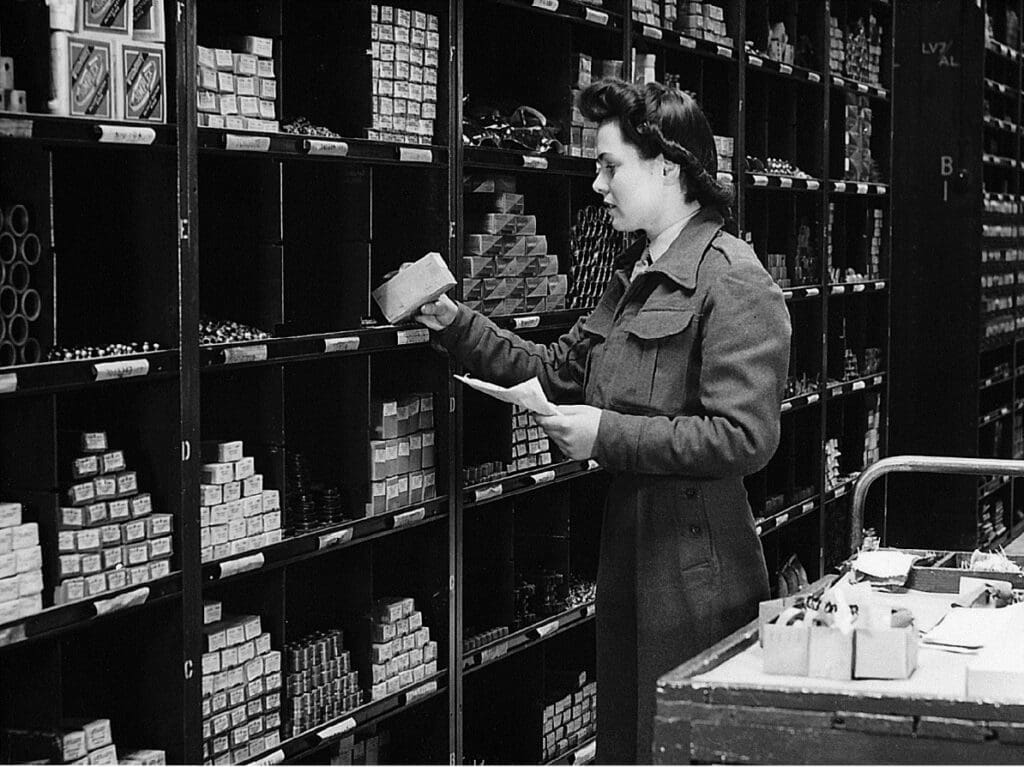
Anything from socks to eighteen inch guns was the business of Ordnance Services in World War One; in World War Two the socks were still there, but the emphasis had moved from massive static guns to mobile armour. Bomber Command had taken over the business of carrying tons of explosives.
The number of soldiers engaged in Ordnance Services for the British Army grew from 2,500 in August 1914 to 250,000 in August 1945; the number of motor vehicles grew from a few hundreds to one and a half million; the tank evolved from barely an idea to an ever present reality. Throughout both wars many thousands of women worked long and hard in the war effort.
Possibly millions of greatcoats, blankets and horse rugs were disinfected, cleaned and repaired in this Paris warehouse
In 1914 the army was highly professional but small; it was the army of empire, the army of cavalry. It took on a war machine and had one way or another to become one too. Almost at the start Ordnance Services descended into chaos with vast quantities of supplies evacuated in the face of the German advance. In the First World War the vital issue was of supply; getting enough guns, enough ammunition to do the job; the scale of which was almost beyond imagination. Lloyd George called upon the men of ‘push and go’, the businessmen, who could produce what was needed. There was much more to it than that, but it was the core, and they did it.
Guns en route to the Front
In 1919 a process of forgetting began. The Great War had rocked the western world and much beyond. Somehow the world had to find different ways to deal with conflict and the League of Nations was central to this. Germany had been emasculated by the Treaty of Versailles. The United States had not the remotest intention of taking up arms again. Britain and France had been decimated.
The twenties and thirties witnessed massive change, as old industries declined and new businesses began to spring up and blossom: motors cars, electronics, household goods. Out of the years of depression came hope for a better future. Those in the armed forces were all too keenly aware that they were being starved of resource.
As the mid thirties approached, so too did the threat of a resurgent Germany. The national debate in the UK about re-armament is well known. When it did come, it was too little too late.
An astonishing array of vehicles and equipment crossed to France in 1939, most of which was left behind at Dunkirk. The parallels with 1914 are so strong that the question has to be asked: why had lessons not been learnt? The German advance was spearheaded by tanks, a British invention; but the British had nothing that could compete.
A conveyor belt is needed in this enormous logistics office
In 1940 Bill Williams, then head of Ordnance Services, turned to industry as Lloyd George had done, but this time it was a search for people steeped in logistics. They came and rose to the challenge, so much so that of D Day, Max Hastings could write in his book, Overlord:
‘To almost every man of the Allied Armies, the predominant memory of the campaign, beyond the horror of battle, was the astounding efficiency of the supply services…for young British soldiers, who had grown up with the legend of the War Office’s chronic bungling, and of the Crimea and the Boer War, Second Army’s administration in Normandy seemed a miracle.’
Matilda tanks begin their long journey to North Africa
In between times though much had been learnt and incredible works were undertaken, not least in the USA. In World War One, the industries of the United States supplied the Entente nations and their bankers financed them. In World War Two, they largely held back until the US declared war. Thereafter it was surely the muscle of the United States that provided the tools to ensure the job was done.
None of this happened on its own. Remarkable people did remarkable things. Their finest years, indeed.
When we think of battles at sea between England and France, our minds tend to be drawn to the Georgian era and the victories of Nelson’s navy. But it is a little-known fact that the first great naval battle in the Channel took place half a millennium earlier, in the summer of 1217.
Prince Louis of France had invaded England in the spring of 1216, having been invited to do so by some of the English barons: King John had agreed to Magna Carta but subsequently reneged on it, and now they sought to overthrow him and install Louis in his place.
To start with Louis had enjoyed great success, but in October 1216 John died, and a number of the magnates took the opportunity to change sides and throw their support behind John’s son and heir Henry, then aged 9. Forces loyal to Louis were defeated at the Battle of Lincoln in May 1217; however, Louis himself was at Dover with half his army, so all was not yet won or lost. He returned to London to consolidate and plan, and awaited reinforcements from France.
King Louis VIII of FranceKing John of EnglandKing Henry III of England
The French fleet, of ten large ships carrying men and horses and some sixty small supply vessels, set off from Calais. It was commanded by a notorious figure known as Eustace the Monk, a pirate who had terrorised English coastal areas for many years before throwing in his lot with Louis. If the ships full of reinforcements were to reach London and join up with Louis’s existing forces, he would probably have sufficient resource to carry the day; England would be ruled by King Louis I rather than King Henry III.
Sandwich is today several miles from the coast, but in 1217 it was a sea port, and William Marshal, young Henry’s regent, had called all the nobles who were loyal to the young king to assemble there to form an army that would take to the sea: it was imperative that the ships be stopped before they could land, so that the two parts of the French army could not unite. As an added incentive, Marshal promised his lords any plunder they could take from captured vessels.
The French ships initially sailed towards Dover as they crossed the Channel, but they then turned; on the morning of 24 August 1217 they could be seen sailing northwards, parallel with the coast, with the idea of rounding the Isle of Thanet and sailing up the Thames to London.
The English fleet of eighteen large and twenty smaller vessels left Sandwich as the French ships were passing. To start with they headed out to sea, into the wind (which was blowing from the south-east), and passed behind and to the south of the French; it looked as though the invaders had made it past the danger, with a clear sea between them and the mouth of the Thames, and they started to celebrate.
However, they had not taken into account the skill of the English sailors: by dint of excellent seamanship their ships came swiftly about and then approached the French at speed with both the wind and the sun behind them. Taking advantage of the wind, the English launched volleys of powdered lime at the French before the ships engaged, blinding and choking those on board so they were unprepared for the brutal attack that would follow.
Sandwich Bay in KentMagna Carta
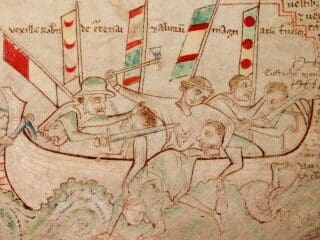
The first vessel to reach the French was one owned by Earl Warenne. It caught up with the French command vessel, known as the ‘great ship of Bayonne’, which was so loaded down with men, horses, baggage, treasure and the pieces of a trebuchet that it was barely out of the water, and rammed it. Warenne’s ship was followed by a large cog belonging to the regent – who was not on board, having remained on shore – that sat higher in the water than the French ship, thus allowing the English to rain down arrows and crossbow bolts on their already incapacitated opponents.
Grappling hooks were thrown; the ships were lashed together; English knights and foot soldiers poured across. The situation was replicated across the fleet, the rigging of the French ships being cut so they became unmanoeuvrable and easily boarded. The bloodiest encounter took place on the command vessel, where the English carried the day in brutal hand-to-hand fighting, hacking their way across a deck so crowded that there was barely room to swing a sword.
The French common soldiers and sailors were massacred. ‘They lost no time at all in killing those they found on board and throwing them into the sea as food for the fish’, says the History of William Marshal; the sea turned red. A group of bloodthirsty men from the English fleet did attempt to kill the knights as well, but they were saved by the English lords for ransom – they hadn’t forgotten the regent’s promise of monetary gain.
Eustace the Monk, ‘the wicked pirate’, was dragged out from where he was hiding in the depths of the ship’s hold; he did make a huge ransom offer but must have known his life would be forfeit. The History of William Marshal says that he was offered the choice of being beheaded on the trebuchet or beheaded on the rail; nobody knows what his answer was, but the sentence was carried out and his severed head was later paraded on a spear around the towns of the south coast that he had terrorised for years.
The outcome of the Battle of Sandwich was the Treaty of Lambeth, finalised three weeks later, by which Louis agreed to relinquish his claim to the throne in return for a huge payment of 10,000 marks (£6,667) of silver. He sailed back across the Channel at the end of September 1217; he would never set foot in England again, but when he later assumed the throne of France as Louis VIII he would fight successfully against the English in his own realm as he sought to expel them from French soil. But the Channel would henceforward remain an insuperable barrier: England had gained a reputation for naval supremacy that it would never lose.
The English Civil War was one of the bloodiest conflicts in Britain’s long history, ending with the execution of King Charles I. What’s lesser known, however, is how the war influenced the evolution of today’s newspapers – something historian Derek J. Taylor has investigated.
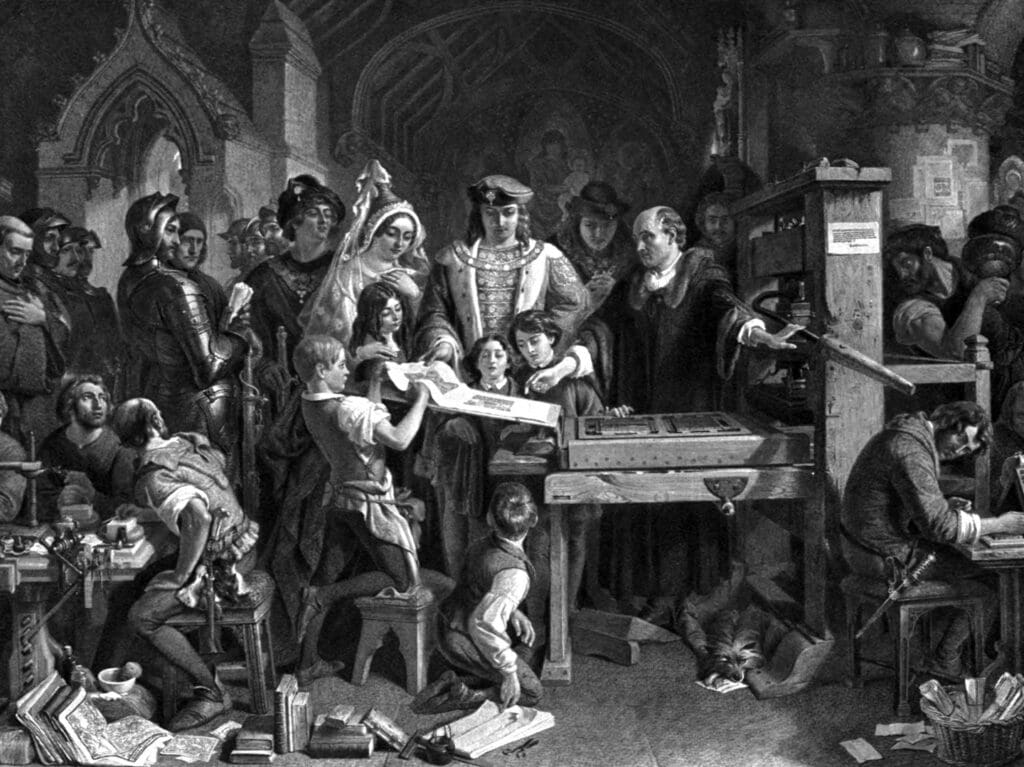
At the age of 23, Marchamont Nedham got his first big break. He was invited to become chief writer of a publication called Mercurius Britannicus. This was one of a new breed of printing press productions, the periodical newsbook. It was the forerunner of today’s newspaper, though it looked more like a small magazine. The key difference from the one-off books and pamphlets we saw during Tudor times, was that newsbooks came out in regular editions, usually once a week, which meant they could build up a readership.
What young Marchamont Nedham had done to win this position, or who he’d met that had swung it for him, we can only guess. Those who’ve examined in detail the writing style of the various editions of Mercurius Britannicus at this time, can’t detect any change with Nedham’s appointment, which has led to the theory that maybe he was already writing for the publication before, perhaps on a trial basis.
But if we’re looking for an explanation for why, around 1643, Marchamont Nedham switched careers to become a journalist, we need look no further than what was happening in the country. These were turbulent days in England, some of the most violent and uncertain in the country’s history. King Charles I, who’d come to the throne in 1625, was trying to put back the clock. He believed kings were answerable to God alone, so ignoring the past 350 years of Parliament’s rising power. And what’s more, he was suspected of nurturing an ambition to return England to Roman Catholicism.
The country’s religious divisions were pushed to extremes under Charles. On one side, the Presbyterians and Puritans who sought to exercise influence through Parliament. On the other, the High Church Anglicans who backed the king. Tension between them was such that it would take only the merest jolt to turn peaceful disagreement into violent rage. And jolt it Charles did.
On 4 January 1642, stung by his openly Catholic wife’s accusation that he was a coward, the king marched into the Palace of Westminster with 200 armed courtiers to arrest one peer and five MPs suspected of plotting against him. But it was a botched job. The six men escaped, and Parliament pronounced the king a ‘public enemy to the commonwealth’. It was the start of the most bloody and divisive civil war in England’s history. And as armies marched and battles were fought on home territory, there was an unprecedented demand among the populace for news of what was happening and opinions as to what to make of them.
Exciting times for a 23-year-old, trying to find his place in the world. The war was getting into full swing as Marchamont Nedham was appointed chief writer at Mercurius Britannicus. Britannicus was firmly on Parliament’s side in the conflict. It had been founded to counter the propaganda being pedalled by a Royalist newsbook called Mercurius Aulicus. King Charles, earlier in his reign, had refused to indulge in anything so demeaning as communicating with his subjects – such action hardly befitted a king with a divine right to rule. And he’d tried to impose the same restraint on his opponents by banning the printing of domestic news. But that prohibition had collapsed by 1641, when Charles lost control of Parliament. The many Presbyterian-owned printing presses immediately started churning out an estimated twenty different newsbooks, most with a pro-Parliament and anti-Royalist bias. Even Charles now realised he had no alternative. He’d have to do the same and swallow his I-only-talk-to-God principles.
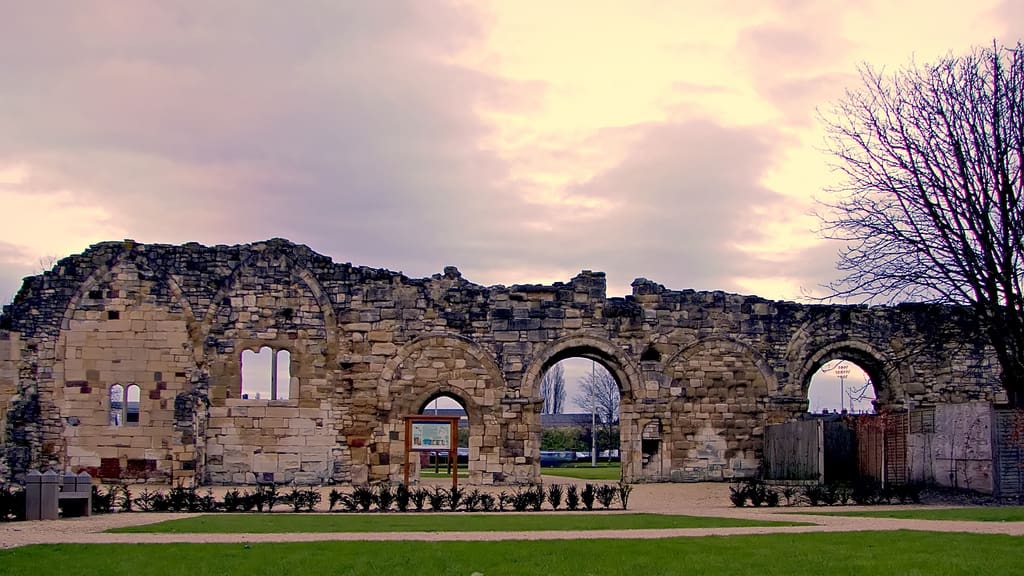
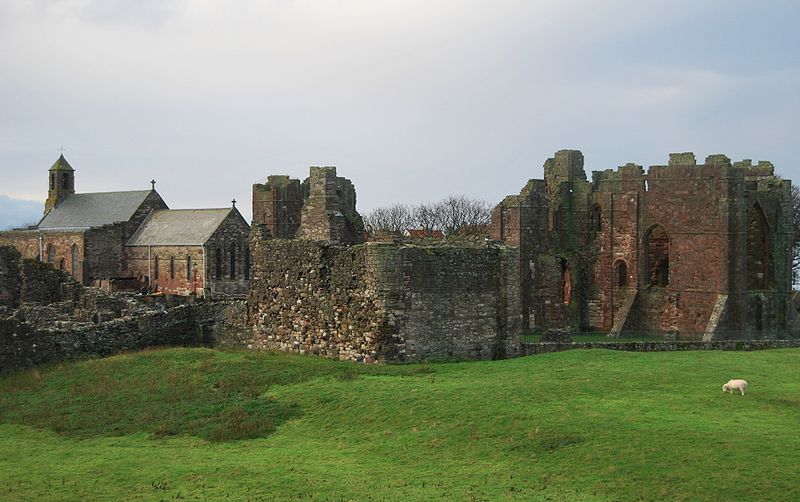
On the 8 June 793, Vikings raided the abbey at Lindisfarne in Northumbria, bringing about what is largely accepted as the beginning of the Scandinavian invasion of England. 117 years later Gloucester’s own warrior queen, Aethelflaed, fought back.
The ruins of Lindisfarne Abbey
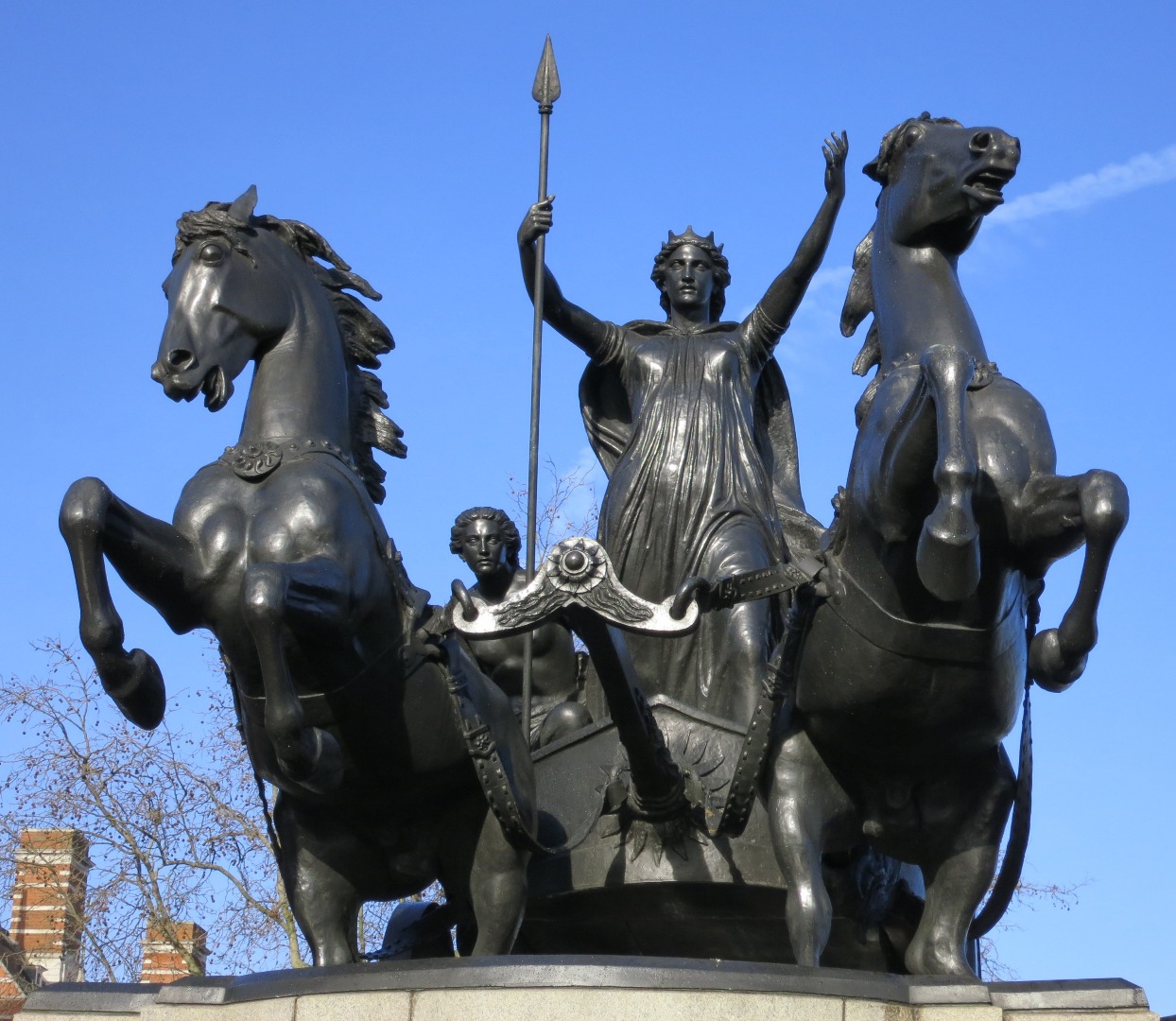
1,100 years since her death the Lady of the Mercians, and oldest daughter of Alfred the Great, is finally receiving the recognition she deserves for the part she played in British history and the formation of Britain as we now know it. When we think of a ‘warrior queen’ we might think of Boadicea or Empress Matilda, but Aethelflaed was a shrewd and military-astute ruler in her own right.
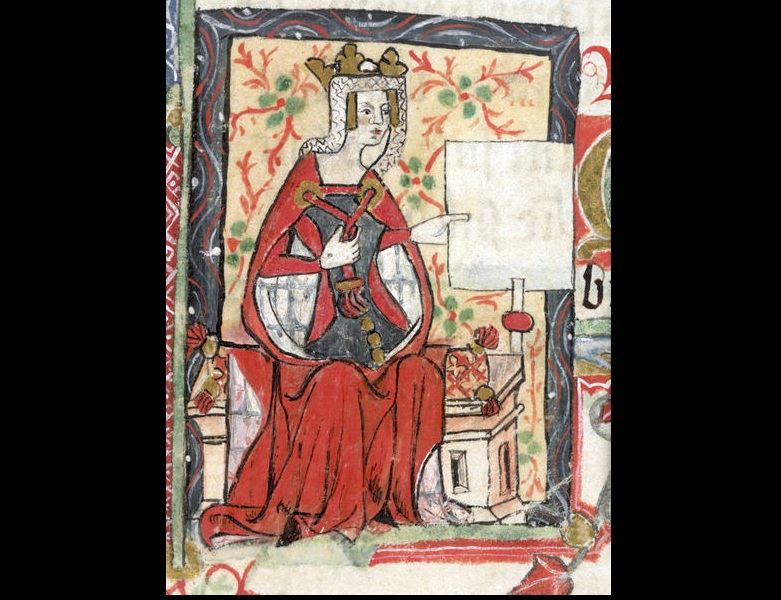
The statue of Celtic queen Boadicea at WestminsterEmpress Matilda, daughter of and heir to Henry I of England
Born to Wessex king Alfred the Great and his wife, Ealhswith, in around 870 at the height of the Viking invasion, Aethelflaed followed in the footsteps of the daughters of kings before her when her hand was offered to the much older Aethelred, Lord of the Mercians in a political marriage that strengthened the alliance between Mercia and Wessex. Rather than solely become a wife and child-bearer, however, Aethelflaed went on to prove herself as an accomplished leader and political thinker. In fact Aethelflaed and Aethelred would only have one child, a daughter named Aelfwynn, whose birth was so difficult that Aethelflaed seems to have shied away from sexual intimacy thereafter, claiming, according to chronicler William of Malmesbury, that it was ‘unbecoming of the daughter of a king to give way to a delight which, after a time, produced such painful consequences’.
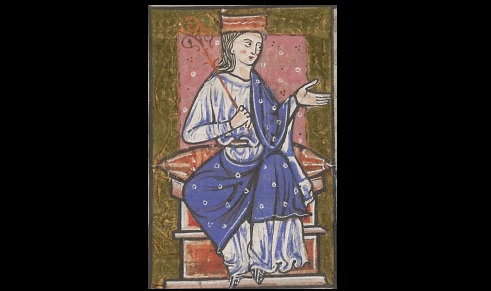
Aethelflaed, Lady of the Mercians
Before the Battle of Tettenhall in 910, Aetheflaed had already garnered a reputation as a ruler who was prepared to stop the Vikings’ continued invasion of the English-speaking world, refortifying the city of Chester before the Vikings attempted, and ultimately failed, to breach its walls in 907. Danish Vikings had controlled much of northern England for over 100 years, and when they plundered and destroyed large parts of Mercia, believing the Anglo-Saxon forces were further south, Aethelflaed combined her Mercian forces with those of her brother, Alfred the Great’s heir Edward the Elder, and retaliated.
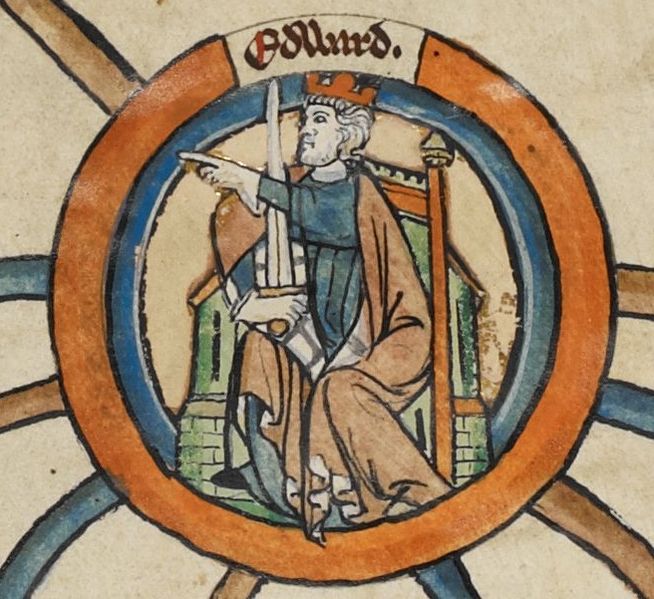
Edward the Elder, King of Wessex
What ensued was the Battle of Tettenhall, in what is now Wolverhampton, on the 5 August 910. Sandwiched between the two Anglo-Saxon forces, the Danes suffered a tremendous defeat; the Anglo-Saxon Chronicle claimed that ‘many thousands of men’ perished, and the loss of two Danish kings, Healfdene and Eowils, as well as several nobles meant their defeat was the defeat of the last great raiding army from Denmark. Aethelflaed and Edward’s united forces could then turn against those further south, resulting in a rise of allied strength that would eventually unite England under one domestic monarch.
That same year the Mercian Register recorded that Aethelflaed constructed a burh, an Old English fortification or fortified settlement that Alfred the Great was known to have developed a network of to defend his kingdom from Viking raids, at Bremesbyrig.
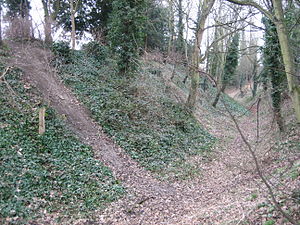
The burh wall at Wallingford, Oxfordshire
What’s most interesting about this construction is that it seems to have been Aethelflaed’s alone – the Mercian Register makes no mention of Aethelred. In fact when the aging Lord of the Mercians died a year later in 911, Aethelflaed took control of Mercia as ‘Lady of the Mercians’. Power was secured in Anglo-Saxon England through support from high-ranking royal officials known as ‘ealdormen’, so Aethelflaed was chosen as her husband’s successor over a male heir or even her own brother.
This was the ultimate mark of trust and respect for the woman who faced the Vikings and won.
Sign up to our newsletter
Sign up to our monthly newsletter for the latest updates on new titles, articles, special offers, events and giveaways.